

Cleveland reached a population of 914,808 in 1950. The latest U.S. Census Bureau estimate puts the city at approximately 363,608 residents.
The city has lost about 60 percent of its population since its peak, but it still occupies roughly the same 78 square miles.
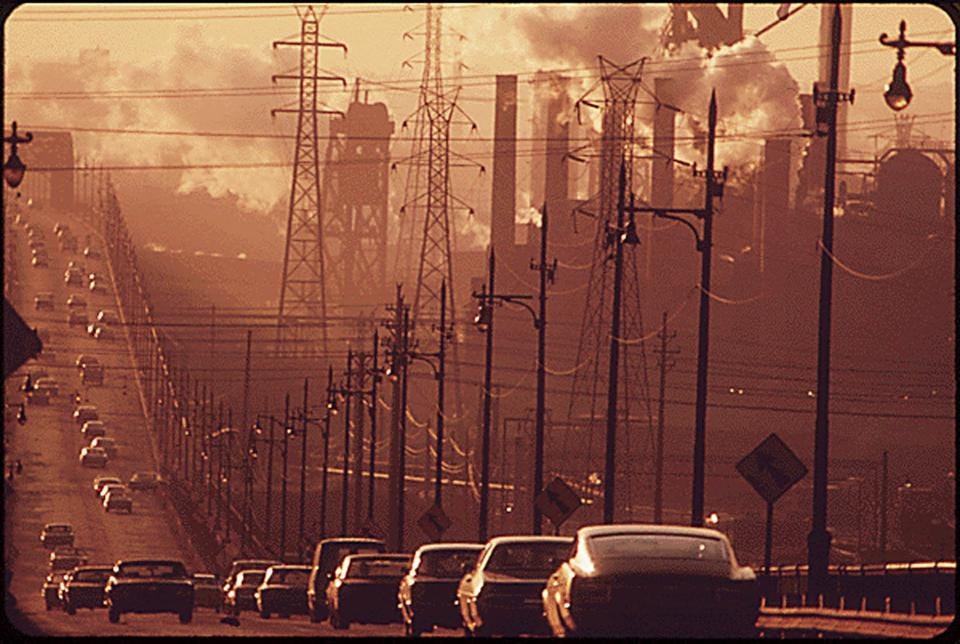
One thing I have watched over the years, living and growing up around Cleveland, is suburban sprawl. It is the movement from the city to the suburbs, then to the outer suburbs, and then even farther out.
I paid attention to it because I was part of it.
I grew up in Slavic Village. Then I moved to Bedford. From there, I moved farther out to Geauga County and Solon, with some stints in Twinsburg and Streetsboro. My brother now lives in Macedonia. My mom lives in Streetsboro. My dad lives in Solon.
I have watched people hop from the inner city to the inner suburbs, from the inner suburbs to the outer suburbs, and then farther and farther away.
There are understandable reasons people do it. They want newer homes, newer schools, newer roads, more space, less crime, or a fresh start. Sometimes an older house costs $150,000 or $200,000 but still needs another $100,000 worth of work. It might need new electrical wiring, grounded outlets, plumbing, HVAC, windows, roofing, asbestos removal, lead remediation, or a completely updated interior.
Then a builder offers a new house farther out for $280,000 or $300,000. Stretch the budget a little more and everything is new.
I understand that decision.
But every time we move farther out, we do not pick up the roads, sewers, water lines, schools, streetlights, police stations and fire stations we left behind.
Those remain.
We build another set farther away.
That has led me to a hypothesis I have been working through: the modern American suburban development pattern may not be financially sustainable over the long term.
This is a hypothesis and a thought experiment. I am not claiming that every suburb is bankrupt or that nobody should own a single-family home. I am asking whether cities with relatively low population density can collect enough revenue to maintain all the infrastructure and services spread across their physical footprint.
The evidence suggests that the lower the density, the more infrastructure each taxpayer is being asked to support.
More Northeast Ohio, but Not More Northeast Ohioans
Cleveland’s population peaked in 1950 and since then the city has lost about 60 percent of its population, but it still occupies roughly the same 78 square miles.
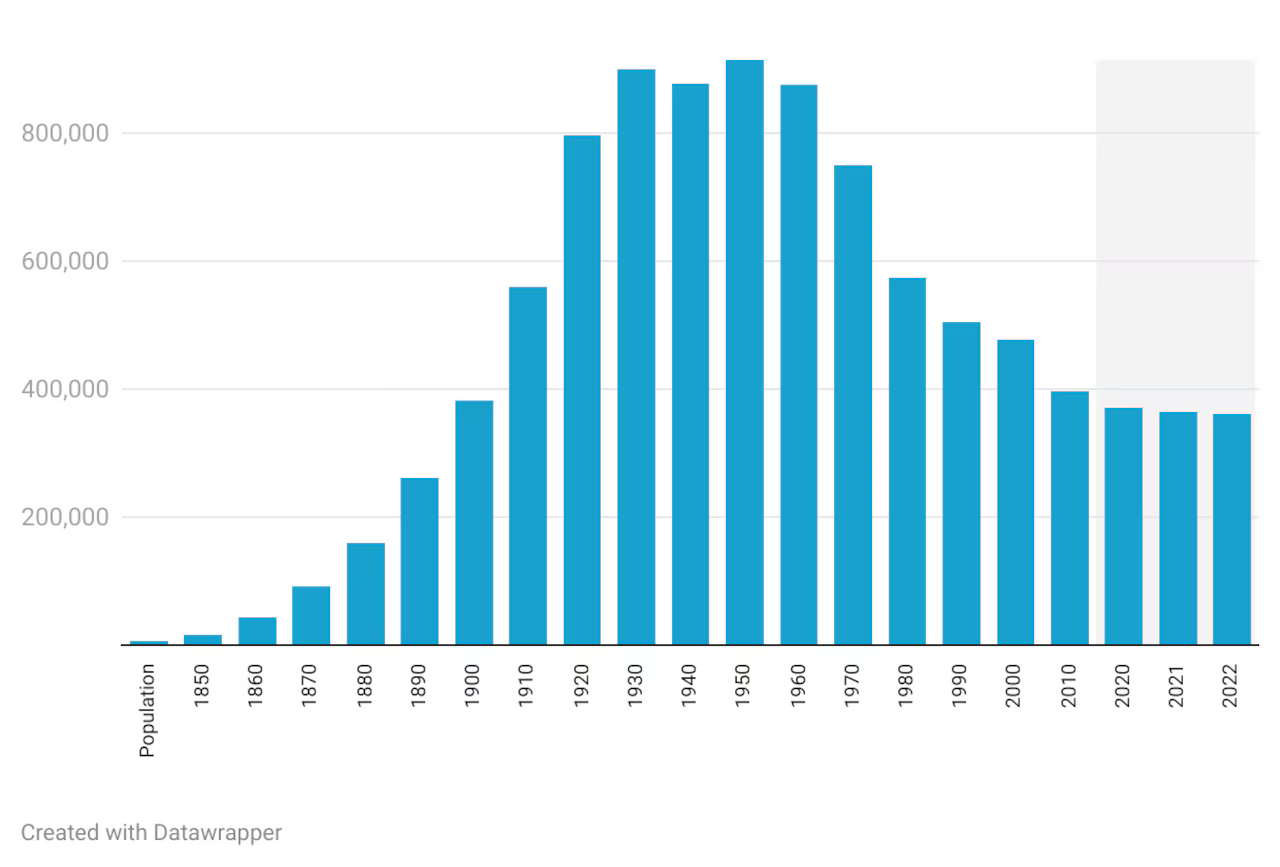
The roads still need to be maintained. The sewers still need to work. The streetlights still need to stay on. Police, fire and emergency services still have to cover the city. Schools still have to be operated or replaced. Bridges still have to be repaired.
A water main does not become 60 percent cheaper because fewer people live above it. Actually, because of inflation that water main becomes more and more expensive.
The population did not simply disappear. Much of it moved.
The Cleveland Planning Commission found that developed property in Cuyahoga County covered more than twice as much land in 2000 as it did in 1950, even though the county’s population was nearly identical in those two years.
There were more individual households because families became smaller, but the general pattern is still clear. We spread roughly the same population across dramatically more land.
We built more roads, more subdivisions, more sewer lines, more schools, more commercial developments and more emergency-service territory without bringing a comparable number of new people into the region.
Regional planners have been warning about this for years. In 2013, Vibrant NEO 2040 modeled what could happen if Northeast Ohio continued with business as usual. It projected only 2.4 percent regional population growth from 2010 through 2040 while adding 92,500 acres of new development and abandoning 77,100 acres of existing property.
That was a projection, not a final count of what has happened. But it described the pattern I have watched my entire life.
If Cleveland loses 10,000 people and Streetsboro gains 10,000 people, Northeast Ohio did not gain 10,000 taxpayers.
But the region may now have the streets those people left behind plus the new streets built for them. It may have the old sewer system plus new sewer extensions. It may have old school buildings plus new school buildings. Police and fire departments still have to cover the older communities while new departments and facilities cover the expanding outer suburbs.
That is the question underneath my hypothesis.
Are we actually growing, or are we spreading the same population across a larger and more expensive and costly system. And… do we need to rethink how we live in America?
Bedford as a Thought Experiment
I lived in Bedford for six years when I was young, so I am going to use Bedford as an example.
Again, this is a thought experiment. I am not arguing that every financial problem in Bedford was caused by suburban sprawl.
Bedford had 17,552 residents in 1970. The Census Bureau now estimates approximately 12,723 residents. The city’s current median household income is about $57,300. Which is down from over $70k average salary (adjusted for infltation) in the 1970’s.
Bedford still has the streets, schools and public infrastructure of a community built during a different economic and demographic era. It has fewer people helping to support much of that infrastructure.
Glendale Primary School is a prime example of what an aging system can look like.
In 2026, a broken sewer pipe in an upstairs boys bathroom leaked into the school kitchen. The kitchen closed, meals were prepared elsewhere, and approximately 300 children ate in the gym. After the first pipe was repaired and the kitchen reopened, a second leak from the girls bathroom forced it to close again.
The building is nearly 100 years old.
The Bedford City School District passed a $161 million construction bond and is replacing several aging facilities, including building a new primary school, middle school and high school. The district’s facilities plan calls for demolishing Glendale and other old buildings.
Passing that bond was probably necessary. Children cannot continue attending school under leaking sewer lines.
Bonds are not inherently bad, either. A school will be used for generations, so spreading the cost across generations can make financial sense.
But the bond is still debt, and somebody has to repay it.
The question is whether communities with declining populations, stagnant or declining wages and aging infrastructure can continue to meet these replacement costs without continually raising taxes, taking on more debt, or depending on money from outside the community.
Bedford is not alone.
Across NOACA’s five-county region, the agency tracks approximately 3,300 centerline miles of major roads, 3,100 bridges and five transit agencies. NOACA estimated accumulated maintenance costs from 2020 through 2024 at $380 million for roads, $240 million for bridges and $340 million for transit.
That is approximately $960 million across only those three categories.
It does not include every local residential street, water line, sewer, stormwater system, school building, fire station, police department, sidewalk, park or streetlight.
The region already relies on outside funding to help maintain and improve this system. NOACA receives approximately $51 million annually from the Federal Highway Administration, Federal Transit Administration and Ohio Department of Transportation to allocate to projects across its five counties.
That does not prove that every individual city is insolvent. State and federal governments normally help finance infrastructure.
It does show that the system is not maintained entirely through the taxes collected by each city from its own residents.
Density Changes the Math
The basic math is not complicated.
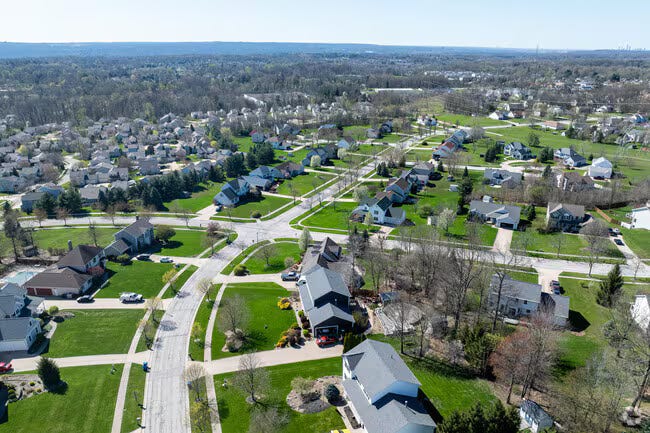
Imagine a street that is 1,000 or 2,000 feet long. It has 60 detached houses and perhaps 120 people living on it.
That street needs pavement, snow removal, drainage, water, sewer, streetlights, police protection, fire protection and emergency medical coverage.
Now imagine that same street with duplexes, triplexes, apartments, townhouses, small businesses or mixed-use buildings. Instead of 120 people, it might have several hundred people living and working along the same stretch of infrastructure.
The city still has to maintain the road and pipes, but the cost is now spread across more households, more businesses and more economic activity.
A national analysis of compact development estimated that controlled growth could save approximately $110 billion in road construction and $12.6 billion in water and sewer infrastructure.
Fire protection provides another example. A Charlotte case study summarized by the Environmental Protection Agency found that a fire station in a connected, compact neighborhood could cover 4.5 times as many addresses as a station serving a sprawling neighborhood. The estimated annualized cost was $159 per person in the compact area compared with $740 in the lower-density area.
It is the same basic public service. Density allows the cost of the station, equipment and firefighters to be spread across more people.
Schools work somewhat differently because Ohio’s school-funding system is complicated and school districts do not always follow municipal boundaries. But density still affects transportation.
Ohio’s school transportation formula uses both students and miles driven and defines density as riders per square mile. A lower-density district may have to send buses farther to reach fewer children.
Police and emergency services face the same geographic problem. A department has to cover the entire physical area of a community regardless of whether that area contains 5,000 residents or 50,000 residents.
The farther people spread out, the longer the network becomes.
There are more roads, longer bus routes, more sewer extensions and a larger area for police, fire and ambulances to cover.
Then, in 20, 30 or 50 years, all of it begins to age.
Why People Keep Moving Outward
This is not just a government-budget problem. Housing plays a major role.
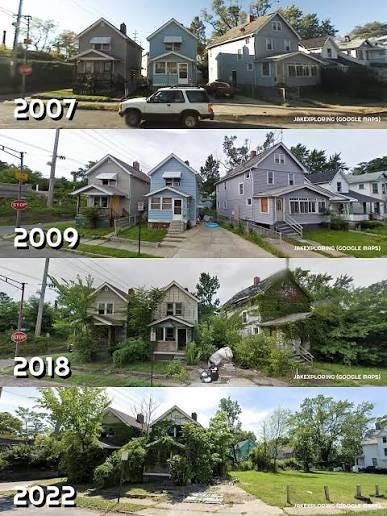
Older communities often have older housing stock. The houses may have been built in the 1940s, 1950s, 1960s or 1970s. Some have outdated floor plans, old wiring, old plumbing, aging HVAC systems, lead paint, asbestos or foundations that need serious work.
People look at a house selling for $150,000 or $200,000 and then realize it needs another $50,000 or $100,000 in repairs.
Farther out, a builder is selling a new home for $280,000 or $300,000.
Why buy the old house?
The newer house has a modern floor plan, grounded electrical outlets, a new roof, new plumbing, a new furnace and fewer immediate repair expenses. The roads and surrounding infrastructure are also newer.
The individual buyer is making a rational decision based on what is best for that household.
But the regional effect is that people continue moving outward. The older home and older infrastructure remain behind. New homes and new infrastructure are added farther away.
Eventually the new community will face the same problem. The roads will age. The schools will age. The sewer lines will age. The houses will need major repairs.
Then another development may be built even farther out.
Ohio’s Other Cities Show the Same Pattern
The Cleveland numbers become even more revealing when we compare them with Ohio’s other major metropolitan areas. Special thank you to Jasson Farrier for collecting the data. Check his You Tube here.
According to an analysis of the U.S. Census Bureau’s American Community Survey housing data, the Cleveland metropolitan area added 17,544 housing units from 2011 through 2024. That sounds like growth until you look at where the housing was built.
Cuyahoga County lost 6,876 housing units while every surrounding county gained. Geauga added 1,262. Lake added 5,509. Medina added 7,547. Lorain added 10,102.
In other words, the region added housing, but the county containing its largest city lost housing while development continued moving outward.
The five ZIP codes losing the most single-family homes were all in Cleveland or East Cleveland. The five gaining the most were in North Ridgeville, Medina, Avon, Painesville and Avon Lake.
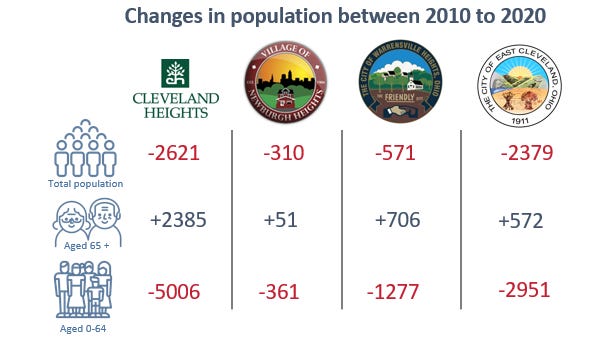
This data does not literally track a family moving from one particular Cleveland house into one particular Medina County subdivision. Housing units can disappear through demolition, conversion or abandonment. But it shows where the region is investing and where its housing stock is disappearing.
We are building outward while allowing parts of the existing core to hollow out.
Cincinnati shows a similar pattern. Hamilton County, which contains Cincinnati, added 3,241 housing units between 2011 and 2024. Warren County added 16,046, nearly five times as many. Clermont County added 8,154 and Butler County added 7,614.
Cincinnati’s core is not collapsing like Cleveland’s, but the direction is similar. The city ZIP codes losing the most single-family homes are inside Cincinnati, while places such as Mason, West Chester and Loveland are adding thousands.
Akron shows how this can happen even when countywide numbers look healthy. Summit County added 3,107 housing units and neighboring Portage County added 4,098. Neither county shrank.
But inside Akron, ZIP code 44304 lost 59 percent of its single-family homes between 2011 and 2024. Several older Akron ZIP codes lost hundreds of homes while Aurora, Stow, Twinsburg and Streetsboro added housing.
That is not simply city versus suburb. Parts of Akron are gaining while other neighborhoods a few miles away are collapsing. It is the same underlying problem happening at a smaller geographic level. New housing and investment flow toward the communities and neighborhoods with newer roads, newer schools and newer infrastructure while older areas are left with fewer homes and taxpayers supporting systems built for more people.
The real question is whether Northeast Ohio can keep building new versions of itself farther outward while expecting every older community left behind to maintain infrastructure designed for a larger population and tax base.
At some point, we are not creating growth. We are setting ourselves up for high taxes and financial strain.
We Have to Rethink How Cities Are Built
If the hypothesis is correct, then continually raising property taxes, income taxes, sales taxes and fees will not fix the underlying problem.
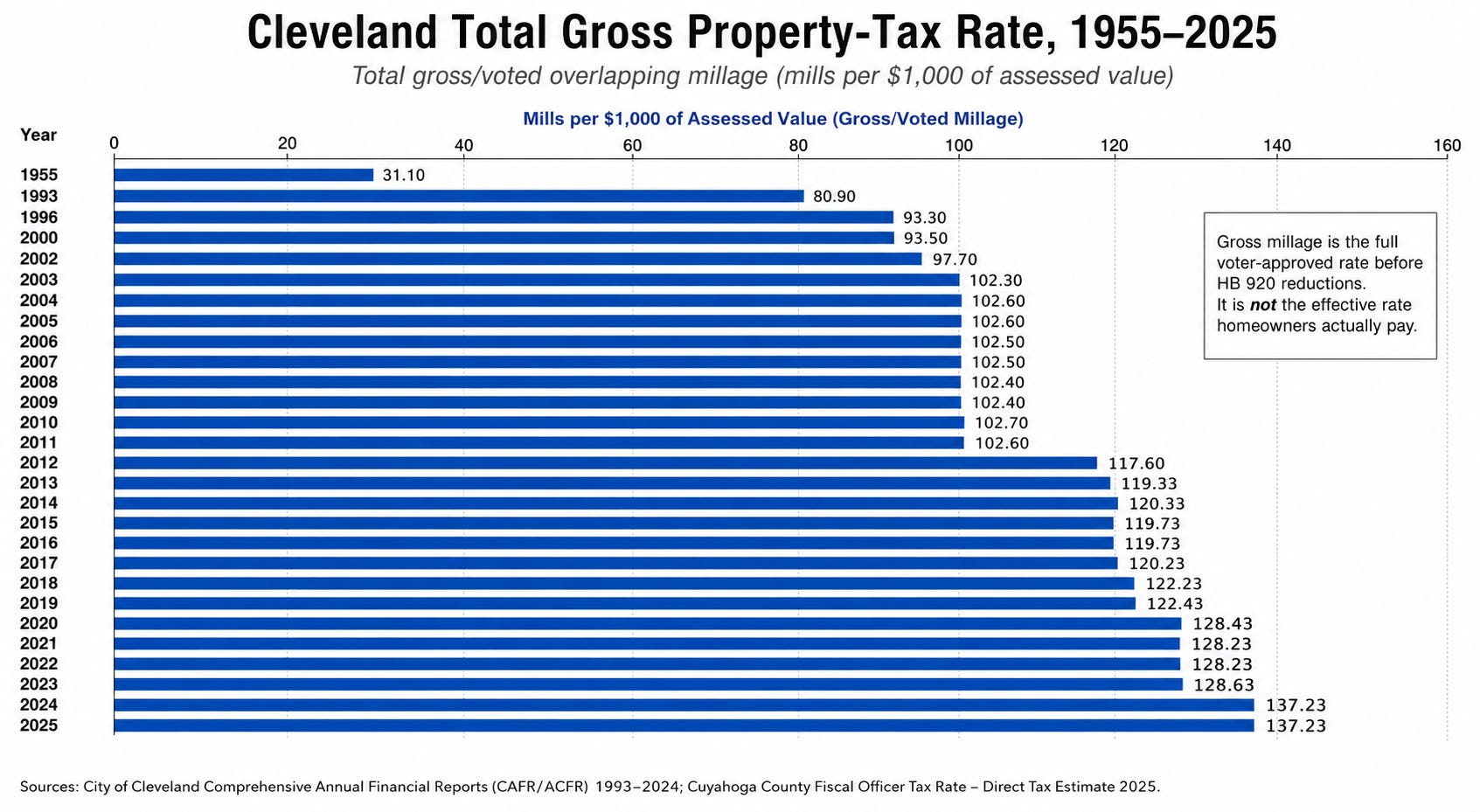
The problem is not only how much revenue the city collects. It is how much infrastructure that revenue must support.
Cities that have lost population need to consider whether their zoning laws are preventing them from adding enough residents and businesses to use the infrastructure they already have.
Large areas are still zoned around an idealized 1950s lifestyle: one detached house, one yard, one garage, one car in the driveway and several children.
But household demographics have changed. More people live alone. People marry later. Some couples do not have children. People are having children in their late thirties and forties. Not everybody needs or wants the same kind of house.
Cities should allow more duplexes, triplexes, multifamily buildings, mixed-use buildings and, where appropriate, tiny homes. Property owners should have more freedom to add households to existing lots.
Instead of receiving revenue from one household on a lot, a city could receive revenue connected to two, three or four households using the same street, sewer and water line.
That does not mean every neighborhood has to become a collection of high-rises. It means cities should stop assuming that detached single-family housing must be the only legal option across enormous portions of their land.
Transportation also has to be part of the discussion.
Cleveland has too many damn parking lots, too much land dedicated to roads and parking, and not enough useful public transportation. RTA should have been redesigned a long time ago.
Cities should be willing to reconsider parking requirements, buses, rail, bike infrastructure, ride sharing and other ways people can move without requiring every person to own and park a car everywhere they go.
We may also need to ask difficult questions about city limits and the number of separate governments managing shared infrastructure. Should boundaries expand? Should services be shared differently? Should some areas operate separately?
I do not know the answer. I am asking whether the current arrangement makes sense when roads, sewers, jobs and transportation systems cross all these municipal boundaries anyway.
Is the American Suburban Lifestyle Sustainable?
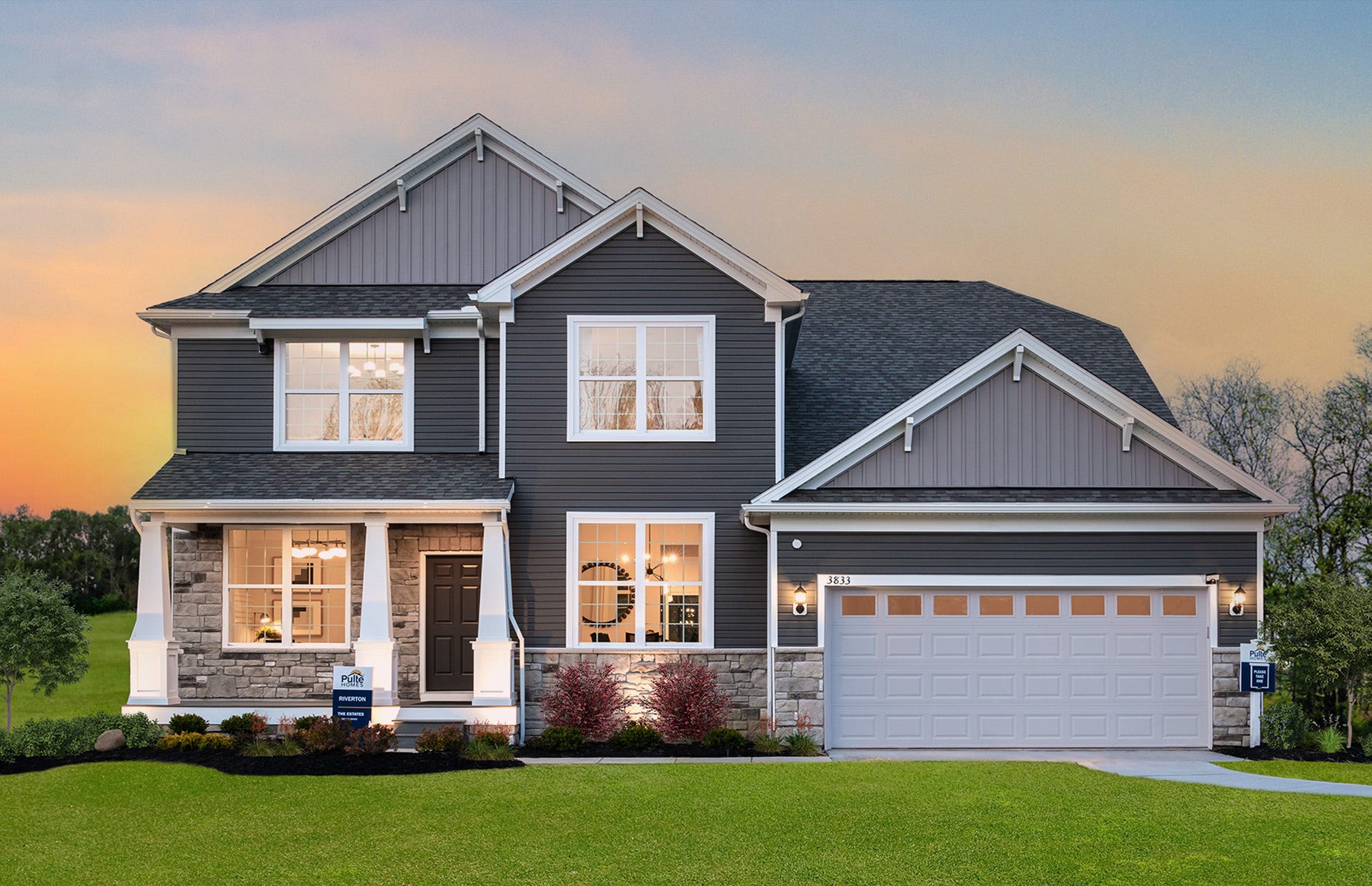
This is the real question. 👆🏽
Can cities maintain roads, bridges, sewers, schools, police departments, fire departments and public transportation when their populations are spread across low-density neighborhoods and their tax bases are not growing fast enough to cover replacement costs?
Can Northeast Ohio continue moving from Cleveland to Bedford and Maple Heights, then to Solon, Northfield and Macedonia, and then to Canal Fulton and beyond, while still expecting every community left behind to maintain what was already built?
Or do we have to rethink the way we live?
Again, this is a hypothesis. But the population numbers, land-development patterns and infrastructure costs suggest that it is a question worth taking seriously.
The American ideal of a detached house on a large lot, with a driveway, a garage and all the infrastructure needed to support it, may not be financially sustainable everywhere forever.
If we want older cities to survive, we may need higher-density housing, walkable neighborhoods, better public transportation and zoning laws that allow more people and economic activity to use the infrastructure we already have.
Yes, cities might have to just say do what you want on your land and build housing and business.
We cannot keep moving farther out, building another version of the same city and expecting the old one to maintain itself with fewer people.
At some point, the replacement bill arrives.
Wow! You've done a lot of work, here!
You're absolutely correct, but at least 27 years later than David Beach and his Green City on a Blue Lake initiative (once housed at the CMNH) eloquently presented. In that time, it has gotten worse, especially since the Subprime Loan crash of the early 2000s.
No, it's not sustainable, and neither is unregulated capitalism nor continuing to burn fossil fuels. As long as greed exists, our days are numbered. I'm glad that I'm as old as I am.
Ooh, boy! This is a potential can of worms that might, eventually, find its way open.
I could ruminate at length about all you’ve discussed with this article but I don’t have that kind of time.
Suffice it to say, continued sprawl is not sustainable and it will continue to destroy not just urban centers, but it is likely to start affecting inner ring suburbs and even suburbs that hit their peak in the 70s, for instance.
You used the example of Bedford to illustrate the point and that is a pretty good example of a community at an obvious turning point. The fact that the community rallied around the building of new school infrastructure is great news.
Contrast that with the example of Parma and their ongoing struggle to pass any school levy at all. In the next twenty years, does anyone really believe Parma is going to be a worthwhile place for anyone with school aged children to live if they can’t get a handle on their very real school funding issues? For now, that doomsday clock keeps ticking.