


You can pass a law in America by voting for it yourself, directly, at the ballot box, by a landslide, and watch your state’s highest court rule it valid. Then watch it erased within weeks. Not by a recount. Not by a court reversal. By the plain decision of the representatives you elected, who repeal your vote and face no consequence for it at all.
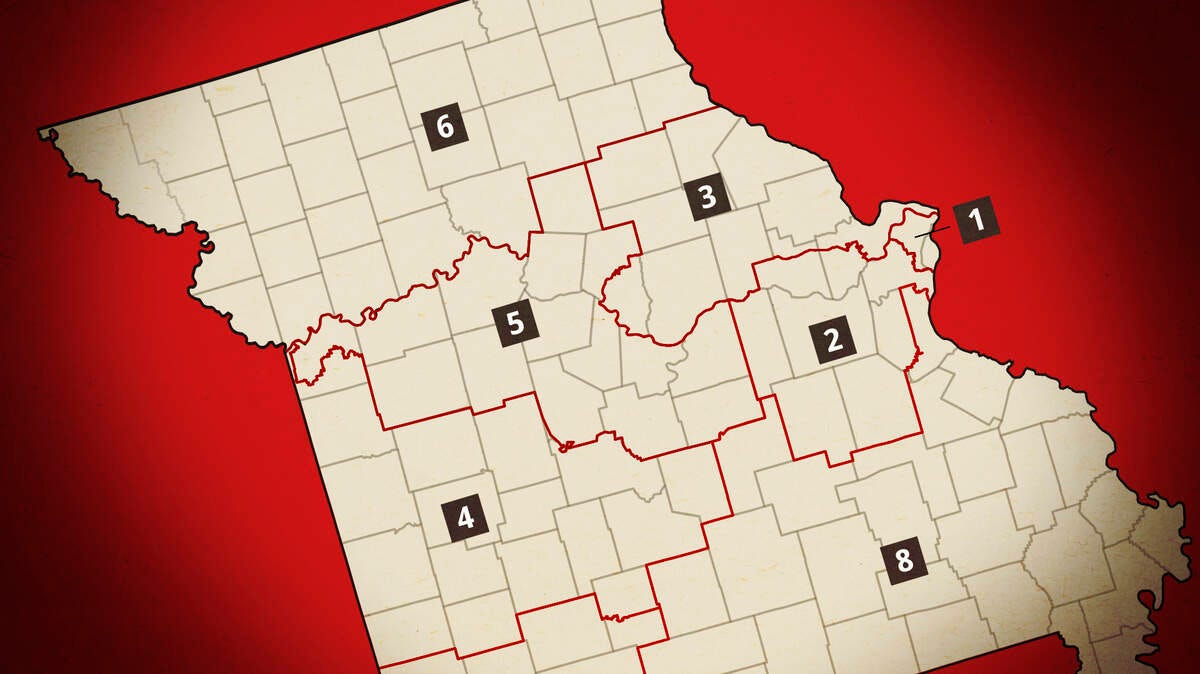
This happens in the part of American government almost nobody watches: the statehouse. It is not a glitch; it is the designed output of a machine most people have never had explained to them. And it is not one party doing it to the other, the votes that get erased are often cast in red states, by the very people who send Republicans to the capitol. So here is the question the machine is built to make irrelevant: what, exactly, is your vote worth?

The first two parts of “The Rigged Map” series followed that machine through the maps that decide Congress. This one follows it somewhere more intimate: your state legislative districts, the maps that decide whether your wages rise, whether you can stay home sick, whether you can see a doctor. They are often rigged far more ruthlessly than the lines that decide Washington.

Here is how it works.
A gerrymander draws districts so lopsided that one party is all but guaranteed to win them. Once a seat is that safe, the November election stops deciding anything; the only contest that can unseat the incumbent is that party’s primary, a low-turnout affair dominated by the most committed voters and the wealthy donors who fund the campaigns.
Win the primary and the general is a formality.
So a representative’s real boss is never the broad public; it is the narrow slice that votes in the primary, and the big money behind it. That is all a “safe seat” means, a place where the people who live there have already lost the only election that counts. Build a statehouse out of such seats, and it can defy its own voters and pay nothing for it.
This is why the familiar instincts fail. Voting a straight party line, or studying the issues and voting your conscience, in a safe seat, both happen in November.
November is the formality. The election that chose your representative was the primary, and for most people it was over before they knew it had begun. You can be the most informed voter in your district and still be voting in the wrong election. And when the people lose it, the bill comes due in dollars, and in lives. You don’t need a theory to see it, only to watch what one state’s legislature did to its own voters.
Missouri Said yes. The Legislature Said No.
In November 2024, Missourians did something their legislature had refused to do for years. By ballot initiative, the citizen end-run that lets voters write law directly when their representatives won’t, they passed Proposition A. It raised the state minimum wage to $15 an hour by 2026, indexed it to inflation after that, and guaranteed workers paid sick leave.
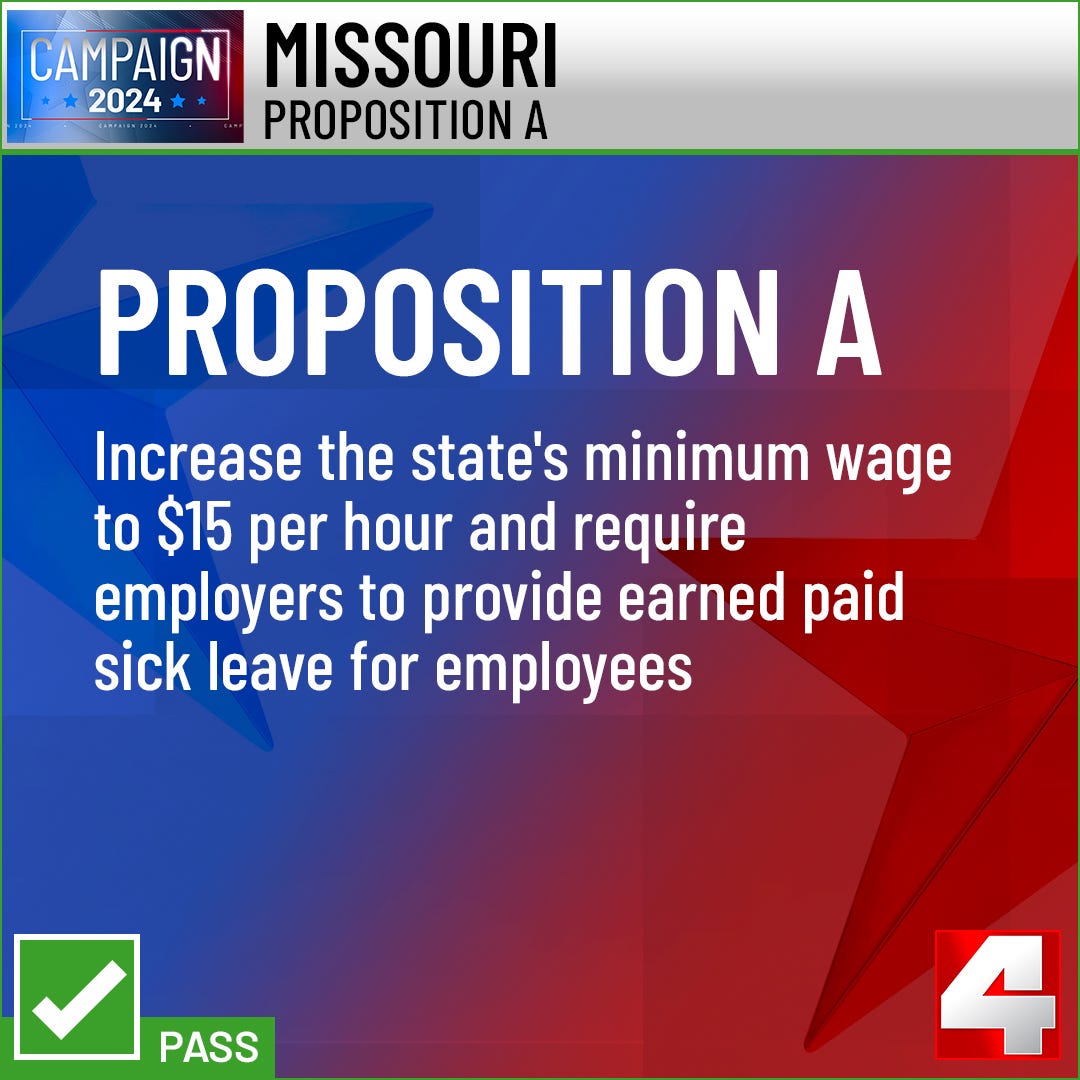
It passed with 57.6 percent of the vote, nearly 1.7 million yes votes, almost as many as Donald Trump drew in the same state on the same night, which he carried by eighteen points. Vast numbers of Missourians, in other words, voted for Trump and for the measure both. This was not a partisan wish list. It was a supermajority of Missourians, Republicans plainly among them, telling their government what they wanted.
The business lobby went to court first. A coalition including the Missouri Chamber of Commerce, the Restaurant Association, and the National Federation of Independent Business sued, arguing the measure violated the constitution’s single-subject rule. On April 29, 2025, the Missouri Supreme Court upheld Proposition A: the summary was not misleading, there was no irregularity, the voters’ law was clean. It stood.
So the legislature simply repealed it. House Bill 567 struck the paid-sick-leave guarantee in full and deleted the inflation indexing, freezing the wage after 2026. The House passed it 97 to 49: the yes votes all Republican, the no votes all Democrats but one, a lone Republican who sided with the voters. The Senate passed it 22 to 11, its leadership invoking a maneuver the chamber rarely uses, the “previous question,” to shut down a Democratic filibuster. Governor Mike Kehoe signed the repeal on July 10, 2025.
The timing is the part to sit with. The sick leave took effect May 1 and was extinguished August 28, accrued for a single summer, then taken back. Not by the voters who granted it, but by a legislature overruling them six months after the election, and barely two weeks after the state’s highest court had confirmed the law was valid.
Ask who actually wanted it gone, and the gerrymandering story and the corporate-money story turn out to be one story.
The repeal was driven by the business groups that had lost at the ballot box, who called the mandate a job killer; the Senate minority leader charged on the floor that the supermajority had acted at the direction of “corporate overlords.” That last is a partisan’s accusation, not a finding of fact, but the structure underneath it is not in dispute.
A legislature drawn to be safe does not have to fear a statewide majority; its members answer to the primary, and the primary answers to money. Fifty-eight percent of Missouri can vote yes and it changes nothing, because the maps mean the people who voted yes were never the people their representatives feared.
The Override Beneath the Override
It is worth asking why those maps look the way they do, because Missouri’s voters tried to fix that too, and were overruled there first.
Previously in 2018, the same electorate passed Proposition A. It won with 62 percent of the vote, carrying 80 of the state’s 114 counties. It handed legislative mapmaking to a nonpartisan demographer and required districts drawn for fairness and competitiveness, an attempt to outlaw the gerrymander and force the legislature into seats it could actually lose. An Associated Press analysis found the formula likely would have let Democrats cut into the Republican supermajority as soon as 2022. To the people holding those safe seats, it was an existential threat, and they treated it as one.
So before the new system drew a single map, the legislature moved to kill it. It put Amendment 3 on the 2020 ballot to repeal the reform voters had just enacted, demoting fairness and competitiveness to the bottom of the criteria. The way it was sold is the part a court ruled on: the ballot summary led with a token tightening of lobbyist gift limits while barely disclosing that it gutted the redistricting reform underneath.
A judge called that summary “misleading, unfair and insufficient,” and wrote that the legislature “seeks to override the recent, clearly expressed will of Missouri voters.” Bankrolled almost entirely by the Missouri Republican State Committee, it passed with 51 percent, and many voters, a Brennan Center analyst noted, likely did not understand they were repealing what they had passed two years before.
It was not a clean repeal, Amendment 3 kept the popular ethics reforms, and there is a fair argument that engineering competitiveness carries distortions of its own. But the heart of it is not in dispute. The voters tried to make their legislature reachable. The legislature reached back and took the tool away before it could be used.
Utah: even the failure failed by accident
It is tempting to think the system has a backstop, that somewhere, a check kicks in. Utah is the cautionary version of that hope.
In November 2018, Utah voters passed Proposition 3, a full Medicaid expansion covering an estimated 150,000 people, with 53 percent of the vote. Weeks into the next legislative session, the Republican supermajority passed SB96, replacing it with a narrower plan that covered roughly 48,000 fewer people and added a work requirement. Governor Gary Herbert signed it before the voter-approved version ever took effect.
It should have stuck, except the legislature had tried to have it both ways, covering fewer people while still drawing the enhanced federal funding the Affordable Care Act reserves for full expansion.
Washington refused; a fallback buried in SB96 then triggered full expansion anyway in 2020, and the voters got, eventually, what they had voted for. But the rule that saved them was written to discipline cost-cutting states, not to protect ballot initiatives, and even then it was close, the federal administration overruled its own Medicaid agency, which had been ready to let the override stand. The maps let Utah’s legislature defy 53 percent of the state freely. What defied the legislature back was a financing technicality the voters had no hand in. Even the failure failed by accident.
The Bill In Lives

The Missouri ledger is measured in dollars: a frozen wage, sick days revoked. The Medicaid ledger is measured in lives, and the arithmetic is grim. Researchers studying the states that refused expansion estimated that roughly 15,600 people died who would have lived had those states expanded Medicaid as the law intended, deaths concentrated among older, low-income adults, from precisely the conditions that medical care prevents.
That is the cost of the divergence, and the ballot initiative is what proves it is a divergence, not a preference. In seven Republican-led states, Maine, Idaho, Nebraska, Utah, Oklahoma, Missouri, and South Dakota, voters used the initiative to expand Medicaid over legislatures that had refused for years.
When an electorate votes directly for coverage while sending representatives who block it to the statehouse, you can no longer say the legislature reflects the will of its constituents. The constituents are on record, in the same election, wanting the opposite. That gap is not a matter of interpretation. It is the rigged map, rendered in mortality tables.
What 90 percent can’t buy
Almost nothing pulls nine in ten Americans to the same side. Universal background checks for gun buyers do, support runs near ninety percent, across nearly every line that supposedly divides the country. And it changes nothing. In a system that answered to the public, that near-unanimity would be law; in a system of safe seats, it isn’t. The ninety percent lives in the general electorate, and safe-seat legislators don’t answer to the general electorate. They answer to the primary, where that consensus thins out, so they can defy nine in ten Americans and never pay for it.
The only safe place left
Step back and it reads as a single argument. Missouri’s voters raised their own wages and were overruled; they tried to fix the maps that made the overruling possible, and were overruled there too. Across the country, voters bought themselves health coverage their legislatures had denied, and watched those legislatures move to shrink it. This is not one party against another. The measures pass in red states, carried by Republican voters; the overrides answer less to ideology than to the wealthy donors the safe-seat primary rewards. It is the moneyed few against an electorate that keeps voting the other way and keeps getting reversed.
Missouri’s organizers drew the obvious conclusion. They have filed a new constitutional amendment for the November 2026 ballot, this time to write the minimum wage and paid sick leave directly into the state constitution, where the legislature cannot reach them.
Their organizing director put the stakes in a sentence: “No right is safe if it is not in your constitution.” It is a remarkable thing to have to say about laws the people already passed, that the only way to make a vote count is to put it where the legislature is forbidden to touch it. The people can win, and win decisively, and still have to wonder whether it will be allowed to stand.
If there is a way out of this, it does not begin in November. It begins in the primary, the election that actually decides who represents you, and the one almost engineered to be ignored.
The information you would need is not secret: when your primary is, who is running, what they have done with their power, and who pays for their campaigns. It is simply scattered, a state office here, a disclosure database there, a record filed somewhere most people never think to look, kept far enough apart that almost no one ever assembles the whole picture.
That is not an accident either. A public that cannot easily see who represents it, or who funds them, is a public that is easier to overrule. Gathering those scattered pieces into one place, where any voter could find them before the election that actually counts, is the work all of this makes necessary, and the work this project means to take up next.
Stay Angry
Sources
Missouri Proposition A and its repeal (HB 567)
Proposition A passage (57.6%, ~1.7 million yes votes), provisions: KCUR, “Missouri legislature repeals sick leave law that voters approved just months before”; Ballotpedia, “Missouri Proposition A, Minimum Wage and Earned Paid Sick Time Initiative (2024)”; Missouri Law Review, “Pre-Empting the People.”
Missouri Supreme Court upholding Proposition A (April 29, 2025): Ballotpedia (Proposition A page); Polsinelli, “Missouri’s Repeal of Paid Sick Leave.”
HB 567 roll calls (House 97–49; Senate 22–11): LegiScan, “MO HB567, 2025 Regular Session.”
“Previous question” motion to end the filibuster: KCUR, “Missouri legislature repeals sick leave law”; KOMU, “Senate Republicans vote to repeal paid sick leave in Missouri.”
Gov. Mike Kehoe’s signature (July 10, 2025); sick leave effective May 1 / repealed Aug. 28: Ballotpedia News, “Missouri governor signs law repealing provisions of 2024 paid sick leave and minimum wage ballot initiative”; Ogletree Deakins; SHRM.
Sen. Doug Beck “corporate overlords” remark: KCUR.
2024 Missouri presidential result (Trump 58.5%, 18.4-point margin)
Missouri Secretary of State, official 2024 General Election returns; Wikipedia, “2024 United States presidential election in Missouri.”
Clean Missouri (2018) and Amendment 3 (2020)
Clean Missouri passage (62%, 80 of 114 counties); nonpartisan demographer and fairness/competitiveness criteria: Missouri Independent, “Voters repeal Clean Missouri redistricting plan they enacted in 2018.”
AP analysis (reform would have let Democrats cut into the supermajority by 2022); Brennan Center assessment (Yurij Rudensky): PBS NewsHour, “Missouri voters reverse redistricting reforms before they could be used.”
Amendment 3 repeal (51%), funded almost entirely by the Missouri Republican State Committee: Missouri Independent; The Intercept, “On the Ballot in Missouri: A GOP Effort to Undo Redistricting Reform.”
Ballot summary ruled “misleading, unfair and insufficient” (Cole County Judge Patricia Joyce): St. Louis Public Radio, “Appeals Court Changes Ballot Summary for Clean Missouri Repeal.”
Ethics provisions retained; competitiveness-method critique: Ballotpedia, “Missouri Amendment 3 (2020)”; PBS NewsHour.
Utah Proposition 3 and SB96
Proposition 3 passage (2018, 53%, ~150,000 people); SB96 repeal-and-replace (~48,000 fewer covered, work requirement and enrollment cap); Gov. Gary Herbert’s signature: Ballotpedia, “Utah Proposition 3, Medicaid Expansion Initiative (2018)”; Ballotpedia News; Families USA; Deseret News.
ACA enhanced match available only for full expansion (2012 CMS guidance after NFIB v. Sebelius): KFF, “’Partial Medicaid Expansion’ with ACA Enhanced Matching Funds”; Congressional Research Service, “Overview of the ACA Medicaid Expansion.”
Rejection of partial-expansion-at-enhanced-match requests (Arkansas, Massachusetts) and the White House overruling CMS on Utah: Center on Budget and Policy Priorities, “Partial Medicaid Expansions Fall Short of Full Medicaid Expansion.”
Waiver denied; SB96 fallback triggering full expansion in 2020: Salt Lake Tribune, “Trump administration to reject full Medicaid expansion funding for Utah”; Families USA.
Medicaid expansion and mortality
Estimated ~15,600 deaths in non-expansion states (Miller and Altekruse study): Medicare Rights Center; UC Davis Center for Poverty and Inequality Research.
Ballot-initiative Medicaid expansions in seven states; margins (Oklahoma 50.5%, Missouri 53%, South Dakota 56%): healthinsurance.org; NPR; NBC News.
Gun background-check polling
Universal background checks supported by roughly nine in ten Americans: Giffords Law Center, “Americans Want Stronger Gun Laws”; Pew Research Center, “Key facts about Americans and guns”; PolitiFact, “Polls consistently show high support for gun background checks.”
Missouri’s 2026 constitutional initiative
New ballot effort to place the minimum wage and paid sick leave in the state constitution; Richard von Glahn (”No right is safe if it is not in your constitution”): Ballotpedia News; MultiState.
We need proportional representation (if a party gets 30% of the vote, it gets 30% of the seats). It would end gerrymandering forever and elect more diverse representatives!