

This continues our analysis of major races we are watching across Ohio. We are going to look at congressional races, Ohio House races, county council races, Ohio Senate races, judicial races, and now the race for governor.
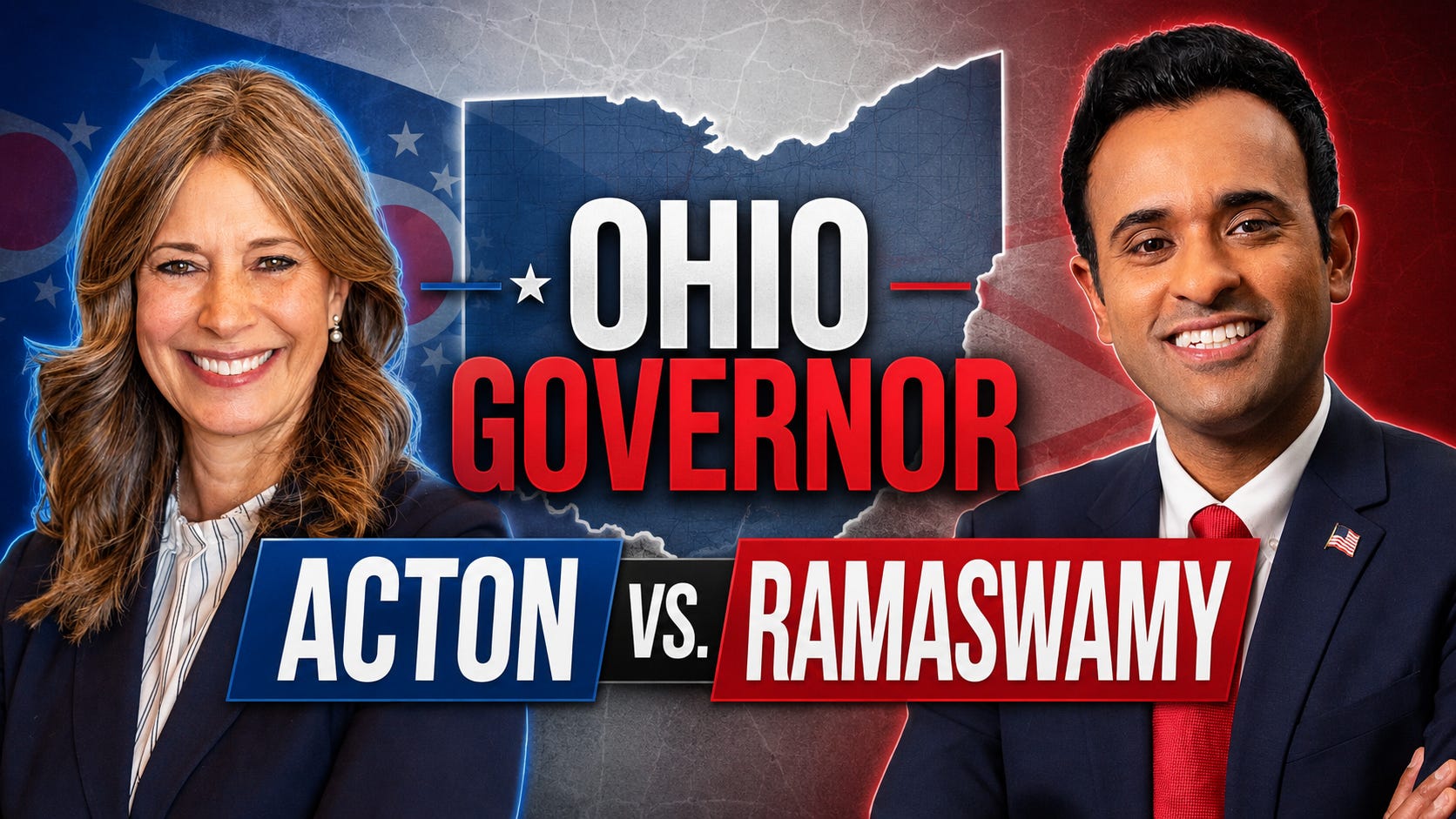
So our next race is the 2026 Ohio governor’s race between Amy Acton and Vivek Ramaswamy. Acton is the Democratic nominee, Ramaswamy is the Republican nominee, and this is one of the clearest contrasts Ohio voters are going to see on the ballot.
This is part of the larger work of The Angry Ohioans: comparing races around Ohio, looking at who is running, what they have done, what they say they will do, and who is funding them. The goal is not to give candidates a free pass because of the letter next to their name. The goal is to look clearly at who wants power, what they say they will do with it, and whether voters have a real way to hold them accountable after Election Day.
Amy Acton
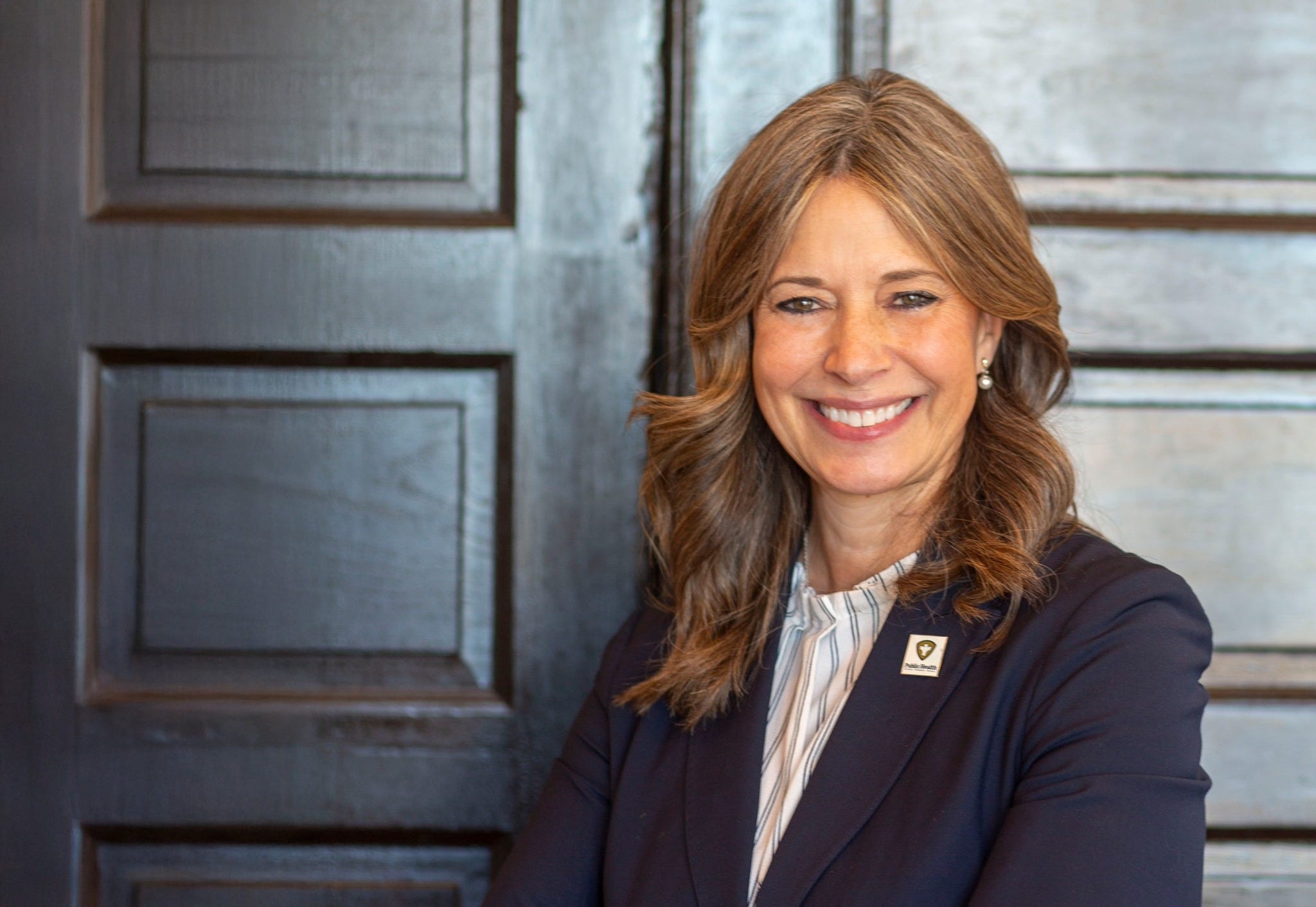
Amy Acton is a 60-year-old Youngstown-born physician and public health leader who served as Director of the Ohio Department of Health under Governor Mike DeWine. She grew up through poverty and instability, worked her way through college and medical school, trained in pediatrics and preventive medicine, earned a master’s in public health, and built much of her career around children’s health, maternal health, public health, and community wellness.
Before running for governor, Acton worked in public health, taught at Ohio State, served with the Columbus Foundation, led health-focused community initiatives, and became one of Ohio’s most visible public officials during the COVID pandemic. She currently lives in Bexley, Ohio, with her husband, Eric, a teacher and coach, and they have a blended family of six children.
Vivek Ramaswamy
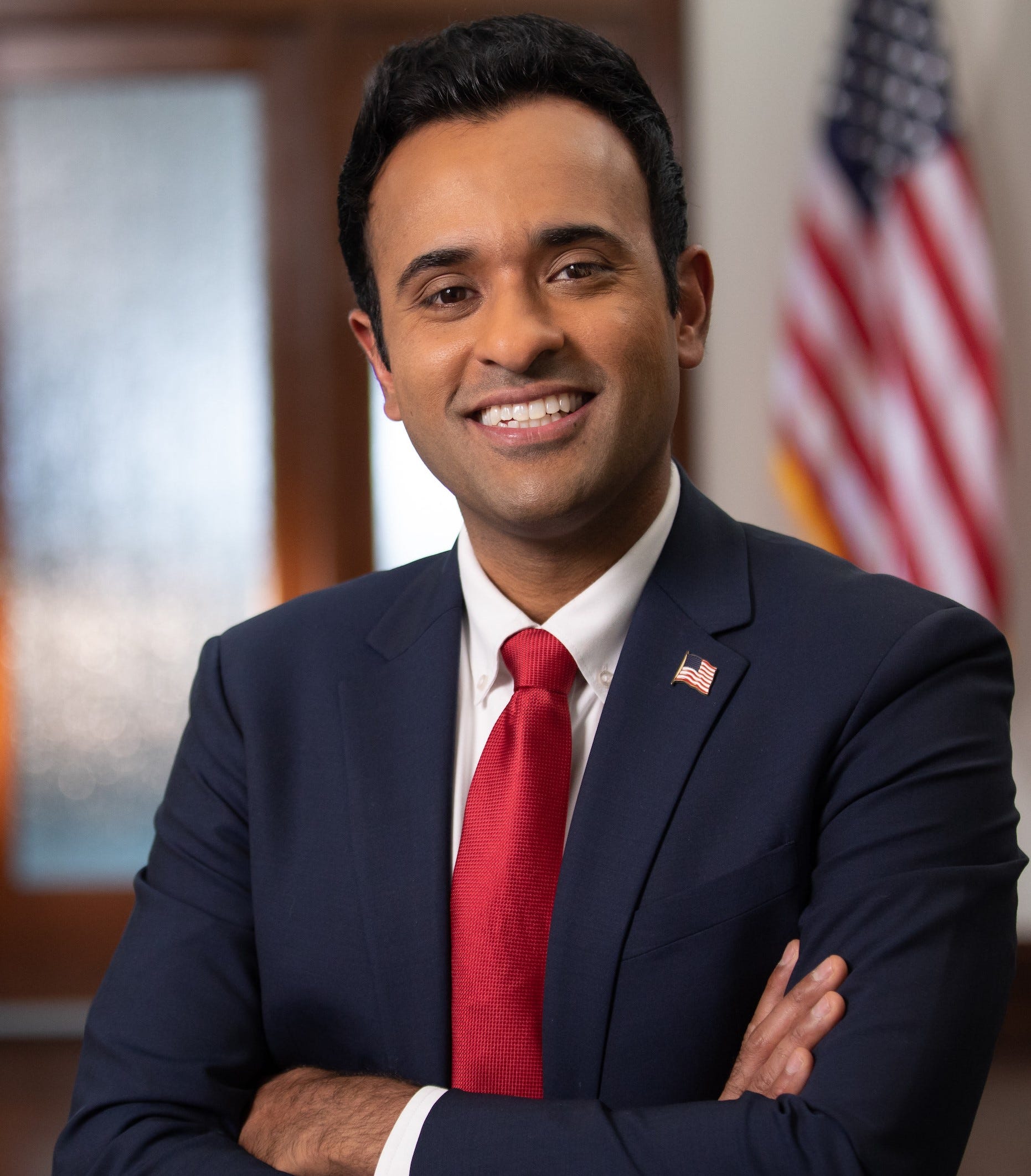
Vivek Ramaswamy is a 40-year-old Cincinnati-born entrepreneur, author, and Republican political figure who made his money in biotech, finance, and anti-woke media politics. He founded Roivant Sciences, a biotech company built around developing and commercializing drugs, later co-founded Strive Asset Management, went to Harvard and Yale, and became nationally known during his 2024 Republican presidential campaign.
Vivek is not a traditional Ohio politician who worked his way up through local government. His background is business, venture capital, biotech, national media, and Republican movement politics. He now lives in the greater Columbus area with his wife, Dr. Apoorva Ramaswamy, a throat surgeon at Ohio State, and their three children.
Campaign Finance Through the 2026 Post-Primary Reports
Both Amy Acton and Vivek Ramaswamy are raising real money, but they are not raising it the same way.
Where Amy Acton’s Money Comes From
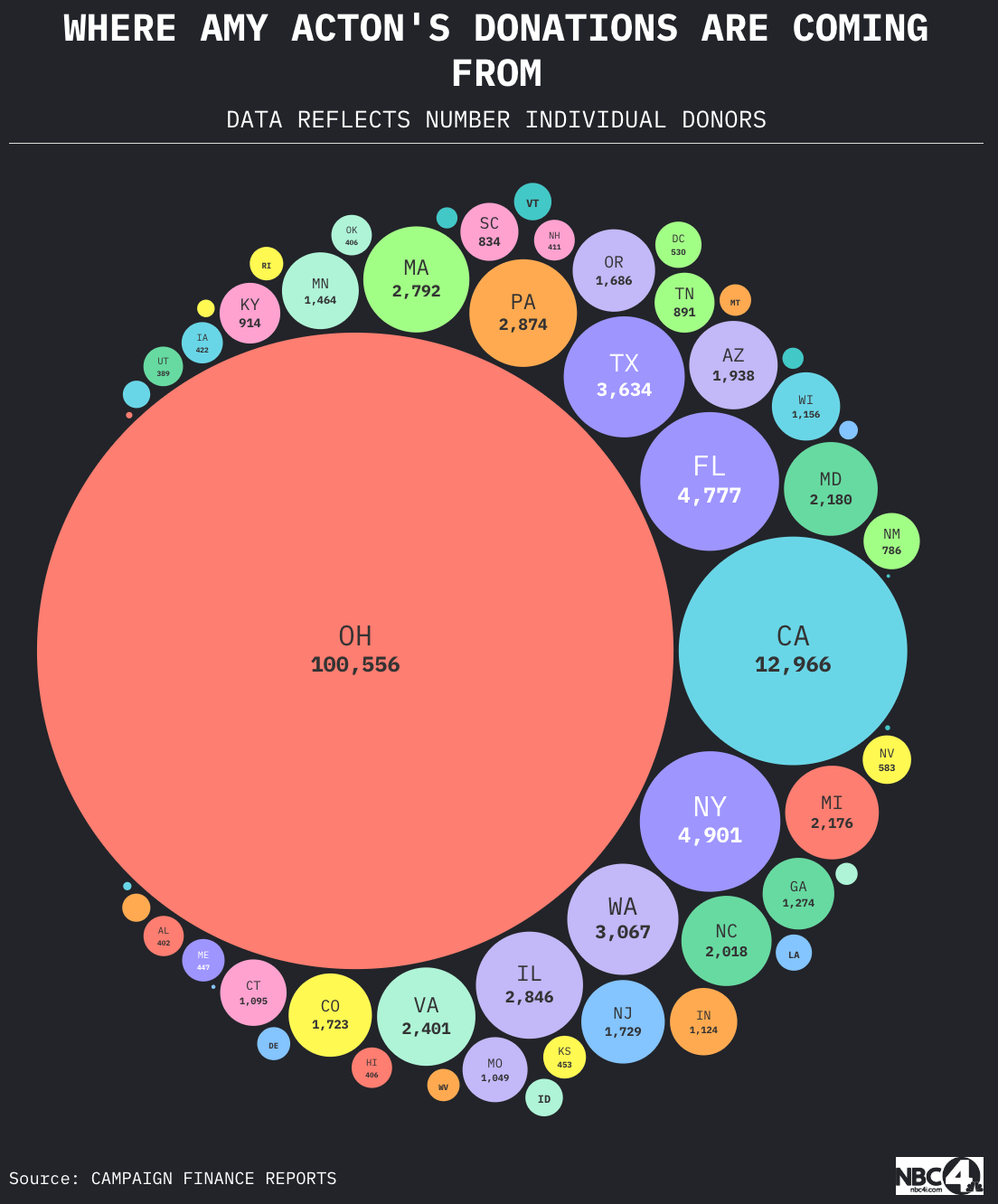
Amy Acton raised another $5.38 million in her 2026 post-primary report. Combined with her earlier reports, Acton has now raised approximately $15.93 million since entering the race, including $10.58 million in 2026.
The biggest thing that stands out is that Acton’s campaign remains heavily rooted in Ohio. About $3.67 million, or 68.3% of the money in her latest report, came from Ohio addresses. Ohio donors also accounted for roughly 51.6% of the individual contribution entries in the report.
Acton’s campaign is also still built around a massive number of small donations. Of the 88,029 contribution entries in the new report, more than 65,000 were $25 or less. Those small contributions added up to roughly $774,000. Another 18,898 contributions fell between $26 and $100, bringing in approximately $1.17 million.
But this is not purely a grassroots campaign. The single largest identifiable block in the new file came from the Ohio Democratic Party, whose Columbus address was attached to four contributions totaling $370,000. That included contributions of $200,000, $100,000, $50,000, and $20,000. So while Acton has a broad small-dollar base, the state party is also putting serious institutional money behind her.
Other large-dollar contributions were heavily concentrated among attorneys, executives, investors, consultants, and business owners, with numerous donors reaching or approaching Ohio’s contribution limit of roughly $16,615. David Pepper, Acton’s running mate, is also listed through his employer information with $12,000 in contributions during the post-primary period.
Where Vivek Ramaswamy’s Money Comes From
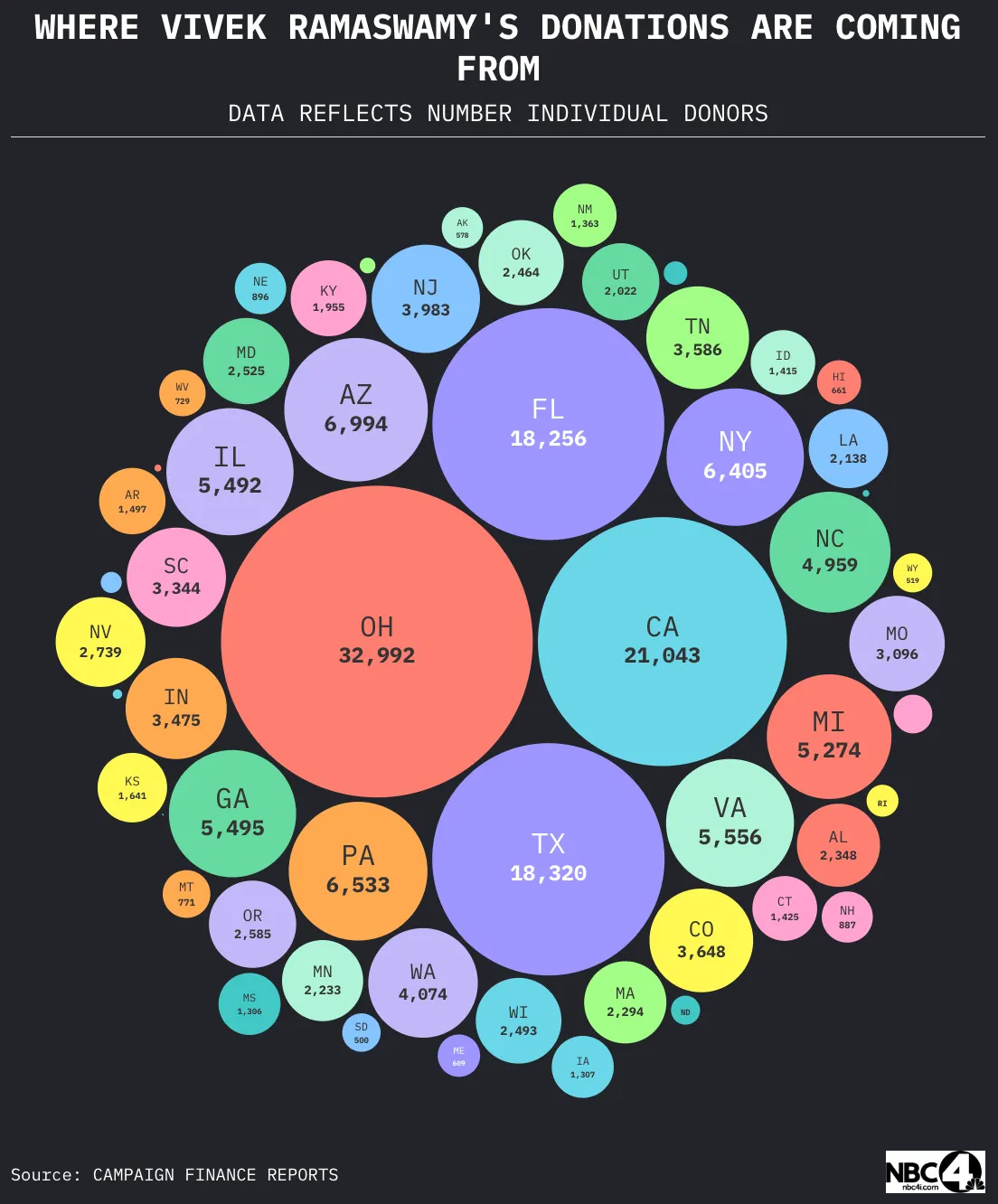
Vivek Ramaswamy raised another $4.
75 million in his post-primary report. His contribution records now total approximately $30.31 million, including $10.30 million in 2026.
That number still does not tell the full story because Ramaswamy previously loaned his campaign at least $25 million of his own money. When his donor contributions and personal financing are combined, his campaign has had access to roughly $55 million, subject to any repayments or additional loans not reflected in these contribution exports.
Ramaswamy’s campaign remains far more national than Acton’s. Ohio addresses produced approximately $2.93 million, or 61.7% of the dollars in his newest report, but Ohioans represented only 16.5% of the contribution entries. That means he is receiving an enormous number of smaller contributions from outside Ohio, even though large Ohio donors still account for much of the money.
His report contained 68,034 contribution entries. Nearly 47,000 were $25 or less, but those donations produced only about $453,000. By contrast, just 453 contributions above $1,000 generated approximately $2.83 million. That is the clearest picture of his fundraising operation: huge national donor volume at the bottom, backed by a relatively small number of very large donors at the top.
The largest identifiable professional groups in the new report included executives and owners connected to Twins Buick, Quasar Energy Group, Brennan Manna & Diamond, Process Technology, AndHealth, Edwards Companies, Oberer Homes, Cardinal Health, Standard Wellness, Ohio CAT, and World Liberty Financial. Numerous donors gave approximately $16,615, effectively maxing out to the campaign.
The Elon Musk and V-PAC Money
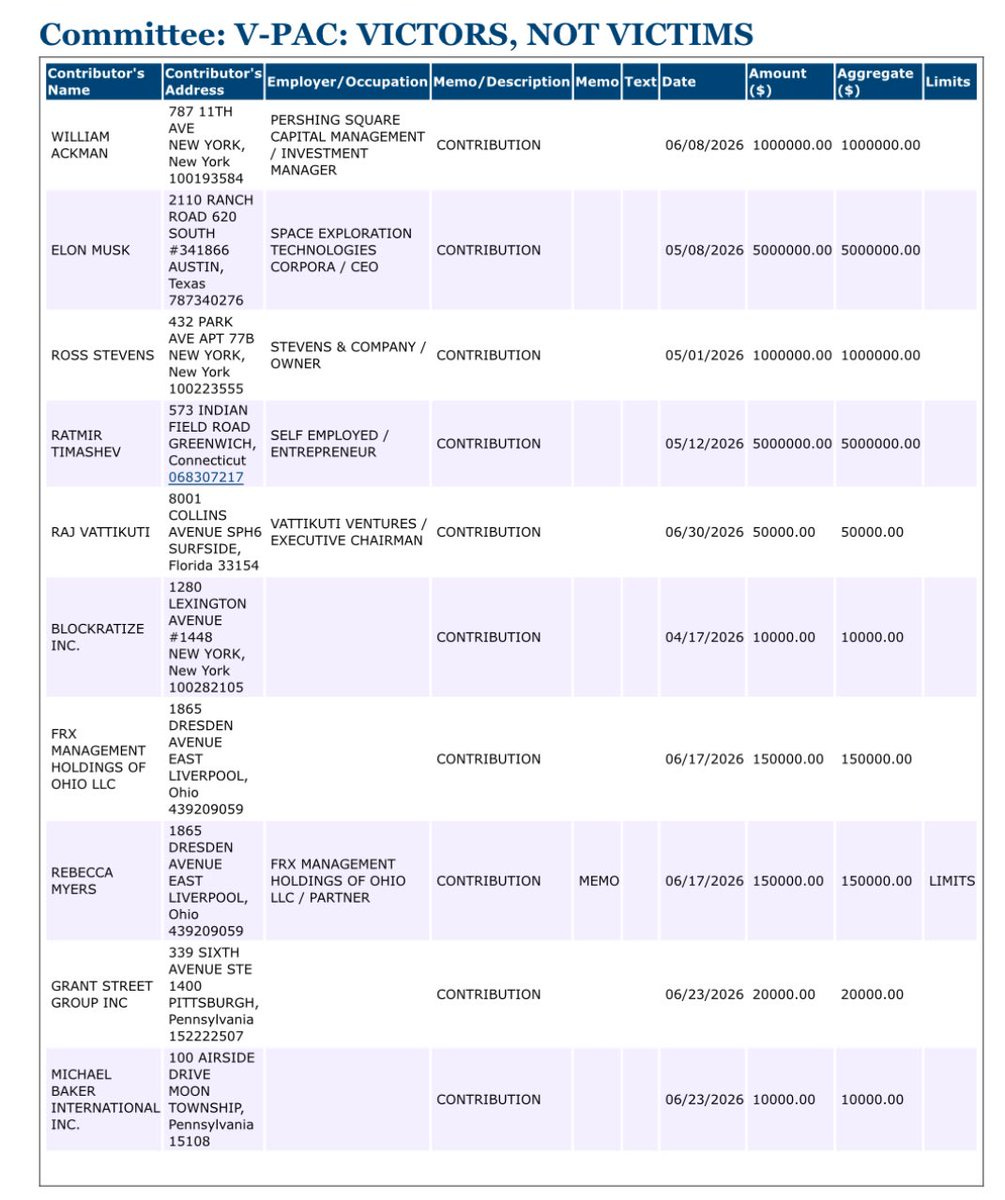
The biggest development is not inside Ramaswamy’s campaign account. It is the outside money being spent on his behalf.
Elon Musk gave $5 million to V-PAC, the super PAC supporting Ramaswamy, according to a filing released July 15. That money did not go directly into Ramaswamy’s campaign account. V-PAC is legally separate and can raise and spend unlimited money independently to help elect him.
And V-PAC is not planning to sit on the money. The group announced a $25 million summer advertising campaign supporting Ramaswamy and attacking Acton. That is outside spending on top of Ramaswamy’s roughly $55 million campaign operation.
So this is no longer simply Amy Acton versus Vivek Ramaswamy. Financially, it is Amy Acton and the Ohio Democratic Party against Ramaswamy’s donor operation, his personal fortune, and a super PAC with a $25 million advertising plan that now includes $5 million from Elon Musk.
Spending
The previous reports showed Ramaswamy spending $21.2 million, compared with Acton’s $5.5 million. Public reporting also found that Ramaswamy’s campaign had placed more than $500,000 on campaign credit cards, including nearly $281,000 on an American Express card over a relatively short period, without the filings fully disclosing the underlying purchases.
On the Issues
Policy count from their websites: Acton 10, Ramaswamy 4.
Amy Acton: Issues From Her Website
Reducing Costs for Ohio Families: Acton says she would lower everyday costs by targeting housing, health care, energy bills, child care, drug prices, property taxes, medical debt, and food costs. Her plan includes free school lunch, an expanded child tax credit, expanding the homestead tax exemption, cracking down on price gouging, fighting wage theft, reducing prescription drug costs, pushing hospital and insurance transparency, stopping surprise medical bills, and creating partnerships to erase medical debt.
Matt’s Take: This reads like a grocery list of things people want to hear, with every cost issue added in to reach some demographic, but not enough of a real actionable plan behind it. I get the strategy, because acknowledging these problems matters and getting lost in policy minutia may not win elections, but anyone paying attention should want to know how she plans to lower all these costs with a Republican supermajority, a conservative-leaning Supreme Court, and without gouging Ohioans in taxes.
Laura’s Take: Acton frames this as help for “775,000 working families,” but the credit she’s building on has a ceiling most working families blow past long before six figures. The federal EITC, and Ohio’s version rides on top of it, phases out completely at $68,675 for a married couple with three or more kids, and far lower than that for smaller families or single filers (IRS). A family earning $75,000, $85,000, or anywhere close to $100,000 gets nothing from it today. Acton’s plan implies she wants to expand it. Fine. How? Does she raise Ohio’s state match percentage, push to change who qualifies at the state level, or does this require Washington to move the federal thresholds first, in which case it’s a promise she can’t keep alone?
