Hey everyone, Matt the Angry Democrat here.
Before we get started. Please think about donating or becoming a subscriber. (Venmo at bottom of article)
Vivek Ramaswamy’s campaign has put out an ad featuring Amy Acton’s estranged mother attacking her own daughter. I think it pushes the boundaries of what we should accept in American politics.
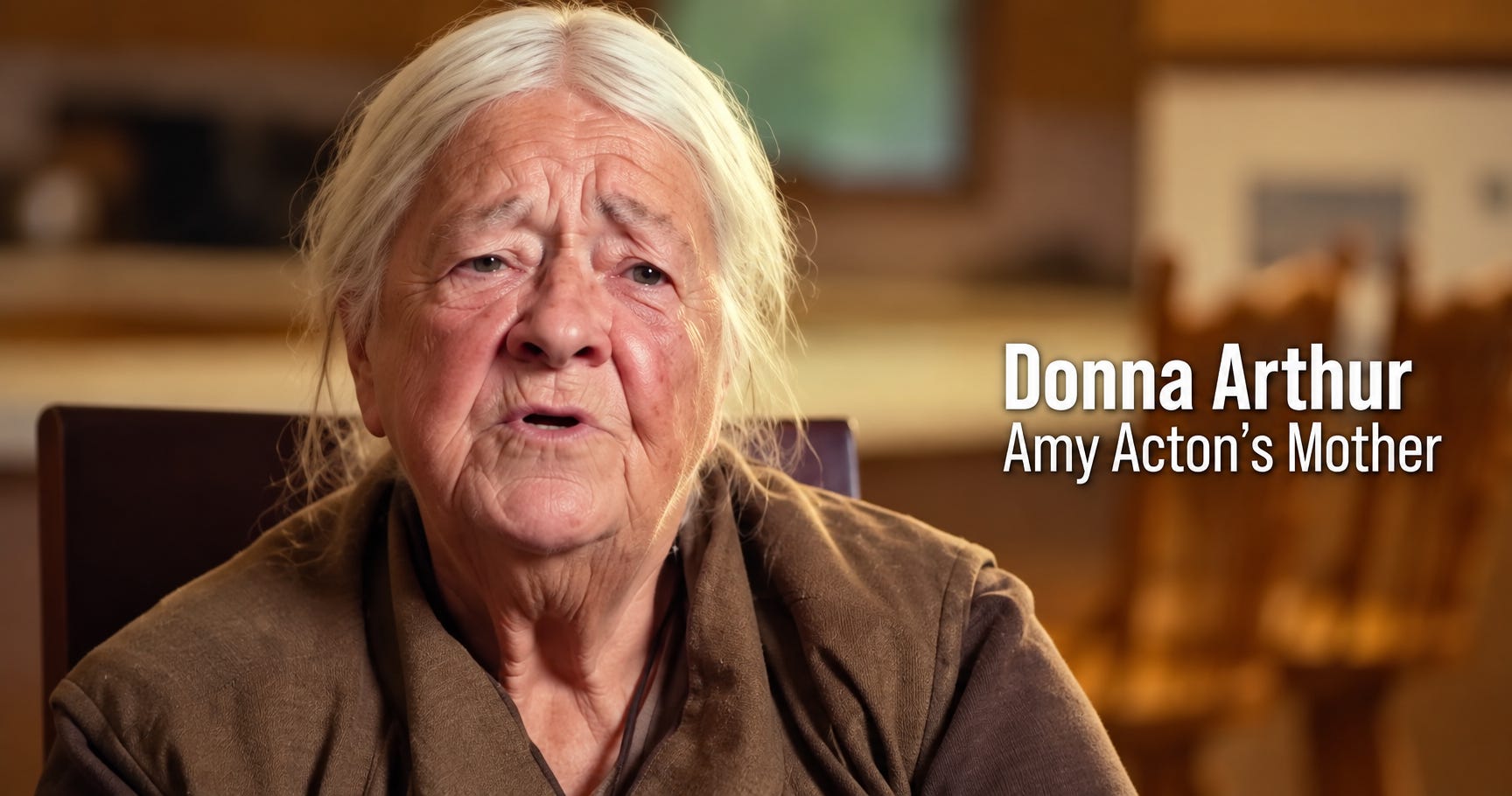
A mother appearing in a campaign ad to tell people not to vote for her child would be shocking enough. But understanding the backstory makes this much worse.
Acton has described a childhood marked by poverty, homelessness, and sexual abuse by her stepfather. Court records document the charges against him and the removal of Acton and her brother from their mother’s custody.
Her brother, Philip Stearns, has publicly supported her account. In his statement condemning the ad, he said their mother stayed married to the man who abused Amy until he died.
This is a family estrangement stretching back decades. Ramaswamy’s campaign decided to turn it into an attack ad.
That crosses a line I would hope Republicans and Democrats alike could recognize. But I do not see this slowing down. I see the boundaries getting pushed further, the behavior getting rewarded, and the next campaign learning that it can go even lower.
At what point are we living in Idiocracy, if we are not already there?
Trump Changed What a Debate Could Be
Shane Gillis has a stand-up bit about Trump’s effect on presidential debates. It is funny because you can recognize exactly what he is talking about.
Other candidates would show up prepared to explain their positions and defend their records. Trump could interrupt, insult somebody’s appearance, give them a nickname, and pull the entire conversation onto his terms.
We watched personal humiliation become part of the performance.
The 2015–2016 campaign brought attacks on opponents’ looks, spouses, and family members. Ted Cruz’s wife became material for a public insult. An unsupported story about Cruz’s father and Lee Harvey Oswald became part of the political conversation.
And Trump kept going.
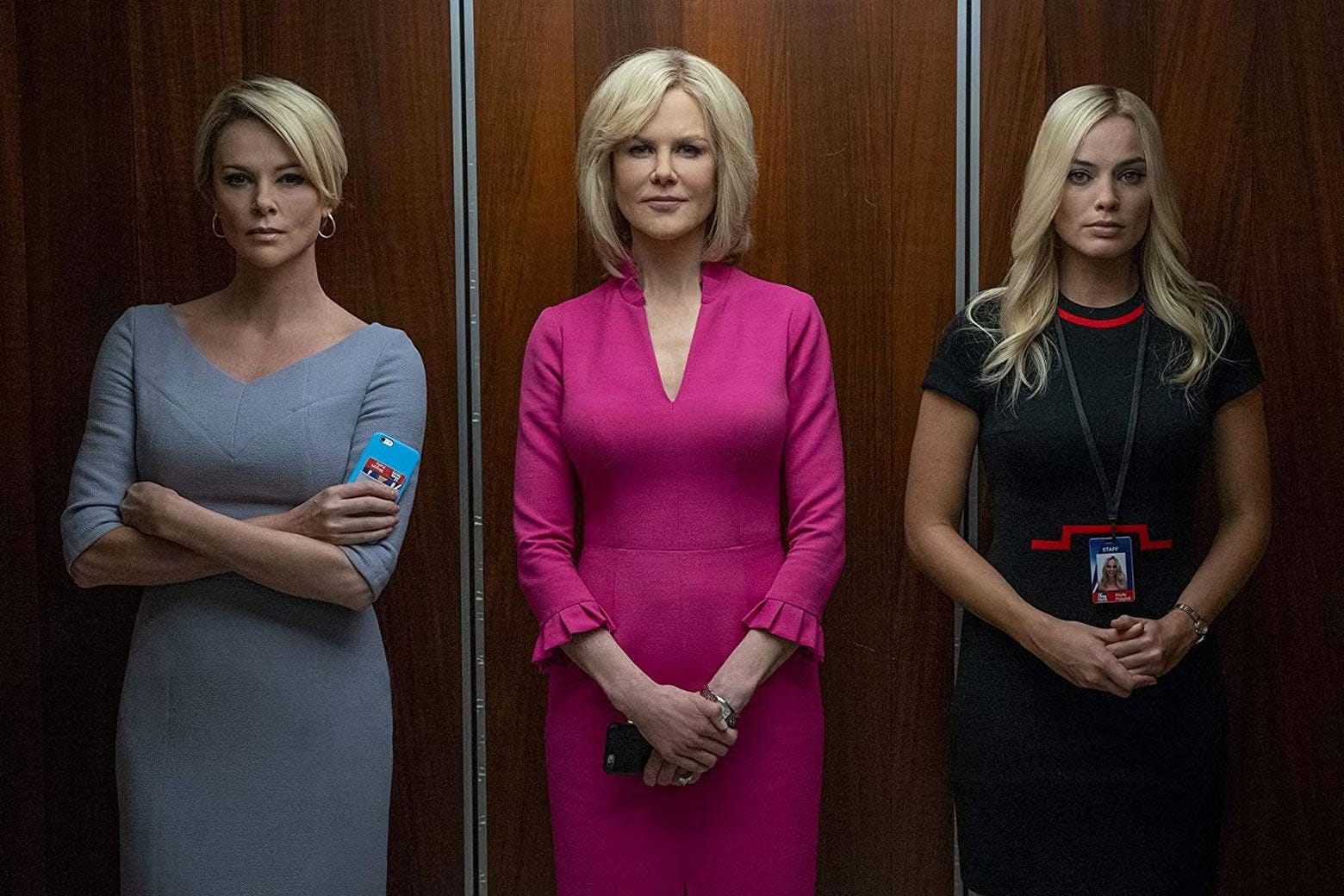
Funny enough, I watched Bombshell yesterday. It brought me back to Megyn Kelly questioning Trump during that first Republican debate about how he talked about women, and the backlash she faced afterward.
That should have been a straightforward accountability question. Instead, the confrontation itself became another spectacle.
What might once have been treated as evidence that a candidate could not conduct himself appropriately became something supporters celebrated. He was fighting. He was unfiltered. He was saying what other people supposedly would not.
The question became less about whether the behavior was acceptable and more about whether the performance worked.
The Smaller Boundaries Shift, Too
This is not only about Trump, and it is not only about the most serious examples.
We have changed expectations about how elected officials talk, dress, conduct themselves, and treat other people. Those changes do not all carry the same moral weight, but they contribute to a broader question about what we expect from public office.
Take John Fetterman’s shorts and hoodie. The Senate briefly relaxed its dress expectations in 2023 before adopting a bipartisan requirement for business attire on the floor.
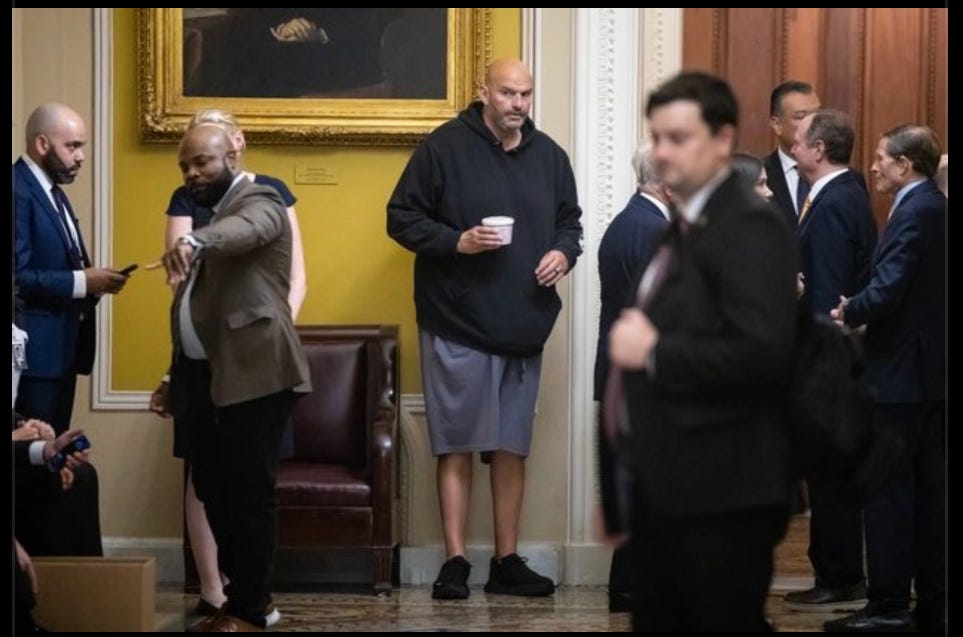
Obviously, wearing shorts is not comparable to exploiting somebody’s childhood abuse. But it is still an argument about institutional standards. Does conventions matter?
Profanity is another example. Personally, I do not have a problem with profanity. You read this newsletter. You know that.
But its role in politics has changed. A public F-bomb can now be presented as proof that a politician is passionate, authentic, or fed up just like you.
A word that might once have produced days of demands for an apology can become the clip somebody shares because they love how “real” the politician sounds.
I am not arguing that every old convention deserves to survive. I am asking whether we are consciously deciding which standards to change, or just accepting whatever gets the biggest reaction.
We Cannot Excuse It Because We Like the Person
Look at Jasmine Crockett’s confrontation with Marjorie Taylor Greene.
Greene insulted Crockett’s appearance. Crockett responded with the “bleach-blonde, bad-built, butch body” line. The exchange went viral, and Crockett announced merchandise built around it to benefit House Democrats.
Yes, Greene started the personal attack. I understand why people enjoyed seeing her get it back.
But if we are talking about the standards of Congress, we should also acknowledge what happened afterward. A congressional hearing produced a personal insult, the insult became entertainment, and the entertainment became a fundraising opportunity.
That is an incentive.
We cannot criticize the degradation of public office only when the person doing it belongs to the other party.
Then there was Greene displaying sexually explicit photographs of Hunter Biden during a congressional hearing. Whatever questions Congress wanted to investigate, putting those images in front of cameras was a choice about public humiliation.
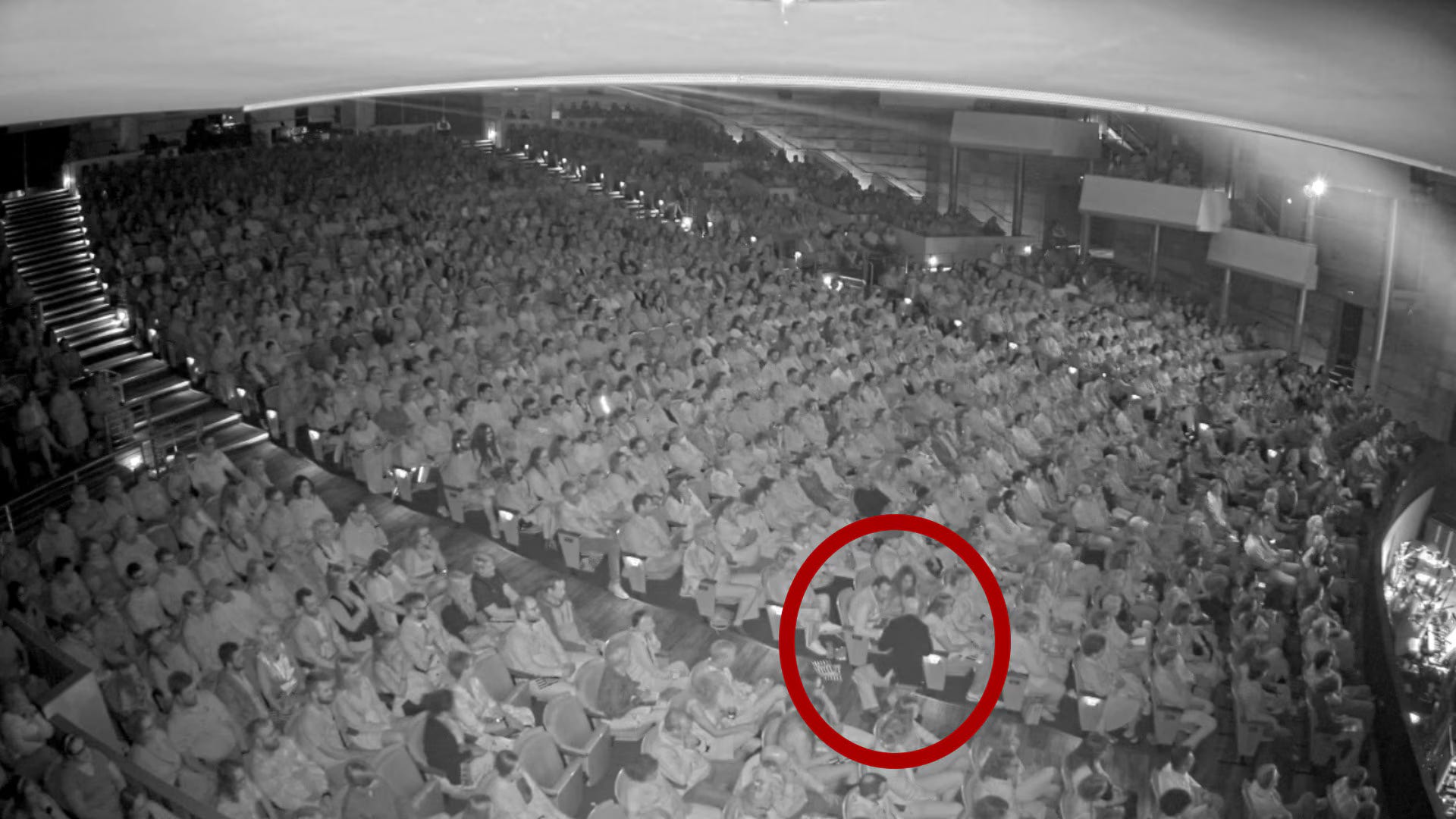
Lauren Boebert was removed from a performance of Beetlejuice after disruptive behavior. Video showed vaping and apparent intimate touching. She later apologized and went on to win election in a different congressional district in 2024.
The incident did not end her career. That does not prove voters liked the conduct. It does show it was not disqualifying.
The standards are becoming difficult to identify because the consequences are so inconsistent.
Even Disgrace Can Become a Business Opportunity
George Santos actually was expelled from Congress.
So accountability has not disappeared completely. But even there, look at what followed.
He turned his notoriety into personalized videos on Cameo. By January 2025, prosecutors said he had earned approximately $400,000 from those appearances.
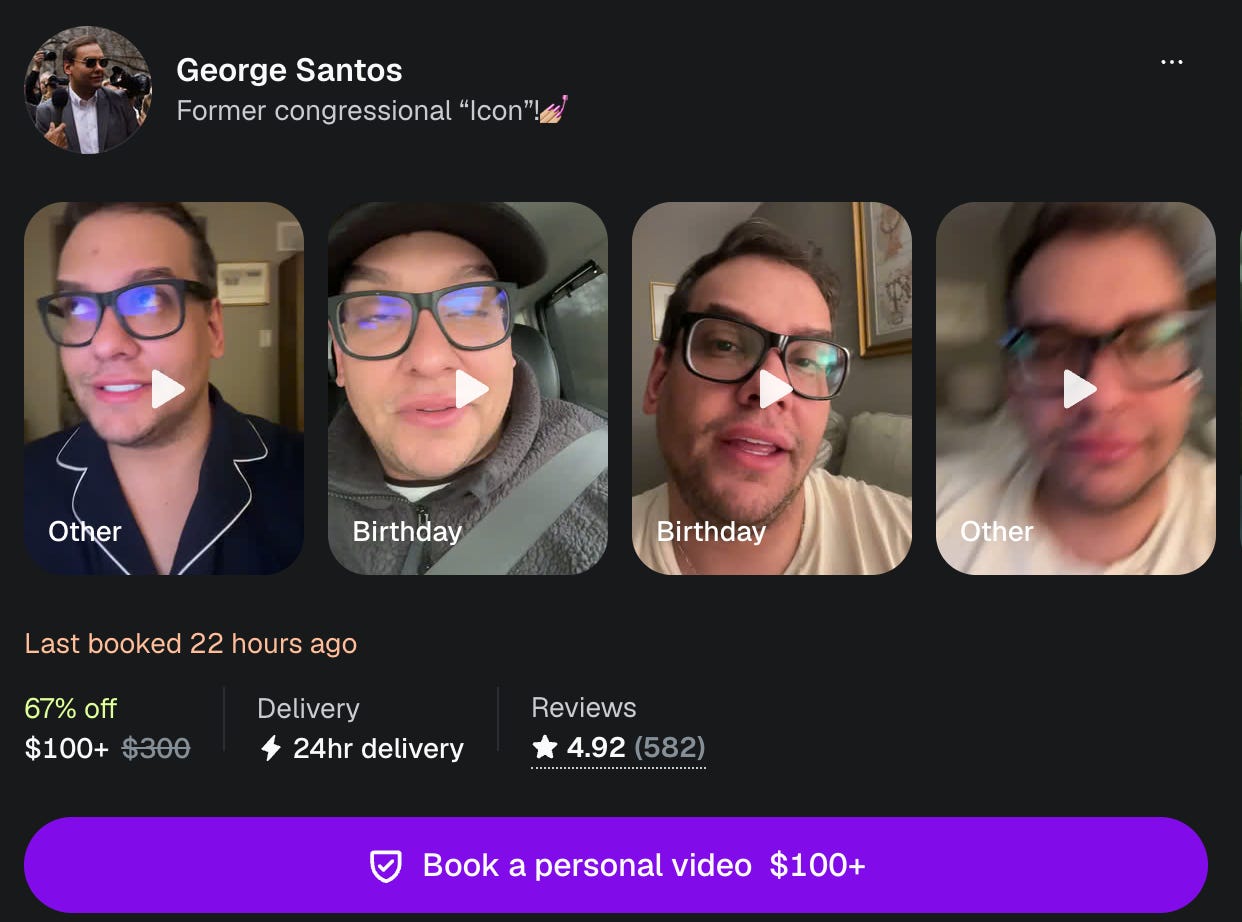
Getting thrown out of Congress helped create an audience willing to pay for a message from him.
That is a different kind of consequence from disappearing from public life in disgrace.
It also gets to something larger. A scandal can cost somebody a position while still increasing their commercial value. Public embarrassment can create a new audience. The person becomes a character, and people pay to keep watching.
Once that happens, how much deterrent does embarrassment really provide?
The Algorithm Does Not Need You to Approve
Social media has changed the incentives around all of this.
The recent movie The Social Reckoning brings attention back to Facebook and the decisions behind what people see. The term I was trying to remember is meaningful social interactions, or MSI.
Facebook announced that shift in 2018. It was about prioritizing interactions between people, including conversations and sharing, rather than simply putting content in front of someone to consume.
It was not literally a system where only shares mattered, and I am not claiming those historical rules describe every platform’s algorithm today.
But the broader problem is easy to recognize: Content can spread because people are furious about it.
You see an awful ad. You share it and say, “Can you believe this?”
Somebody else shares it because they think it is hilarious. Another person posts a response. A news outlet covers the backlash. A commentator makes a video about the news coverage.
Everybody has a different opinion. The ad keeps moving.
Your condemnation can help distribute the same material you want people to reject.
And I am part of that. I am writing about the Acton ad. I am showing examples of the behavior I think has gone too far. Calling something out does not stop me from contributing to its exposure.
A campaign does not need you to agree with its ad for the ad to dominate the conversation.

AI Lets Campaigns Manufacture the Performance
Artificial intelligence adds another level.
We are moving beyond choosing an embarrassing photograph or cutting a real quote in a misleading way. Campaigns can now manufacture a recognizable person appearing to do something that never happened.
Ken Paxton’s campaign used an AI-generated James Talarico in an ad involving a fictional Bible. It mixed actual remarks with missing context and a synthetic presentation.
Think about that. Instead of showing you the candidate’s actual appearance and explaining what is wrong with what he said, a campaign can construct its own version of him.
Through October 11, more than $137 million had reportedly been spent running 220 identified political ads containing AI-generated or AI-enhanced material.
That is spending to distribute those ads, not just the cost of making them.
We have already struggled to maintain standards when dealing with real footage. Now we are adding invented footage, artificial voices, and scenes created specifically to provoke a reaction.
The cost of producing more outrageous material is falling. The incentive to make it spread is still there.
A Song About Somebody’s Family Becomes the Ad
Look at the attack on Troy Jackson in Maine.
A Republican super PAC, Senate Leadership Fund, put out a song targeting his relationship with his partner, who is reportedly his second cousin. The relationship is legal.
The ad turns it into a sexual joke, with the chorus: “If he’ll screw his own family, he’ll screw yours, too.”
Susan Collins’s campaign called for the ad to be taken down. It is important to identify who actually made it rather than attribute it to her campaign.
But somebody still decided this was worth producing and distributing.
It sounds like the kind of thing AI makes easier to churn out. Regardless of the production method, the decision to make somebody’s family relationship into a catchy sexual insult was human.
And people like it. Some people find it funny. They share it.
The audience can reward the very thing we say we wish campaigns would stop doing.
“Authentic” Can Mean Almost Anything Now
Drinking and campaigning offer another example of how perception can change.
Indiana local candidate Jaime West went viral after a televised forum. In a later interview with Piers Morgan, she acknowledged having three beers beforehand.
Some people saw an embarrassing lack of judgment. Others saw somebody speaking plainly and refusing to act like a conventional politician.
I have also heard the claim that attacks portraying Amy Acton as drinking too much were pulled because they made her seem more relatable.
My Tinfoil-Hat Theory About Political Scandal
Here is my own theory, and I am calling it a theory.
I increasingly wonder whether some controversies do less damage than we assume because the publicity itself becomes useful.
We should question the assumption that more exposure to something embarrassing automatically means less support.
Look at Max Miller’s divorce controversy. His campaign has incorporated the family difficulties into its own advertising and accused opponents of exploiting them.
That is an attempt to take negative coverage and turn it into a narrative the campaign can use.
Whether it works is another question. But the strategy recognizes that attention can be reframed.
A voter might reject an allegation, dislike the people making it, or interpret the criticism as proof that their candidate is being targeted. Someone who was already committed may simply stay committed.
So the controversy spreads and name recognition goes through the roof!
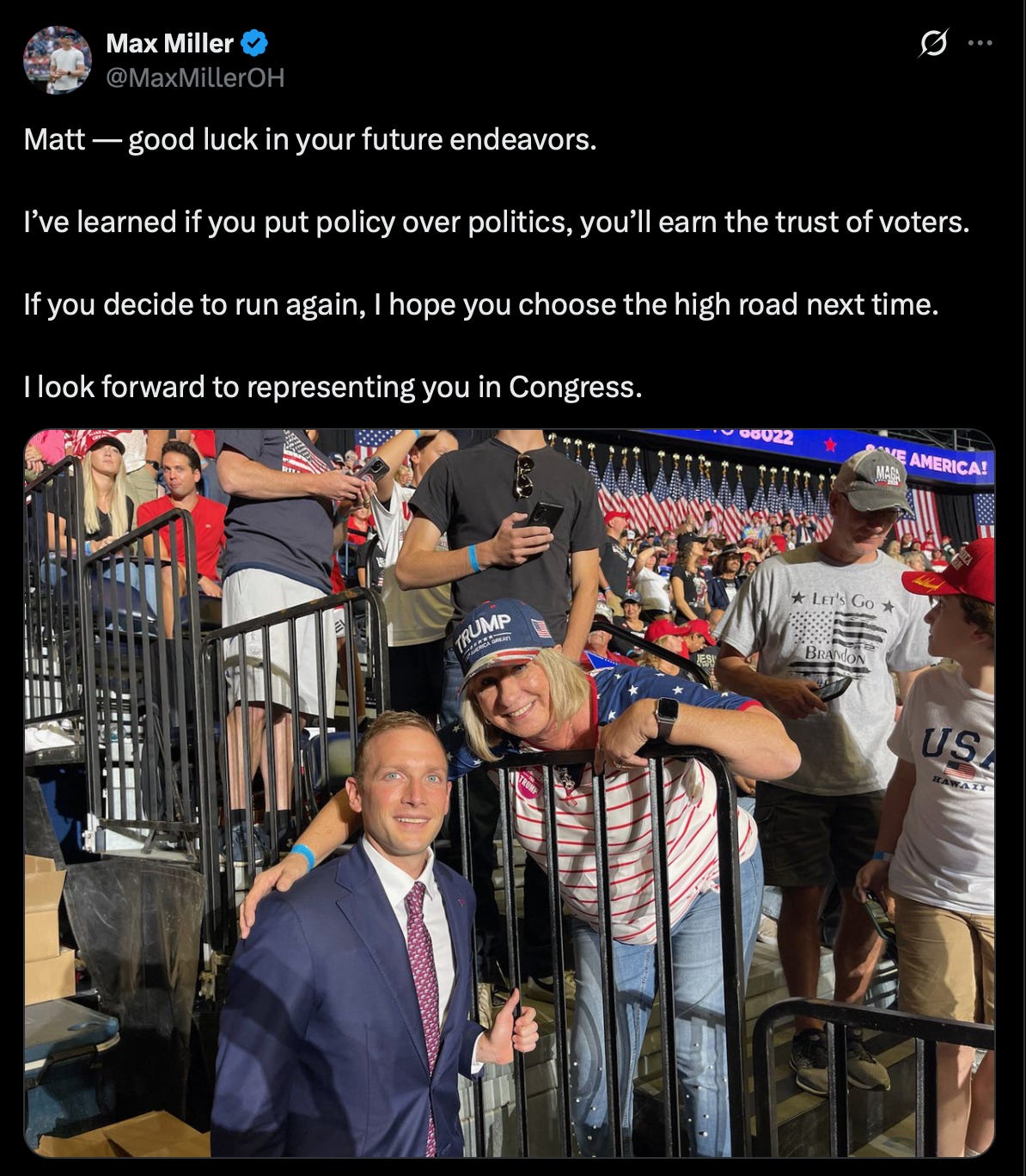
I have experienced a version of this myself. After our election, Max Miller posted a photograph with my mother, who was at a Trump rally.
My mother is entitled to her political opinions. That is not the issue. What is shown was his decision to use her photograph to punctuate a public dig at me after he had already won. Would this have be acceptable 30 years ago?
And Now We Are Using Childhood Trauma
Which brings me back to Amy Acton.
Her mother’s appearance in this ad is not a policy disagreement. It is an attempt to use a deeply painful family history to undermine her credibility.
The statement from Acton’s brother describes what happened to them and says their mother remained married to the man who abused Amy.
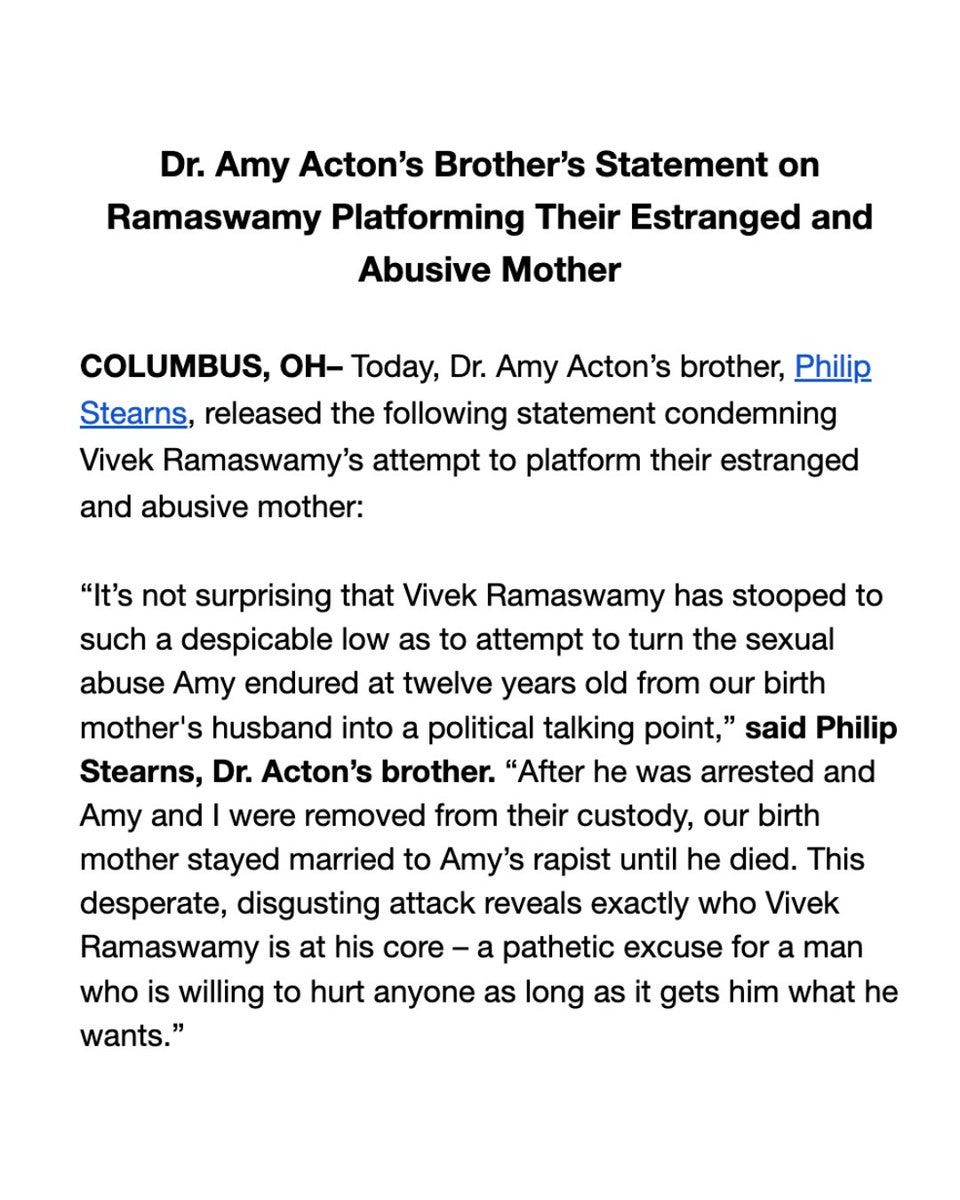
Knowing that history changes how you understand the ad. This is not simply a relative saying, “I disagree with her tax plan.”
And after the backlash, Ramaswamy’s campaign acknowledged producing it and announced plans to spend $4 million promoting it.
That is what makes this moment so disturbing to me. The criticism has not caused the campaign to step back. It is investing in getting the message in front of more people.
Maybe it believes the ad will persuade voters. Maybe the controversy itself provides useful exposure. We will not know the electoral result until people vote.
But I do not need an election result to decide that using this history in this way crosses a line.
If winning requires doing that, what exactly are you asking people to reward?
When Is Enough Enough?
There are big and small examples here. Clothing, profanity, personal insults, sexual humiliation, synthetic depictions, and childhood abuse are different things.
But across them, I keep coming back to the same concern: We are losing the ability, or the willingness, to say that public office requires standards that apply even when breaking them benefits our side.
An insult becomes merchandise. A scandal becomes a paid appearance. A cruel ad becomes national news.
The next campaign sees the attention and decides how much further it can go.
I do not see that slowing down on its own. I worry it will accelerate as the tools get cheaper and the rewards for provoking people get larger.
So where is the line? Have we already crossed it? What would someone have to do for their own party, donors, supporters, or voters to say, “Enough”?
Do we still expect more from our representatives, campaigns, and news media than whatever produces the most clicks and reshares?
I want to hear what you think. Does this get worse, or can we stop rewarding it?
Stay Angry.
Please think about donating or becoming a subscriber.