

Can we get back to normal, to baseline?
Honestly, I don’t think we can. I think politics has fundamentally changed. There is no such thing as normalcy. The politics of the old, of the stately president. Where if you didn’t wear a tie or rolled up your sleeves, while playing basketball in dress shoes and took off your jacket, that was considered the cool thing to do. Or, sipping a beer with constituents, knowing that it was only for a photo op, was considered edgy. And, the occasional profanity of “fight like hell” was about as far as you could go.
Nah, we’ve blown way past that.
Personally, I’ve always thought that listening to politicians or corporate people speak was nauseating. It was inauthentic and downright offensive by how much jargony, corporate, political speak they used that was just meaningless trash, knowing full well that if you turn off the camera and walk away and everybody, including the politician and all the constituents, speak, act, and think completely differently. So part of me is sitting here going, at least people are saying what they feel.
But over the weekend, and really the past couple weeks, I’ve been thinking about how we react to the world, how we react to politics, social media, and everything around it. And I think that, honestly, we have a dopamine problem.
Now look, if you are a neuroscientist or somebody with a degree in psychology, don’t come at me because I get the science wrong. This is just me thinking. But you can come correct me, we can learn together, or you can confirm that I’m right. Which I would like very much.
Here’s my thought.
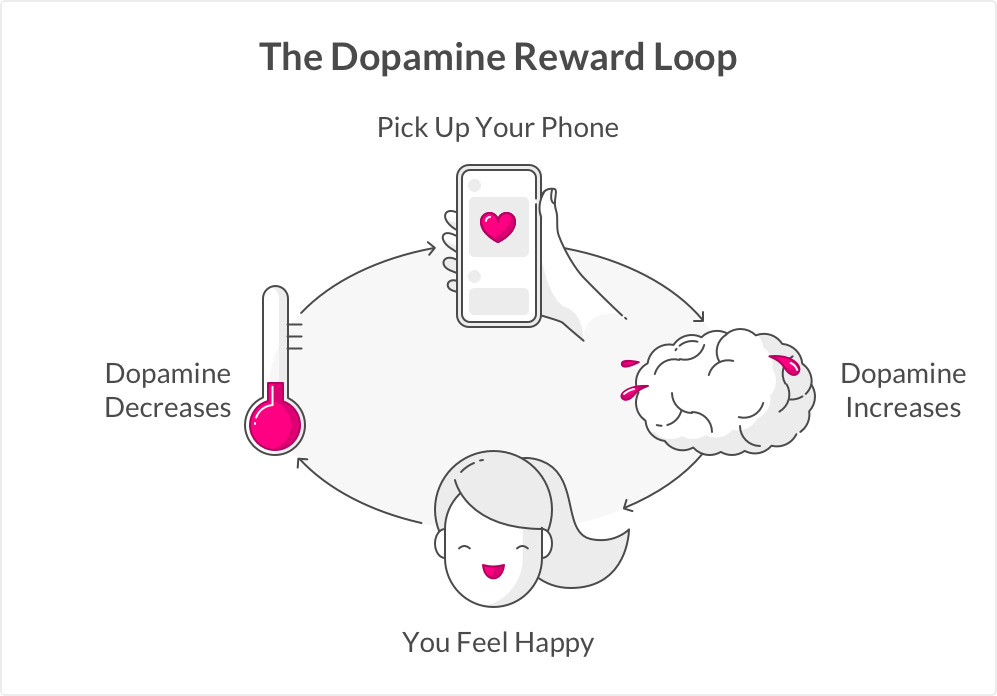
We have screens everywhere. We have trained ourselves over the past decade and it has accelerated especially over the past 5 to 6 years, particularly post-COVID, to act like a hamster to a water bottle… getting little hits of dopamine any chance we can get.
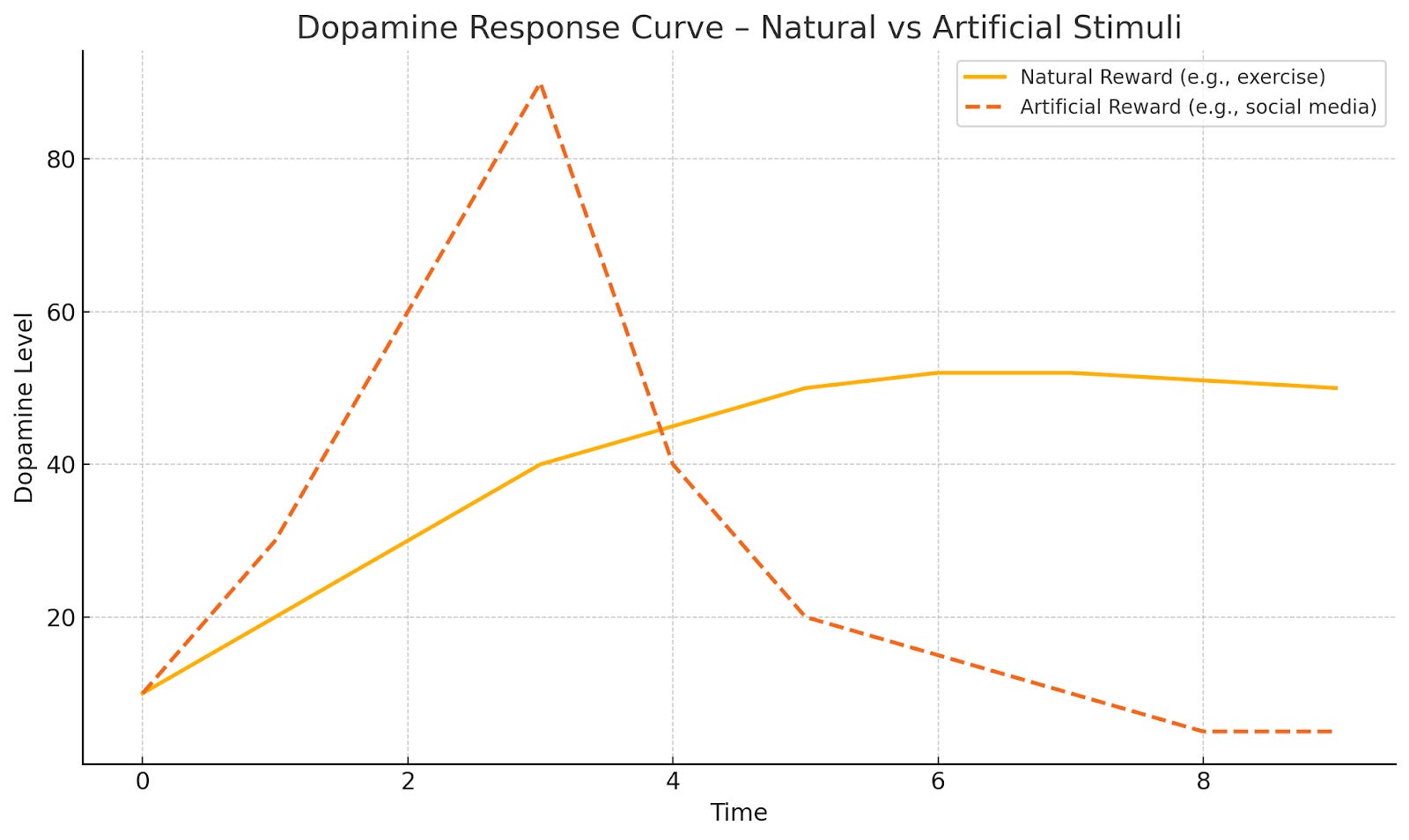
The way dopamine works in the brain, especially what people refer to as reward-driven dopamine responses, is that you get a small spike, and then over time, you return to baseline. Historically, that came from real-world experiences like friends and family, a treat, exercise, a good book, building something, or personal satisfaction.
But now we have it in the palm of our hands. Opening and closing apps all day to check to see if anybody messaged you. Feeling your phone buzz, pulling down to refresh your email knowing damn well that 90 percent of it is junk! But, you still enjoy getting it because dopamine.
So my theory is pretty simple, and it ties all of this together.
Social activity used to be the thing that released dopamine. Now it almost feels like something we have to relearn. You go out with friends. You go to a bar. You go to a park! And, even though you want to be there, even though you enjoy it, it is harder to stay engaged, harder to stay present, harder to feel satisfied. I am not saying you personally. You might be sitting there thinking, that’s not me, I love my friends. Fine.
But I am talking in aggregate.
However, we are getting thousands of micro-hits of stimulation throughout the day. So when we go to do something that used to feel good, it doesn’t hit the same. At the same time, larger spikes like sugar or alcohol can feel worse than they used to, not better, because you are already depleted.
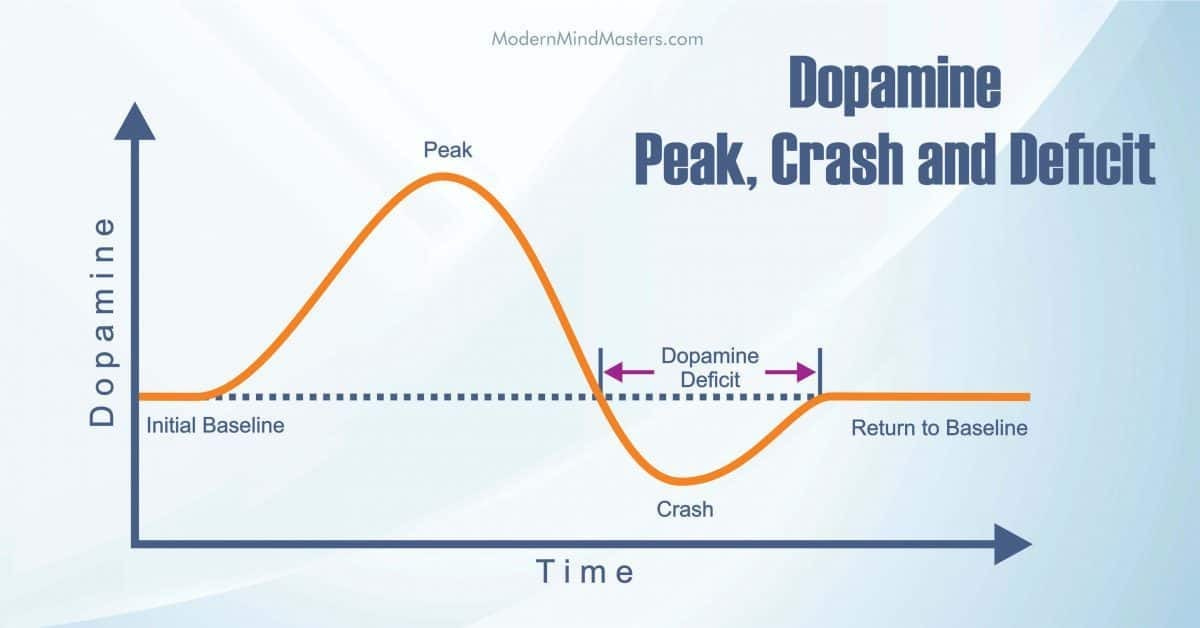
What I mean is this. If you are constantly hitting dopamine throughout the day, you spike, drop below baseline, and then recover. But the more often you do that, the deeper that drop can feel. So when you try to get a bigger hit later, it does not feel as good. And, it can actually increase stress and anxiety instead of satisfaction.
That brings us to politics.
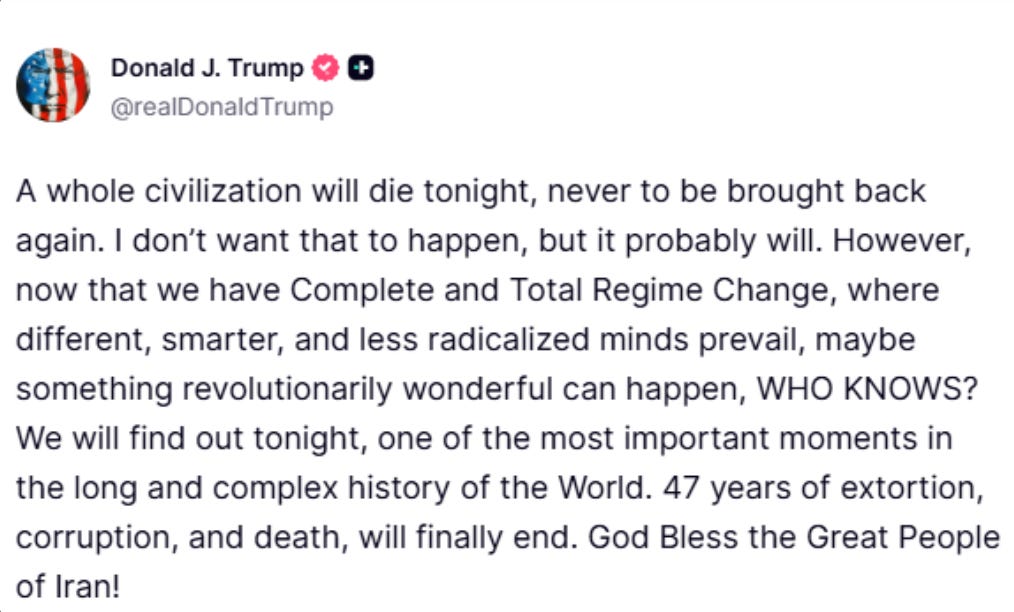
Trump knows exactly what he is doing. This is not random. This is not accidental. These are ways of communicating that understand we are desensitized. That we are overloaded. That we need stronger and stronger stimuli just to feel something.
So what happens is that you get statements that are more extreme, more aggressive, more outrageous, not because that is necessarily the natural endpoint of politics, but because that is what cuts through. We have been so inundated with information, outrage, content, truth, lies, AI-generated noise, everything, that if you want attention! Now, you have to go beyond the threshold. You have to shock! You have to provoke! You have to hit people with something strong enough to create a reaction!
And it works!
We react. We get outraged. We talk about it. We share it. We argue about it. Then we refresh, scroll, and move on. The goal is achieved and attention is captured. Then it all disappears. Nobody remembers how it felt six months later, and not because it wasn’t important. But because we have gone through thousands of those cycles since then. The emotional impact gets washed out.
That is the shift.
The moral compass that used to be tied to strong emotional reactions gets diluted because nothing feels that shocking anymore. It just becomes another thing, another moment, another post.
That is why I do not think politics is going back. Emily Jashinsky
We are not going back to the candidate who rolls up their sleeves, drinks a beer, and everyone says, “wow,” how relatable. Now it is the most outrageous, the most shocking, and the most offensive thing that actually breaks through. Because, that is what gives people enough of a spike to feel something, to feel that something happened, that something mattered.
And I think we are now in a different world, a world where AI is going to amplify this even further, where communication can be generated, exaggerated, and distributed at scale in ways we have never seen before, where shock and attention become the currency.
And in that world, normal life starts to feel dull by comparison.
Even when you are out with friends. Even when you are doing something you used to enjoy, it just feels a little flatter, a little more gray.
So what is the solution?
Honestly, it is obvious. But, it is also the hardest thing to do.
Get off the phone!
Step away from it. Break the cycle.
I was listening to Ari Shaffir talk about going off social media and how for a couple of weeks he felt completely off, withdrawal, disconnected, out of rhythm. That is a red flag!
This is not just an individual problem anymore. This is collective.
If the entire system is built on feeding us constant stimulation, then stepping away cannot just be one person deciding to log off for a weekend. It has to be a broader shift in how we consume information, how we engage with each other, and how we value attention. It means fewer refreshes, fewer outrage cycles, fewer moments where we need something louder, crazier, or more extreme just to feel something.
Because right now, the incentive structure is clear. The more depleted we are, the more extreme things have to become to break through. That is not just changing politics.
It is changing us.
So maybe the real question is not whether politics will go back to normal. It will not. The better question is… Can we reset ourselves enough to stop rewarding the behavior that got us here in the first place?
Can we actually step back, collectively, and give our brains time to return to baseline?
Because if we cannot, then the cycle does not slow down. It accelerates. And the next version of this, whether it is AI, politics, or something else entirely, is going to have to be even louder, even more extreme, just to get our attention.
And at that point, we are not reacting to the world anymore.
We are just chasing the next hit and who will give it to us.
I believe this to be true as well, the dopamine and screen addiction. I’ve tried to cut back on anything like gaming, doomscrolling, etc. and do more things like housework, yard work, gardening, etc. that get me away from my device and get me ‘touching grass’ in a literal or figurative way. The societal damage smartphones have done to humanity I’ve witnessed over the last 20 years. Families have stopped interacting together, people don’t talk to each other on the train, or out at a restaurant they’re checking their phones. I just can’t be that kind of human being anymore, and the only way to change is to cut way back. That’s my post of the day - cheers!
Hmmm. Are you kidding? I was on my way to sort laundry and I thought “Oh, what’s up?” Read your post and now? Contributor post to the described problem? Irony.