


The following is an op-ed from Dani Pajak, who has written for The Angry Ohioans before.
I wanted to highlight this piece because what Dani says below reflects something I have felt for a long time. Honestly, it is one of the main reasons I started The Angry Democrats, why I reached out to Laura, and why people like Dani and others have found this platform as a place to voice their dissatisfaction with the Democratic Party.
We all want to make this nation better. We deeply love the United States. We believe the Democratic Party is still the last real avenue of political power that can hopefully protect democracy and create change for the betterment of everyone in this country.
But some of the party’s shortcomings have become so glaringly anti-democratic, anti-transparency, and opposed to the very principles we should hold dear that we cannot simply stand by and let them happen.
Otherwise, what are we doing?
That is not democracy.
To have a strong democracy, we have to practice democracy. That means debate, speech, open conversation, finding our voices, and finding others who are willing to speak with us.
Dani’s opinions below echo how I felt after 2024.
I remember getting on the phone with a close colleague and saying Joe Biden had to drop out of the race. I was told to shut up and accept what the Democratic Party gave me.
I later put out a statement calling for Biden to step aside, in lockstep with Sherrod Brown when he made the same request.
Then Kamala Harris was anointed without a primary. I protested that too. I said this was not what we should be standing for, and I was shut down again.
After Kamala was chosen, I never supported her publicly. I did not put up a yard sign. I did not talk about her on the campaign trail.
To me, the Democratic Party had done one of the most undemocratic things imaginable. It simply picked someone, told us to shut up, fall in line, and vote for her.
So I am glad to see that Dani and others agree with me on something fundamental.
To uphold democracy, we have to practice democracy. We have to model it. We have to defend open speech and debate inside our own party.
Thank you, Dani, for being brave enough to speak out.
- Matt
Guest Writer: Dani Pajak is a local Angry Ohioan and guest contributor. In this piece, Dani argues that the Democratic Party has replaced open debate with candidate anointment, trigger words, and “what-about-isms,” leaving independent-minded voters feeling dismissed, unheard, and taken for granted.
American politics used to be a contest of ideas, with debate at the center of the process.
Today, especially within the Democratic Party, debate feels like from another era.
What has replaced it is a defensive reflex built on trigger words, accusations, and a kind of rhetorical sleight of hand I call “what‑about‑isms.”
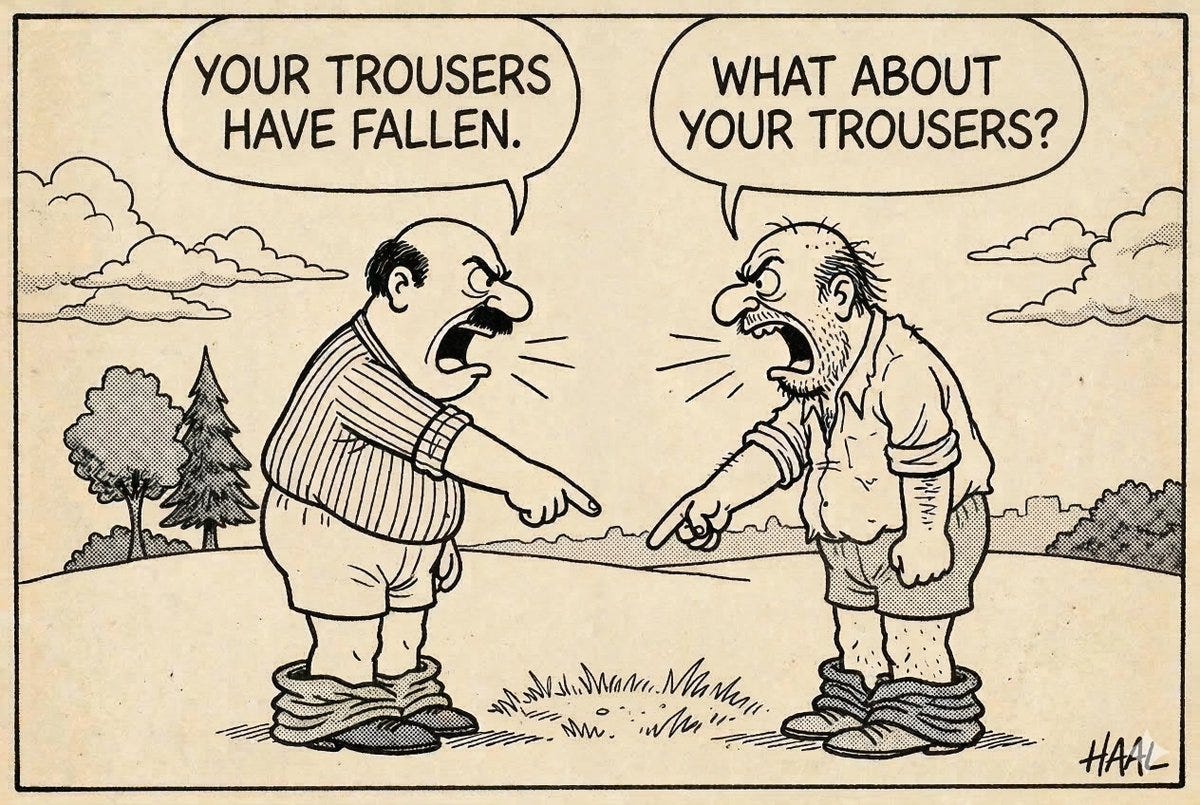
Instead of addressing criticism, the response is often to point at the opposing party and say, “Well, what about them?” It’s a tactic meant to shut down conversation rather than open it. I’ve watched this shift happen over years, but the last presidential election made it impossible to ignore.
I wasn’t on board with Kamala Harris, and I felt my voice was taken away when the primary offered no real choice. I was open‑minded to independent candidates like Bobby Kennedy Jr., Jill Stein, and others.
But the moment I told someone I didn’t support Harris, the assumption was immediate: I must be MAGA. I must be a Trump lover. The nuance of being an independent voter, someone who evaluates candidates individually, was erased.
When I asked people why I should vote for Harris, the answer was always the same: “Because she’s not Trump.” That was the entire pitch. Not her policies, not her leadership, not her vision. Just her opposition to one man. And nothing seemed to anger staunch Democrats more than hearing that I was open to someone other than Trump and Kamala. The only thing both parties seemed to hate more was me considering the Green Party or Libertarians.
This wasn’t new for me. Back when I campaigned for Bernie Sanders, I watched him get boxed out for Hillary Clinton. I was infuriated. And when Bernie jumped on the bandwagon afterward, I felt betrayed. I lost respect for him because it felt like he abandoned the movement he inspired. And because of all that, of course Trump won.
To call Hillary Clinton a liberal is laughable. When she labeled anyone who didn’t support her as sexist, racist, or a “basket of deplorables,” she alienated millions of voters who weren’t any of those things.
Some were, most weren’t. But her campaign acted like disagreement itself was bigotry.
Kamala Harris followed the same pattern. She offered nothing meaningful, and when she lost, Democrats seemed shocked that celebrity endorsements weren’t enough.
When Joe Biden went on The Breakfast Club and said, “If you don’t vote for me, you’re not Black,” it was another example of how disconnected Democratic leadership had become from real people. I’ve watched debates where the Democratic candidate’s entire platform was anti‑Trump. That’s not a platform.
The “what‑about‑isms” don’t work. And somehow the Democratic Party doesn’t seem to understand that.
The Meaning of Debate: What We Lost
A debate is not supposed to be a performance. It’s not a collection of sound bites crafted by consultants. A debate is a public test of ideas. It’s a moment where a politician must stand alone, without the shield of their party, and defend their beliefs with clarity, logic, and conviction. A real debate is a form of respect, respect for the audience, respect for the opponent, and respect for the democratic process.
Once upon a time, debates were meaningful. Watching John F. Kennedy and Richard Nixon was like watching two visions of America collide. They disagreed deeply, but they shared a fundamental belief, that the American people deserved to hear their reasoning. They spoke in full thoughts, not fragments. They explained, they justified, they persuaded. They didn’t rely on trigger words or accusations. They didn’t assume that calling the other side names would be enough to win.
Debate used to be a way for voters to understand how politicians thought, not just what they thought. It revealed character. It revealed priorities. It revealed whether someone could handle pressure, complexity, and scrutiny.
Today, debates feel more like staged media events where candidates recite pre‑approved lines designed to avoid risk. The art of thinking out loud, the courage to engage honestly, has been replaced by fear of saying anything that might offend the party’s base.
When debate dies, democracy weakens.
Because democracy depends on disagreement. It depends on the clash of ideas. It depends on leaders who can articulate more than insults.
The Party of Anointment

The Democratic Party has developed a habit of anointing candidates instead of letting voters choose them. Kamala Harris was hoisted up the same way Hillary Clinton was. The same way others have been. The voice of the people gets replaced by the voice of party insiders who decide who the nominee “should” be. And then they expect everyone to fall in line.
This isn’t just a federal problem. It happens right here in Euclid, where I live.
Local politics mirror national politics, candidates are selected behind closed doors, and the public is expected to accept it.
Debate is minimized. Dissent is treated as disloyalty.
And anyone who questions the chosen candidate is labeled with whatever trigger word is convenient.
The result is predictable, people feel unheard. People feel dismissed. People feel like their vote is being taken for granted. And when voters feel ignored long enough, they stop supporting the party that ignores them.
The Cost of Losing Debate
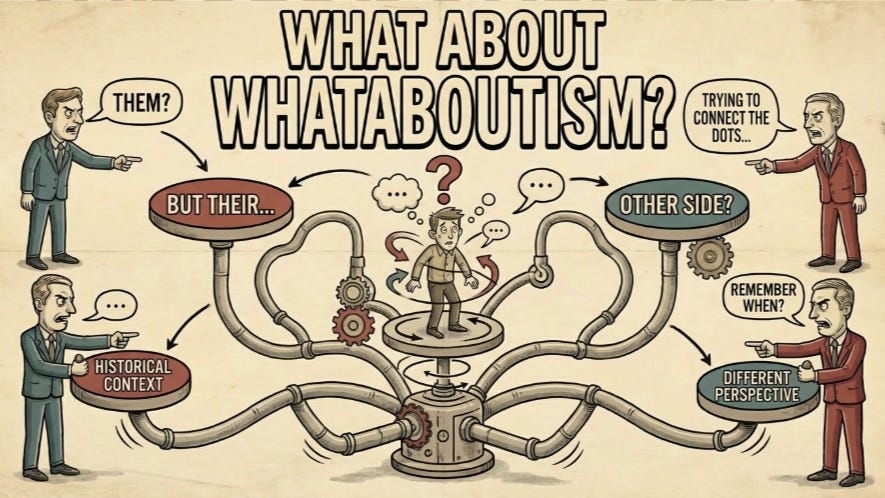
When a party stops debating, it stops evolving. It stops listening. It stops learning. It becomes defensive instead of visionary. It becomes reactive instead of proactive. It becomes a party defined by what it hates rather than what it hopes for.
Trigger words like “fascist,” “racist,” “sexist,” and “Nazi” are used so casually now that they’ve lost meaning.
They’re used as shields, not arguments. They’re used to silence, not persuade.
And when every criticism is met with a “what‑about‑ism,” nothing gets solved. Accountability disappears.
Debate forces clarity. Debate forces honesty. Debate forces growth.
Without it, politics becomes a performance instead of a conversation.
A Final Thought
I use the word “coup” because that’s what it felt like, a takeover of the Democratic Party by people who no longer trust voters to choose.
I didn’t vote for Kamala Harris. I didn’t support her. And I won’t pretend that being told “vote for her because she’s not Trump” was enough.
Debate matters. Ideas matter. Choice matters.
And until the Democratic Party remembers that, they will continue to lose the voters who once believed in them.
Guest Writer: This article was contributed by a local Angry Patriot.
The Angry Democrat welcomes submissions from local writers and community members who want to contribute thoughtful commentary on the Democratic Party, our democracy, public policy, and issues affecting Northeast Ohio and beyond.
Interested in writing for us? Contact us at admin@theangrydem.com.