

It seems like every piece of political news today is doom and gloom. Criticism. Everything is negative. Everything is about what is broken, what is corrupt, what is failing. America bad. Always.
And to be honest, I’m part of that too. The Angry Democrat definitely leans into criticism. We talk about problems. We talk about what needs to be fixed. Everyone has opinions about what’s wrong.
But the other day I was at a meet and greet with Bryan Hambley, and he started the event with a simple question that has been sticking with me for days.
A question we don’t ask enough.
Not because we want to ignore the problems. Not because we don’t see what needs fixing. But because, frankly, we have a pretty damn good country and pretty damn good lives in many ways.
The question was simple:
What is something you are proud of?
Something the United States has done.
Something your hometown has done.
It sounds easy. But it wasn’t.
People struggled with it. Some would think of something they were proud of and then immediately follow it with why it’s bad now, why it’s being eroded, or why some politician is ruining it. We’re so conditioned to talk about decline that we almost feel uncomfortable acknowledging success.
At the meet and greet people mentioned public education, national parks, NASA, and other things.
When I answered, I said the Great Lakes.
But the thing I’m actually most proud of about the United States is something else entirely.
And it took living abroad for me to fully understand it.
To see the full interview with Bryan Hambley please click the link below.

Seeing America From the Outside
Some of you know that I lived in China from around 2005 until 2017. After that I spent about two years in Taiwan. I’ve also traveled to many other countries.
When you live abroad that long, you don’t just visit. You navigate their systems.
You deal with landlords.
You sign contracts.
You open bank accounts.
You get a phone plan.
You start businesses.
You pay taxes.
You deal with bureaucracies and corruption.
You experience daily life inside another country’s system.
And doing that changes how you see America.
It allows you to take experiences from other places and compare them to the United States. It allows you to crowdsource ideas and solutions from different systems.
But there is one thing I have never seen done better anywhere else in the world.
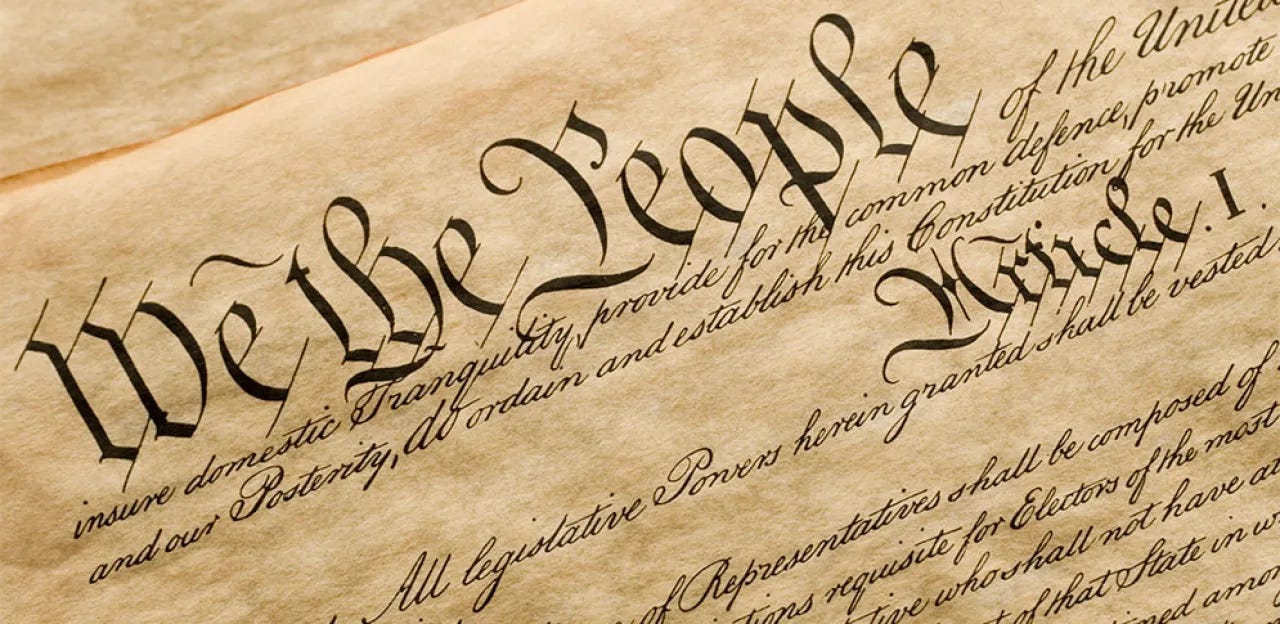
The universality of American constitutional rights and the ability of people from anywhere to become part of Americanism.
The United States is a beacon of inclusion.
Not perfect inclusion. But inclusion that is universal for all.
Equal Rights Under the Constitution
Immigrants come to America from all over the world and become citizens.
And once they are here, they are protected under the same Constitution as everyone else.
They can open businesses.
They can buy property.
They can work.
They can criticize the government.
They can practice religion.
They can defend themselves.
They can vote once they become citizens.
It doesn’t matter whether you speak with a New York accent or an Indian accent.
The rights are the same.
That is extraordinary.
You can walk into a strip mall in America and see a pho shop, a taco stand, a pizzeria, and a shawarma shop, all next to each other. Four different cultures. Four different accents. Four different origin stories.
All protected under the same law.
That level of everyday integration is something people who have never lived abroad often take for granted.
This Does Not Happen Everywhere
In many countries, being a foreigner means you will never truly belong.
You can live there for decades and still never be considered one of them.
You may not be able to own property.
You may not be able to open a business without a local partner.
You may need a spouse from that country just to register the business in their name.
Working in government? Forget it.
Even speaking the language with an accent can be enough to limit opportunity.
Meanwhile in the United States, naturalized citizens serve on school boards, run companies, sit in state legislatures, teach in universities, and operate businesses in every town in the country.
The only restriction is that you cannot be President unless you are born here.
Everything else is open.
That is uniquely American.
America’s Quiet Diversity
We talk about immigration constantly in politics. But we rarely acknowledge what a massive success story American integration actually is.
Think about it.
I’ve been to about 40 states and countless small towns.
And I have yet to find a town without at least one of these:
A Mexican restaurant.
A Chinese restaurant.
A pizza shop.
Often all three.
For a country that is constantly accused of xenophobia, it’s remarkable how even the smallest towns embrace some sort of cultural diversity in everyday life.
Yes, the Mexican restaurant might be Americanized.
Yes, the Chinese food might be Americanized.
But the people running those businesses are still immigrants.
And they are protected under the same laws as everyone else.
That phenomenon is far rarer globally than Americans realize. You don't see a immigrant American family in Wuzhou, China running a burger shop sending their kids to to school as the first generation, while running for office to join the Board of Education.
Why I Came Back
Living abroad taught me something important.
No matter how long I lived in China, I would never be Chinese.
No matter how long I lived in Taiwan, I would never be Taiwanese.
The same is true in many other countries.
But in America?
You can become American.
And once you do, the Constitution protects you the same as anyone else.
Freedom of speech.
Due process.
The right to own property.
The right to bear arms.
The right to criticize the government.
Those protections apply regardless of your accent, background, or where you were born.
I genuinely don’t know if anything quite like that has existed before in world history.
Pride and Responsibility
None of this means America is perfect.
But people who come here see that too.
They see the places where the country can grow and change. And because they come from different places, with different accents, different backgrounds, and different origin stories, they bring ideas with them.
All of those perspectives operating under the Constitution of the United States allows people to participate in government and civic life, to recognize what works well and what does not, and to contribute their own experiences to improving the system.
The universality of constitutional rights makes that possible. It allows everyone to take part.
It is also why so many people who came here, built a life here, and made something of themselves eventually feel a responsibility to give back.
Take a Moment
So let me ask you the same question Bryan Hambley asked that night.
Stop reading for a second and think about it.
What is something you are proud of in the United States?
And don’t allow yourself to start saying how it can be improved or how it is getting worse. Just acknowledge what you are proud of.
What are you proud of in your home state?
We’ve spent a lot of time criticizing America.
Sometimes rightfully so.
But pride in what works is not nationalism in a dangerous sense. It’s recognition of the principles worth protecting.
America has survived nearly 250 years because of those principles.
And they’re worth defending.