

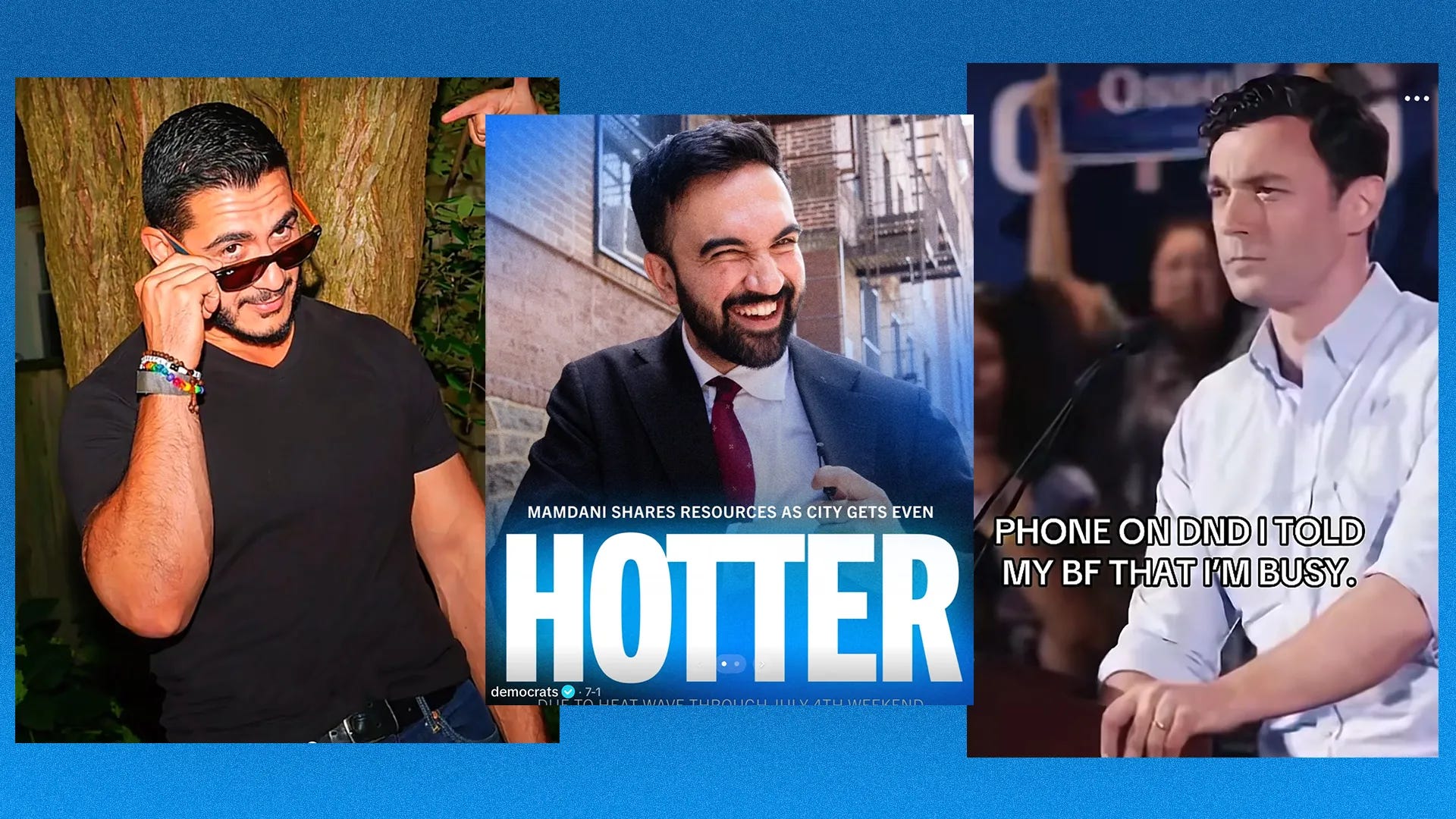
Axios recently declared that Democrats have entered their “thirst trap era.” The party’s social media accounts have been featuring Jon Ossoff, Zohran Mamdani, Abdul El-Sayed in his fitted black T-shirts, and Barack Obama with a little gray in his hair. AOC and Michelle Obama have received similar treatment.
But let’s be honest. Thirst trap politics is not a Democratic invention. Republicans have been doing this too. In fact, politicians around the world have been using their looks, clothing, bodies, fitness, and sexuality for attention long before anyone knew what a thirst trap was.
What has changed is the intent, the delivery system, and who controls the picture.
A politician being attractive is not automatically a thirst trap. A politician being sexualized by the media is not the same as a politician intentionally posting sexualized content. There are levels to this, and if we are going to talk about thirst trap politics, we should at least define what we are talking about.
Merriam-Webster defines a thirst trap as a photograph or video shared for the purpose of attracting attention or desire.
The important word is purpose.
Level One: You Are Hot and Other People Notice
The first level is not really thirst trapping at all. It is simply being an attractive person in public life and having the media, paparazzi, or internet sexualize you.
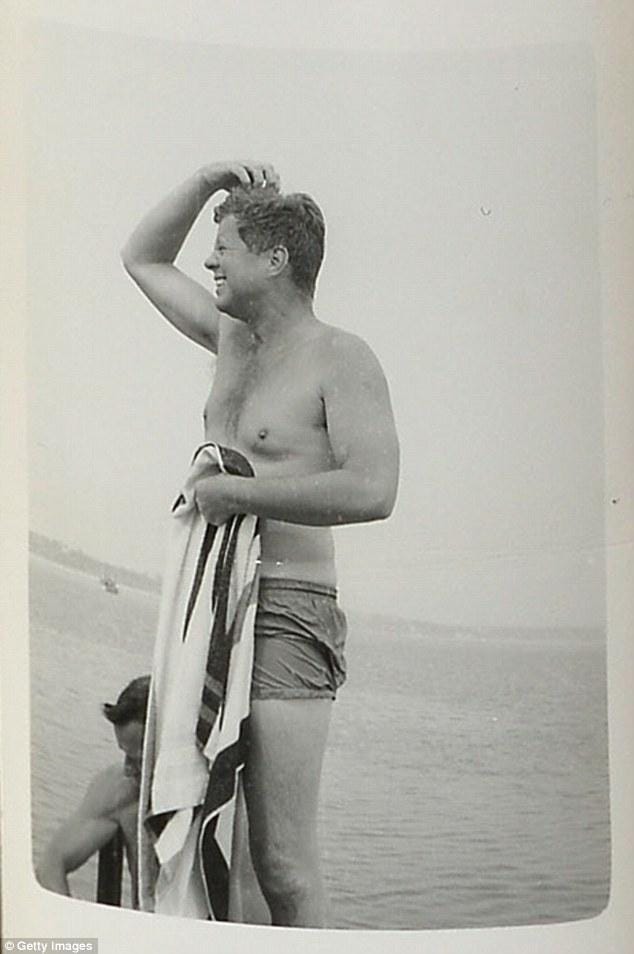
John F. Kennedy would be the historical example. He was young, attractive, athletic, wealthy, and surrounded by an entire political mythology built around youth, vigor, and Camelot. Pictures of him sailing, swimming, or sitting shirtless on a boat became part of his public image regardless of the purpose of those pictures .
Barack Obama experienced the modern version of that in 2008. While he was vacationing in Hawaii after the election, paparazzi positioned themselves on the beach with long lenses and photographed him shirtless. Obama was not standing there taking a mirror selfie and asking America what it thought of his abs. He was existing on a beach while attractive, and the media did the rest.

The same thing happens to women, although usually with a much nastier double standard.
AOC can wear a dress, put on red lipstick, or show up at an event looking good, and the internet immediately turns her into either a sex symbol or the subject of some weird conservative fantasy. There have even been digitally altered pictures created to make her clothing look more revealing.
Former New Zealand Prime Minister Jacinda Ardern once sat for an interview in which the male interviewer described her as young and attractive, then started asking about when her child was conceived. The interview was widely criticized as sexist and creepy.

Former Finnish Prime Minister Sanna Marin was sexualized constantly because she was young, attractive, and liked to go out with her friends. Private videos of her dancing were leaked, and suddenly the world was debating whether a prime minister was allowed to party.
That is not thirst trapping.
That is other people seeing an attractive politician and deciding to thirst over them. The politician may benefit from the attention, but they did not create or release the image.
There is a difference between setting a trap and having the internet decide that you are the trap.
Level Two: The Political Flex
The second level is the flex.
This is when politicians intentionally display their bodies, athleticism, or physical conditioning, but the primary message is supposed to be health, strength, vitality, discipline, or power.
Robert F. Kennedy Jr. is a perfect example.
Kennedy is now 72 years old, is obviously in very good shape, and clearly wants everyone to know it. He posts workout videos. He does pull-ups in jeans. Earlier this year, he and Kid Rock released a 90-second video in which they exercised, flexed shirtless, played pickleball, took a cold plunge, and drank whole milk.
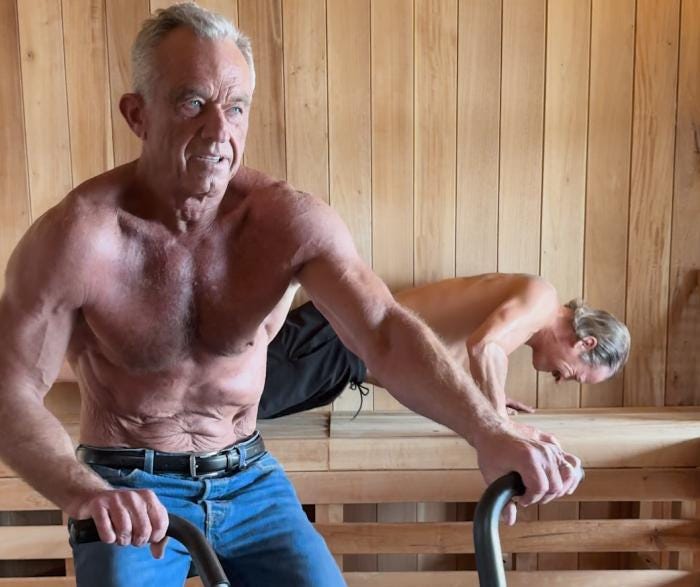
The stated message was to get active and eat real food. It fit directly into Kennedy’s Make America Healthy Again brand.
But come on, man.
RFK Jr. knows he looks good for 72. He knows the video will get attention. He knows people will talk about his body. That is part of the message. His physical condition is presented as evidence that his health philosophy works.
It is a flex, but it is a political flex.
Vladimir Putin used the same idea differently. His shirtless horseback pictures were not primarily about making people want to get thirsty. They were about projecting masculinity, dominance, strength, and control. The picture became an extension of the political brand.

American politicians have done softer versions of this for decades. Bill Clinton went jogging. George W. Bush was photographed exercising and clearing brush. Pete Buttigieg goes running. Politicians throw baseballs, shoot baskets, ride bicycles, lift weights, and perform whatever physical activity makes them look healthy enough to survive four years in office.
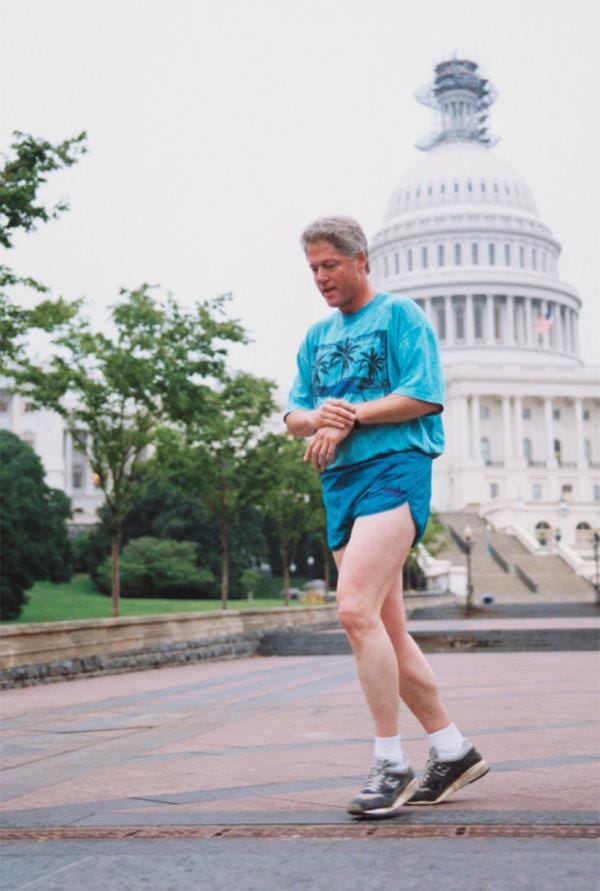
Sometimes the flex is connected to policy. Sometimes it is supposed to communicate strength.
It is image-conscious, and it can be intentionally attractive, but it is not a thirst trap.
Level Three: I Know I Look Good, and I Know What You Will Do With This
The third level is where plausible deniability tapers off.
The politician is not necessarily posting an openly thirsty picture, but they know what the clothing, camera angle, or presentation will do. They know the internet will sexualize it, and they are counting on everybody else to complete the transaction.
Abdul El-Sayed’s campaign uniform is a good current example.
El-Sayed campaigned across Michigan in a fitted black V-neck T-shirt and jeans. It was a simple look, but it also made sure you noticed that he goes to the gym. Even Fox News repeatedly called him “gym boy,” talked about his pecs, and asked his Republican opponent whether he planned to compete with El-Sayed’s tight shirts.
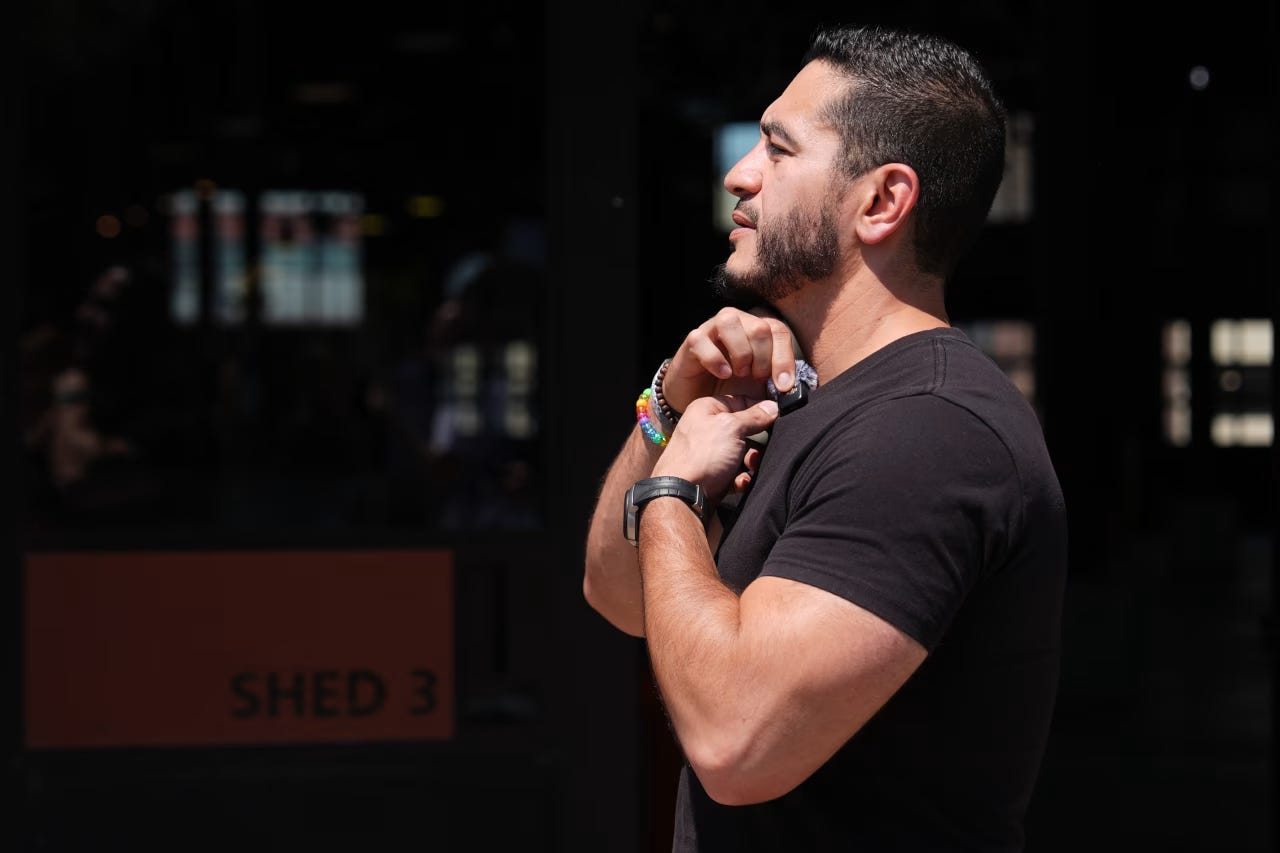
El-Sayed did not take his shirt off. He did not release a bikini calendar. He wore a fitted shirt that supported his anti-establishment, ready-to-fight image and also happened to show his arms.
He knew.
That does not make it a full thirst trap. It makes it a very deliberate flex that allows everyone else to do the thirst trapping for him.
Former Republican Congressman Aaron Schock took it further. In 2011, Schock appeared shirtless on the cover of Men’s Health, where he was promoted as “America’s Fittest Congressman.”
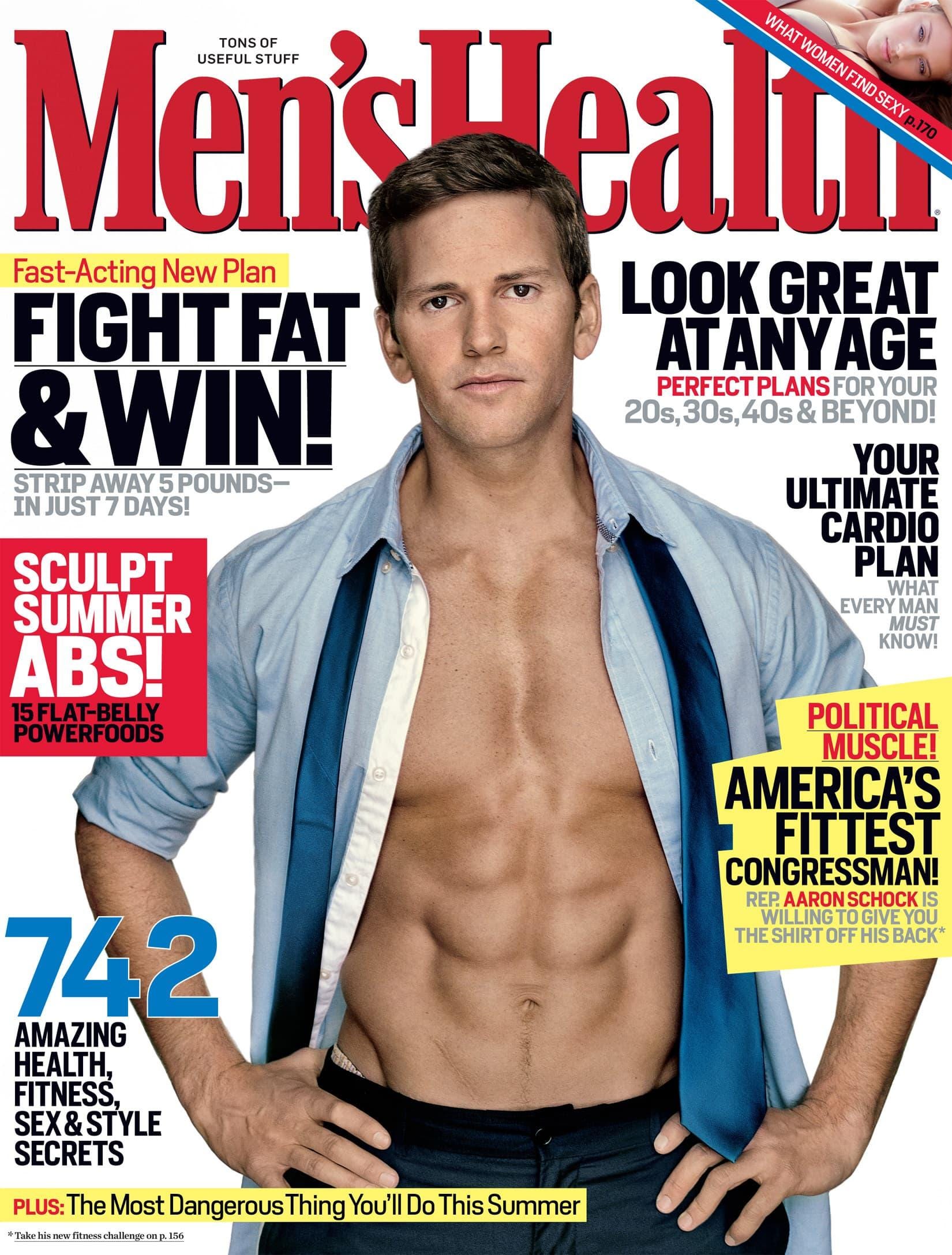
The official explanation was health. Schock was promoting fitness and talking about the cost of diabetes, heart disease, and other preventable conditions.
Okay.
He was also a 29-year-old congressman with a six-pack, standing shirtless on a national magazine cover. He knew exactly what kind of attention that would create. The health campaign made the picture politically defensible, but the abs did the marketing.
Lauren Boebert sits somewhere around this category too. A bikini photo showing her large side tattoo was recirculated in 2024 by Ginger Gaetz, who praised “confident, healthy, patriotic women.” It was unclear when the original picture was taken, and Boebert was not the person who republished it.

That distinction is important. Boebert appearing in a bikini does not automatically make the picture a thirst trap. People wear bathing suits at the beach. But once the political ecosystem deliberately recirculates that picture as part of “Hot Girl Summer” celebration of conservative women, it becomes political marketing through thirst.
The politician gets the attention without necessarily having to admit that attention was the point.
Level Four: This Is Absolutely a Thirst Trap
Then we arrive at the real thing.
This is when the politician or political figure deliberately releases sexualized content because they know people will look, share, comment, joke, and thirst.
Nancy Mace has entered this category.
After losing her run for governor, the outgoing Republican congresswoman launched a YouTube show called Get Maced. The opening montage includes Mace showing off her new tattoos, walking out of the ocean with a surfboard, firing guns, and lounging in a black bikini.

Mace has explained that the tattoos have personal meaning and were connected to trauma, pain, and reclaiming her body. That explanation is sincere.
But she also deliberately put the bikini footage in the opening montage of her new media show.
Nobody accidentally edits a poolside bikini selfie into the introduction of a political YouTube program. That is a branding decision.
That is a thirst trap.
Former New York City Mayor Eric Adams recently posted a shirtless picture of himself in his kitchen holding an extra-large cucumber in one hand and a red pepper in the other. He said the post was about healthy eating and being in the best shape of his life at 65.
I am sure that was the message.
I am also sure that Eric Adams knew exactly what the internet would do with a shirtless picture of him holding an enormous cucumber.
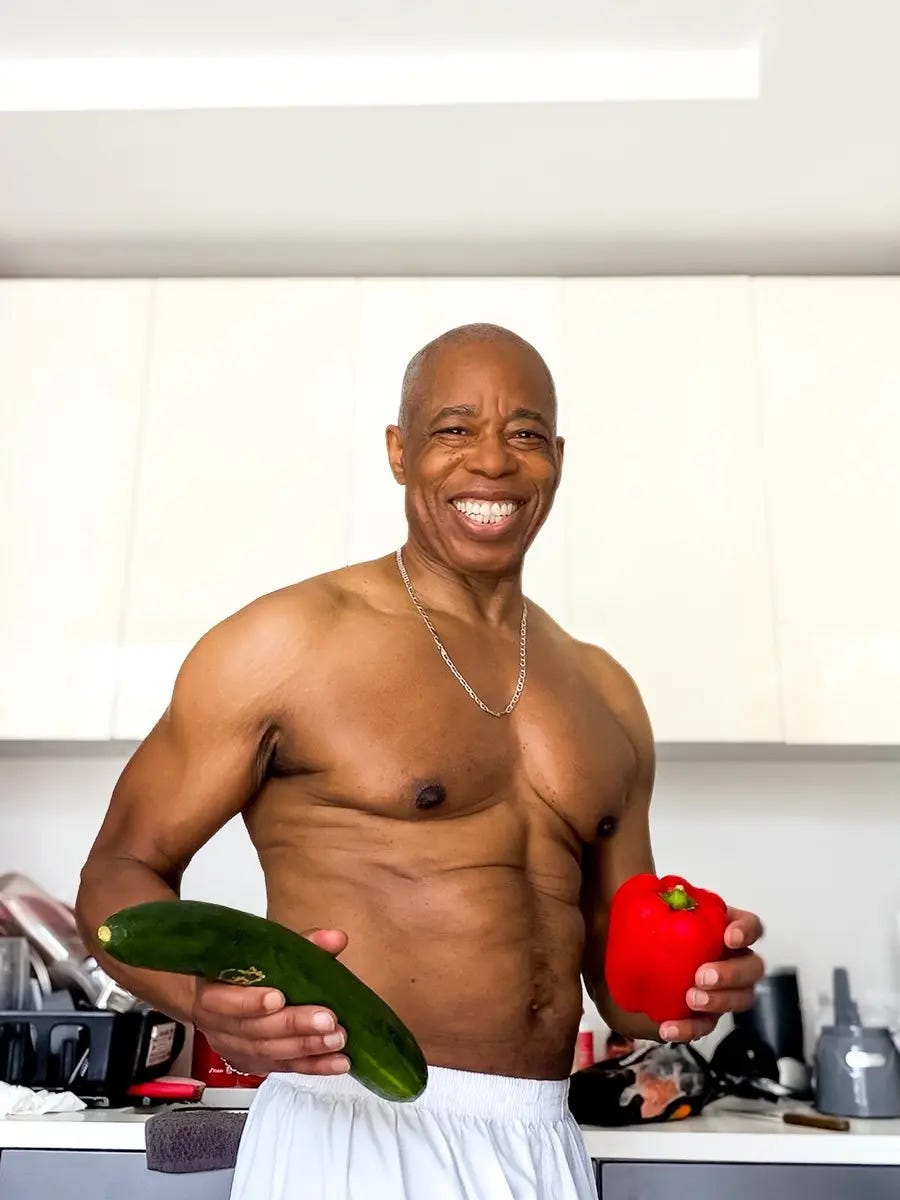
That picture crossed the border from health flex to thirst trap the moment he selected the cucumber.
Then there is Brian Sims, the former Pennsylvania state representative, LGBTQ+ activist, and what at least one publication has called a “certified DILF.”
Sims posted a shirtless selfie with the caption, “Shirts?!? In this economy?” He later celebrated Pride with a professional photo shoot featuring him shirtless and posing in Calvin Klein underwear.


Sims has connected those pictures to queer visibility, confidence, and political resistance. That political meaning can be genuine.
They are also thirst traps.
Both things can be true.
Has Sex Appeal Become Political Currency
Politicians have always been performers.
Their voices, clothing, hair, spouses, families, physical health, and personal stories have always been part of the product. JFK understood television. Reagan understood performance. Obama understood social media. Trump understands spectacle.
What is different now is that politicians can publish directly to millions of people without a newspaper editor, television producer, or campaign reporter standing between them and the audience.
They can see immediately which pictures generate attention. They know which shirt gets more views. They know which angle creates fan edits. They know when a picture ends up in group chats, TikTok montages, reaction videos, and cable news segments.
The algorithm does not care whether you have a ten-point housing plan.
It cares whether people stop scrolling.
Sex makes people stop scrolling.
That attention can become followers. Followers can become small-dollar donors, volunteers, media appearances, fan communities, and sometimes votes. A candidate does not necessarily need people to understand the entire policy platform if enough people already feel some kind of personal attachment to the candidate.
That attachment might be ideological.
It might also be that they think Senator “My Boo” is hot.
This is not automatically bad. Attractive people are allowed to run for office. Politicians are allowed to wear bathing suits, go to the gym, have tattoos, pose for pictures, and feel good about their bodies.
There is a difference between sexualizing someone who was simply existing and a politician deliberately using sexual attention as part of a political brand. There is also a difference between demonstrating physical fitness and posting content specifically designed to make people “thirsty.”
Does Any of This Actually Win Elections?
The other question is whether thirst trapping works.
It definitely creates attention. That does not mean it creates votes.
Nancy Mace’s bikini montage did not save her gubernatorial campaign. Brian Sims’ internet popularity did not win him the Democratic nomination for lieutenant governor. Aaron Schock’s abs did not protect him from the scandals that ended his congressional career. Eric Adams’ cucumber is unlikely to create a political comeback by itself.
A person can go viral while remaining politically irrelevant. People can share a politician’s picture, call them hot, make jokes, and never register to vote for them.
But political thirst trapping is not disappearing. Campaigns have discovered another tool, and politicians who are young, attractive, fit, or simply shameless enough to participate are going to use it.
We have moved from attractive politicians being sexualized by the media, to politicians flexing their health and strength, to candidates wearing exactly the right shirt so other people will sexualize them, to politicians openly creating content designed to generate thirst.
We now have political MILFs and DILFs.
The only question left is when we get the first political OnlyFans.
At this rate, the press release will explain that the monthly subscription is about transparency, democracy, and grassroots fundraising.
So, what this piece is saying is, "Start working out! Pronto!"