


In April 2026, the Supreme Court of the United States delivered its most consequential blow to American voting rights in decades. In Louisiana v. Callais, the Court gutted Section 2 of the Voting Rights Act — the provision that for over sixty years gave communities of color their only reliable legal tool to challenge maps designed to erase their political power. Without it, states may now draw maps that crush minority representation, call it a partisan decision rather than a racial one, and the courts cannot intervene. As Justice Kagan wrote in dissent, Section 2 is now “all but a dead letter.” The last guardrail is gone.
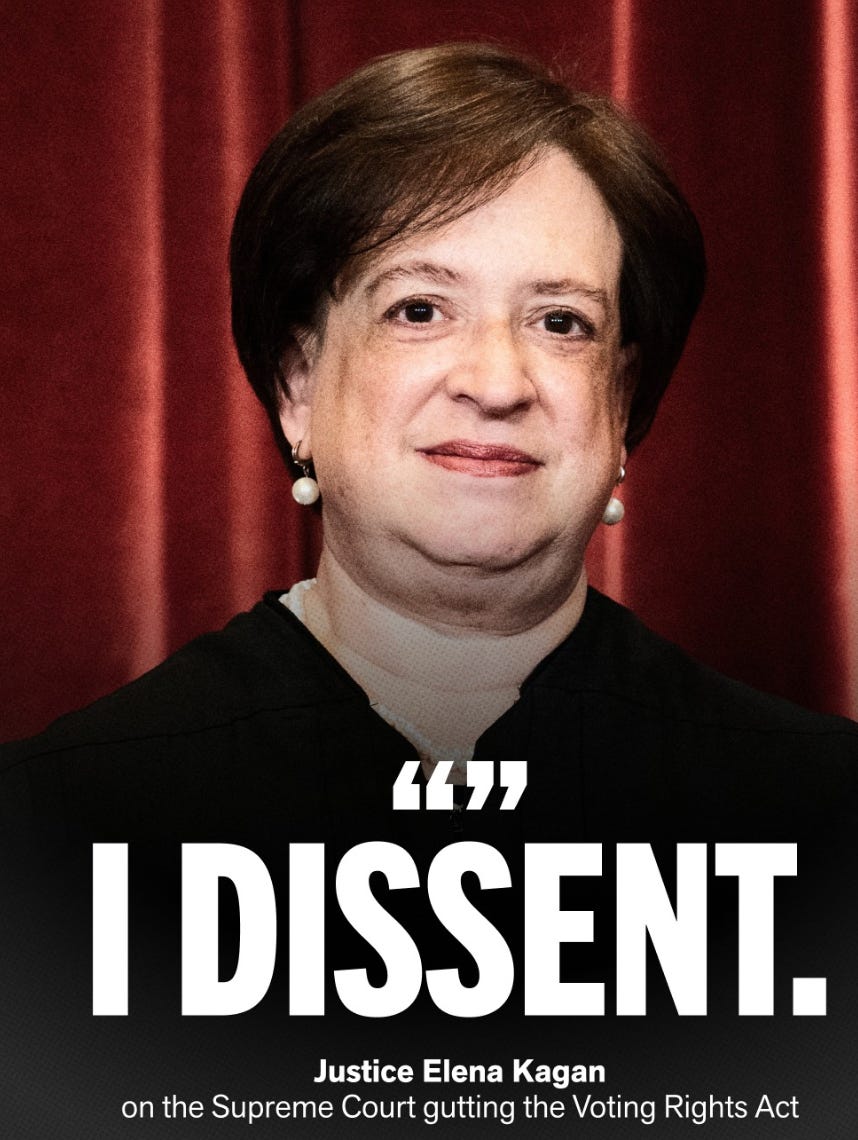
That ruling did not come out of nowhere. It was the latest chapter in a decades-long campaign — planned, funded, and executed with remarkable discipline — to rig the rules of American democracy before most Americans noticed what was happening.
This series is about that campaign. How it was built. How it works. What it has already cost us. And what — if anything — can be done about it.
But before we get into who did what and when, we need to establish something that this series will return to again and again. Because if you walk away from this introduction with one idea, we want it to be this one.
This is not a Republican problem. This is an American problem.
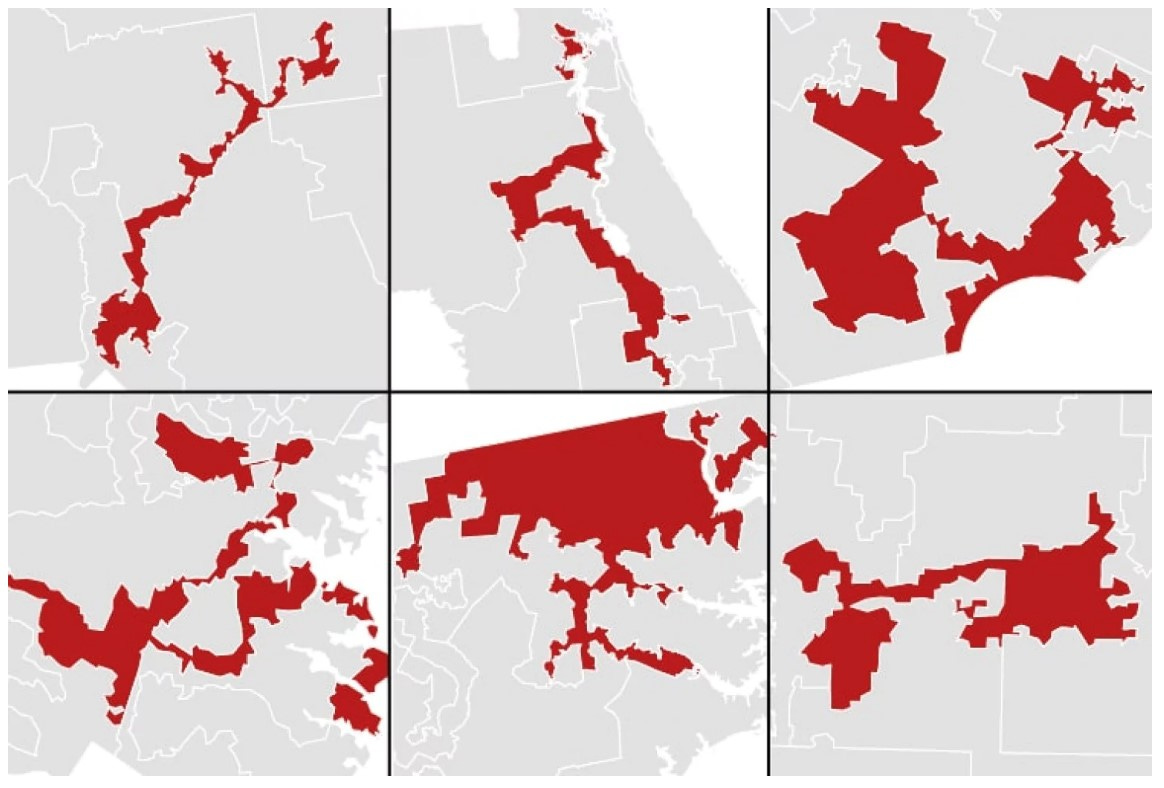
We will document in this series how Republicans built the modern redistricting machine and used it more aggressively, more systematically, and more effectively than Democrats have. That is not a partisan opinion. It is a documented fact, confirmed by the Brennan Center, by academic researchers at Duke, MIT, and Harvard, and by the Republicans who designed the strategy and wrote about it openly at the time.
But Democrats have done it too. After the 2020 census, Democrats in Illinois redrew their congressional map so aggressively that Republicans were left holding just 3 of 17 seats — in a state where a fair map would have produced roughly 6. That is gerrymandering. It is wrong when Republicans do it in Texas and North Carolina, and it is wrong when Democrats do it in Illinois.
We make this point not to create false equivalence — the scale and coordination of Republican gerrymandering since 2010 has no Democratic parallel — but because the argument that this is simply a team sport, where your side’s gerrymandering is acceptable and theirs is not, is exactly the kind of thinking that has allowed this problem to fester for decades.


Here is the thing that most political coverage gets wrong. Republicans are winning the redistricting war. That is true. But winning implies there are two sides in competition and one is ahead. That framing misses what is actually happening — because the people losing are not Democrats. The people losing are voters. All voters. The scoreboard that matters is not R versus D. It is corporations and wealthy donors on one side, and everyone else on the other. And on that scoreboard, the donors are winning in a landslide — in red districts and blue districts alike.
Think about what a safe seat actually means in practice. A representative in a gerrymandered district does not need to win a competitive general election. The map guarantees the seat. The only thing that can threaten their career is losing a primary — and corporate money has now colonized primaries too. Which means there is no longer any moment in the electoral cycle where an ordinary voter’s preference reliably determines the outcome.
You can see this in the most basic act of democratic accountability: the town hall. Research drawing on more than 23,000 town hall meetings over eight years found that the average representative holds just nine town halls per Congress — and many hold none at all during the two years between elections. In March 2025, the chair of the National Republican Congressional Committee advised members in a closed-door meeting to stop holding in-person town halls entirely. The House Speaker agreed. Several Texas Republicans replaced public forums with private meetings — not with constituents broadly, but with business owners and stakeholder groups. Not the people who vote for them. The people who fund them.
This is what a safe seat produces. A representative who has stopped needing you. Gerrymandering is the tactic. But voters are the target. All of them.
What this series will show you.
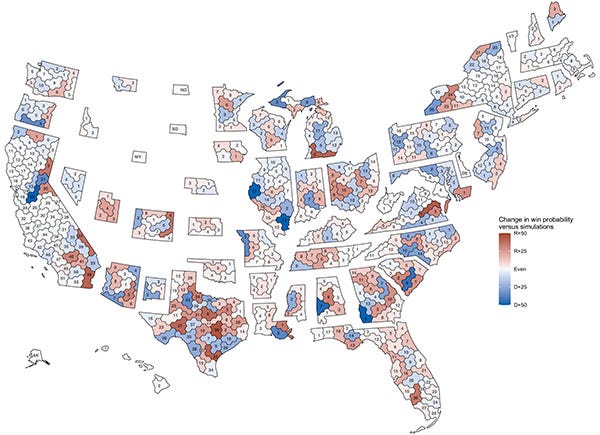
Over ten installments, we are going to take this apart completely — and then show you what can actually be done about it.
We start where the machine started. In Part 1, we go back to 2010 — to REDMAP, to Karl Rove’s Wall Street Journal op-ed, to the $30 million that flipped 20 state legislative chambers and handed Republicans control of the mapmaking process for an entire decade. We document what Democrats were doing instead, and why that failure compounded into the structural disadvantage that persists today.
In Part 2, we follow the legal guardrails as they were dismantled one ruling at a time — from Buckley v. Valeo in 1976, which opened the door to unlimited political spending, through Citizens United in 2010, through Rucho v. Common Cause in 2019, through Callais last month. Each decision narrowed the field of legal recourse available to voters. Together they closed it entirely.
Part 3 draws the full circle — from corporate PAC money to redistricting to policy outcomes. We show, with sourced data, what happens to healthcare legislation, wage policy, gun safety, and environmental regulation in gerrymandered states versus competitive ones. This is where the abstract becomes concrete: what rigged maps actually cost people, in dollars and in lives.
Part 4 is the mathematics. Geographic sorting, the S-curve, the reason a 10-point national wave can produce a 5-seat swing when maps are drawn to absorb it. We draw on research from Duke, MIT, and Harvard to show how the numbers work — and what neutral maps would have produced in Ohio and across the country.
Part 5 covers the technology — the same algorithmic tools that made extreme gerrymandering possible, and the open-source research tools now sitting in university labs that could draw fairer maps than any human legislature has ever produced. This is not a theoretical future. The tools exist. The question is whether voters will demand they be used.
Part 6 maps the battlefield state by state in the post-Callais world — which states are redrawing maps right now, which seats are at risk, and what the floor looks like for Democrats trying to win a House majority against maps explicitly designed to stop them.
Part 7 is the Ohio story in full — redistricting history from 2010 to today, the seven court rejections, the legislature that ignored every one of them, and what the next cycle looks like if nothing changes.
Part 8 is about solutions — what has actually worked, in California, Virginia, Michigan, and elsewhere. Independent commissions. Algorithmic maps. Multi-member districts. The Fair Representation Act. We do not cover solutions that sound good but have no path to implementation. We cover what has moved the needle and why.
Part 9 is the timeline — what Democrats and reform advocates must do in the next four years, before the 2030 census resets the cycle. The 2026 Ohio Supreme Court races. The 2028 seats. The governor’s race. The ballot initiative pathway. Year by year, what the window looks like and how quickly it closes.
And Part 10 is yours. Specific, actionable, and honest about what one person can actually do — whether you live in Ohio or not, whether you have $25 or $2,500, whether you want to donate, organize, vote in a judicial race you’ve never thought about before, or simply understand the fight well enough to explain it to someone else.
The system is rigged. That is not a talking point — it is a documented, litigated, peer-reviewed fact. But it was not rigged against one party. It was rigged against people. Against the nurse in a county that lost its hospital. Against the factory worker whose wages haven’t moved in seventeen years. Against the parent — Republican or Democrat — who wanted their legislature to act and watched it do nothing. Against every voter whose representative stopped showing up the moment the map made the seat safe. The coalition that can fix this is not one party. It is everyone who has noticed that their government no longer works for them. That is a very large number of people. This series is for all of them.
This article was written by Democracy Watch. Please follow their work @ Democracy Watch
SOURCES — THE RIGGED MAP: INTRODUCTION
Louisiana v. Callais, 608 U.S. ___ (2026). Supreme Court of the United States, decided April 29, 2026. supremecourt.gov
Kagan, J., dissenting. Louisiana v. Callais, 608 U.S. ___ (2026). supremecourt.gov
Brennan Center for Justice. Louisiana v. Callais case page. brennancenter.org
Rove, Karl. “He Who Controls Redistricting Can Control Congress.” Wall Street Journal, March 2010.
Daley, David. Ratf**ked: The True Story Behind the Secret Plan to Steal America’s Democracy. W.W. Norton, 2016.
ProPublica. “How Dark Money Helped Republicans Hold the House and Hurt Voters.” propublica.org
Republican State Leadership Committee. REDMAP post-election analysis, 2012.
Brennan Center for Justice. Analysis of 2024 election maps and Freedom to Vote Act standard. brennancenter.org
Clarke, Andrew J. and Daniel Markovits. “Congressional Town Halls and Legislative Effectiveness.” Legislative Studies Quarterly, April 2024. doi.org/10.1111/lsq.12456
NBC News. “Republicans advised to avoid in-person town halls after confrontations over layoffs go viral.” March 5, 2025. nbcnews.com
Politico. “No more town halls, NRCC chief tells House Republicans.” March 4, 2025. politico.com
Axios. “House Republicans told to stop doing in-person town halls.” March 4, 2025. axios.com
The Texas Tribune. “Texas Republicans in Congress scaled back town halls during summer recess amid criticism over Trump megabill.” September 5, 2025. texastribune.org
Buckley v. Valeo, 424 U.S. 1 (1976). supremecourt.gov
Citizens United v. FEC, 558 U.S. 310 (2010). supremecourt.gov
Rucho v. Common Cause, 588 U.S. 684 (2019). supremecourt.gov