

It is election season, and you are probably wondering why you are seeing certain advertisements, receiving certain mailers and getting certain text messages while your neighbor is seeing something completely different.
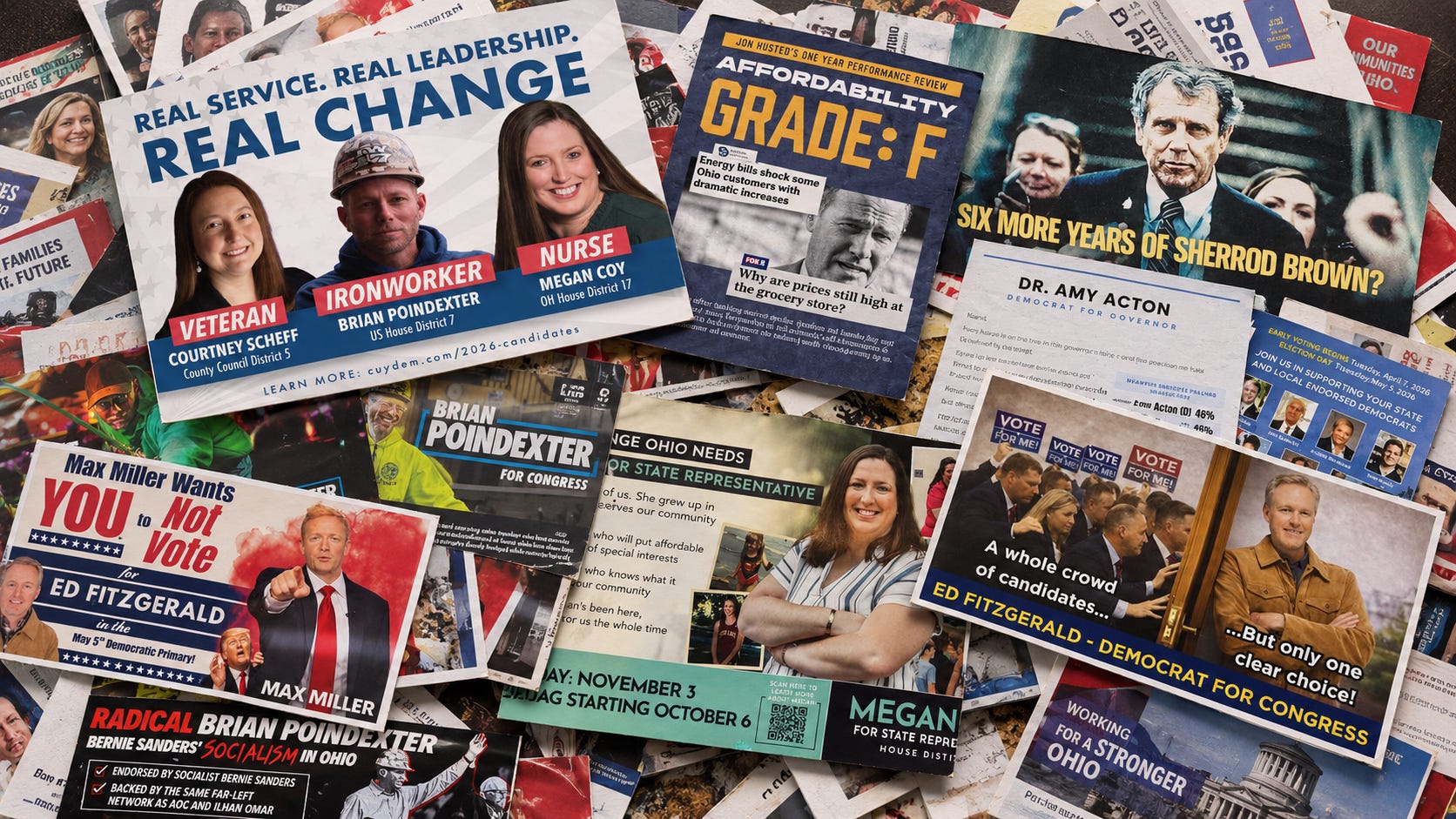
A Democratic candidate may show up at your door. Republican Senate advertisements may follow you around social media. You may receive five pieces of campaign mail while your neighbor receives only one, or none at all.
That is not random.
Political campaigns have ways of estimating who you are, how likely you are to vote and how you might vote. They assign voters different scores based primarily on two variables: support and turnout. Those scores are then combined with voter records, donation history, consumer data and whatever other concoction of information the campaigns and their data brokers put into their algorithms.
Out comes a score telling campaigns how good of a Democrat or Republican they think you are, how likely you are to vote, how they might be able to use you and whether you are worth targeting at all.
Let’s get into what that actually means.
The Tools Used to Score You
I ran as a Democrat and have been involved in Democratic campaigns and political circles, so I know more about the Democratic side than the Republican side.
For Democrats, the primary system is NGP VAN’s VoteBuilder. Other political-data companies exist, including nonpartisan vendors such as L2 that sell voter data to Democrats, Republicans and independent campaigns.
The basic information starts with voter-registration records.
Campaigns cannot see whom you voted for. Your ballot is private. But they can see whether you showed up.
They can see whether you voted in a Democratic or Republican primary. They can see whether you participated in a general election, special election or ballot-issue election. They can see how consistently you vote and which elections you skip.
They can also see your publicly reported campaign contributions. Federal contributions are disclosed through the Federal Election Commission, while Ohio state and local contributions are reported through the state’s campaign-finance system. Campaigns can see which candidates or political committees received your money, how much you gave, how often you donated and whether your contributions generally went to Democrats or Republicans.
That information becomes the foundation of your score.
Campaigns and political-data companies can then combine it with modeled information and commercially available consumer data. VoteBuilder provides campaigns with voter-file information, score modeling and consumer data designed to help them target the people they want to reach.
The exact formula is not public. Campaigns are not handing voters a recipe showing exactly which data points are used or how heavily each one is weighted.
Consumer data could include assumptions drawn from the stores where people shop, the media they consume and the demographic categories into which data brokers place them.
Are you more likely to shop at Aldi, Costco or Tractor Supply?

What categories of shows do you watch on YouTube, Netflix or other platforms?
What does your neighborhood, income, age or consumer profile suggest about you?
These are examples of the kinds of categories consumer models could use. I am not claiming that VoteBuilder contains your raw Netflix history, a list of every YouTube video you have watched or an itemized receipt from Tractor Supply.
I am saying that data companies use consumer patterns, interest categories, demographic information and other commercially available data to build models about people.
Buying something at Tractor Supply does not automatically make you a Republican, and shopping at Aldi does not make you a Democrat. But these systems can take enormous amounts of information, run it through algorithms and use the result to estimate what kind of voter you are.
These are assumptions. Sometimes they are right. Sometimes they are wrong. But campaigns make real decisions and spend real money based on them.
How Campaigns Categorize You
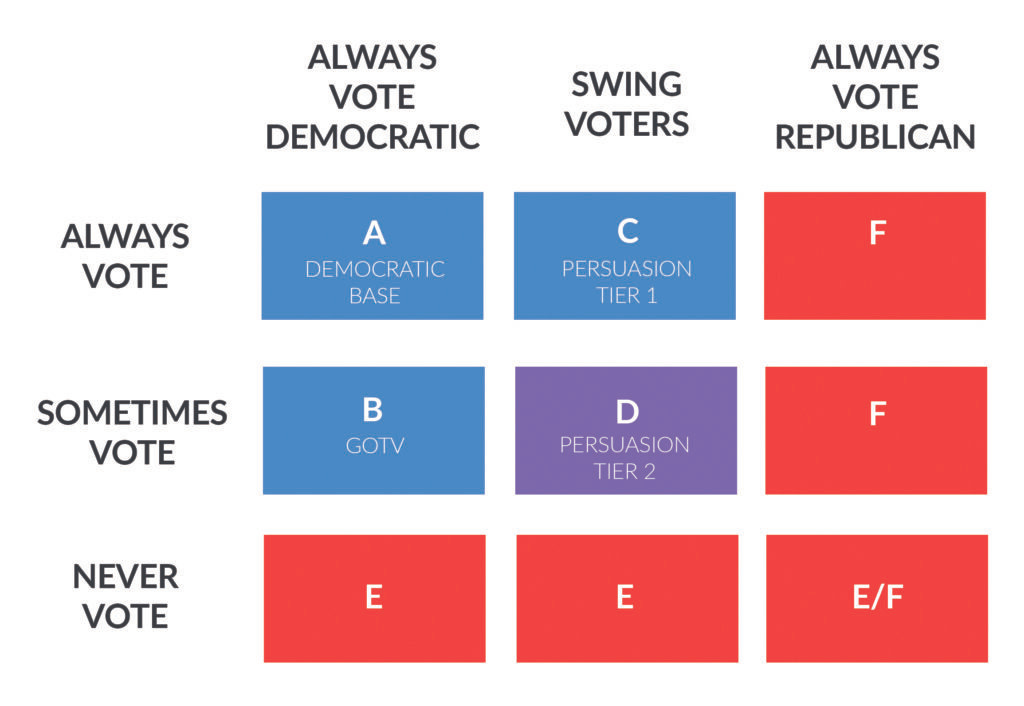
A voter with a Democratic-support score of 90 to 100 would generally be considered a strong Democratic voter.
If that person also has a high turnout score, a Democratic campaign may not spend much money persuading them. The campaign already believes that person supports Democrats and will show up. It might ask for a donation, recruit the person as a volunteer or send a basic reminder, but there is little reason to waste money repeatedly convincing someone who is already voting for you.
If someone has high Democratic support but low turnout, that person becomes a get-out-the-vote target.
That is when the mailers, calls and text messages start saying, “This is the most important election of our lifetime.” The campaign believes the person supports Democrats, but it is not confident that the person will actually vote.
Someone scoring between roughly 75 and 90 may still lean Democratic, but there may be something in the data suggesting that the person does not always support the party or may sit out an election.
Maybe there is an inkling of independence or free thinking. Maybe that person has not completely drunk the Kool-Aid. Depending on the turnout and support scores, that voter may become a persuasion target.
The campaign wants to convince that person that its candidate is the right choice and then make sure the person votes.
Someone around 50 or 60 could fall closer to the middle. That voter might be worth persuading, or the campaign might decide the score is too low and leave the person alone. If the voter has a high turnout score, both parties may fight for that vote.
A Democratic-support score of 20 would suggest someone who is probably a strong Republican. Democratic campaigns may leave that person alone while Republicans treat the same person as a reliable supporter.
These numbers are examples, not universal cutoffs. Each campaign decides where it draws the lines based on its race, district, budget and strategy.
But the basic system remains the same.
Campaigns want to know whether you support them, whether you vote, whether you donate, whether you volunteer and whether you can be persuaded. If your scores do not fit their campaign goals, they may completely ignore you.
Then the Political Machine Starts Turning
Once campaigns have this information, the machine starts turning and the gears start running.

They call the printers. They call the advertising agencies. They call the media creators, consultants, designers, texting companies and canvassing operations. They begin creating literature, advertisements, videos, text messages and door-knocking lists designed around the voters they want to reach.
This is why you can open your mailbox and see completely different political advertisements than your neighbor.
Your social media feed may be filled with advertisements your relatives have never seen. One voter may receive messages about abortion. Another may receive messages about taxes. Another may receive messages about guns, immigration, crime or healthcare.
The campaign is not communicating one message to everybody. It is dividing voters into groups and telling each group what the campaign believes will move them.
This data is insanely valuable to a political campaign.
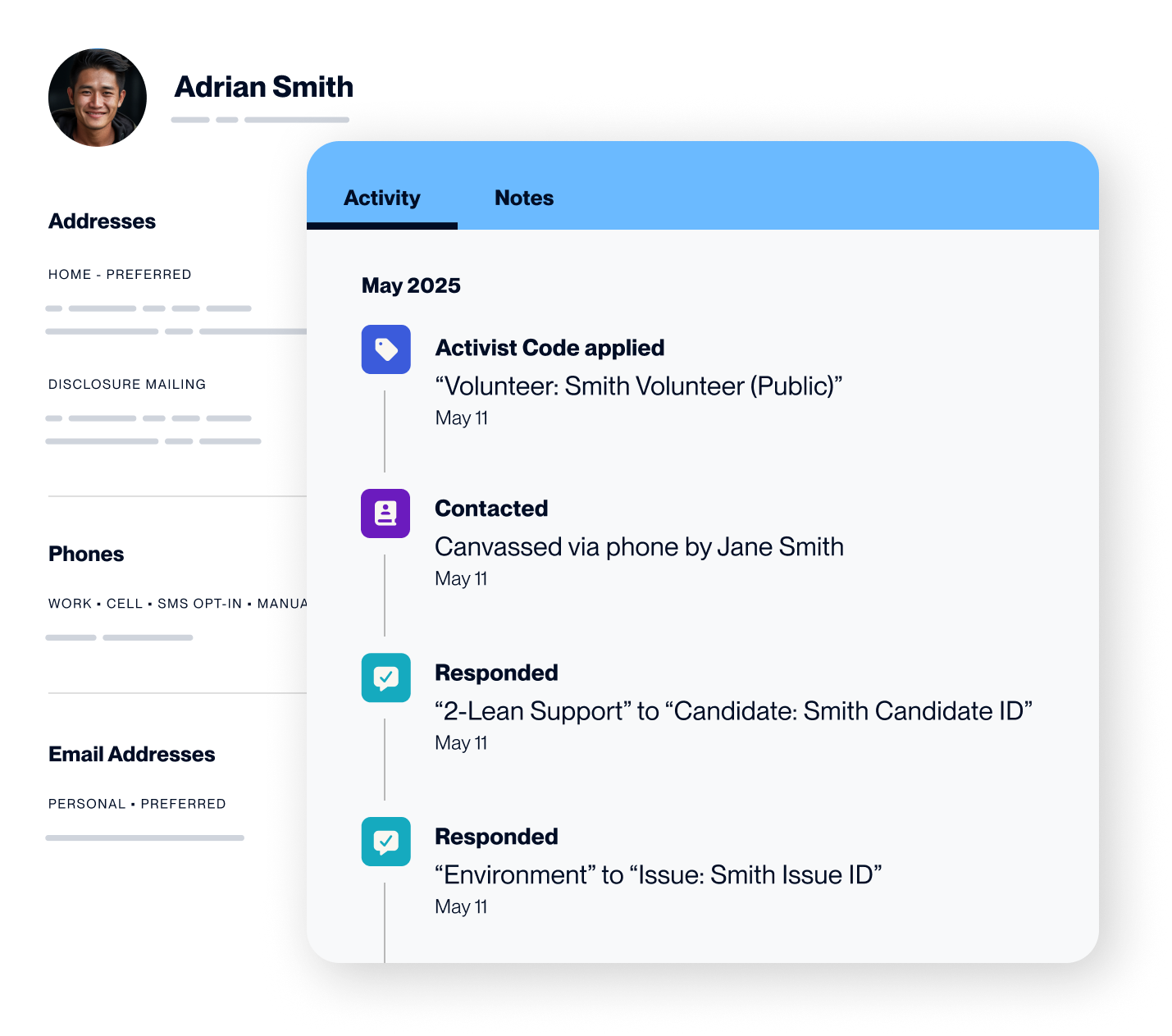
Without it, a campaign is throwing money into the air and hoping the right people see its message. With it, the campaign can decide which voters should receive mail, which doors should be knocked, which phones should be called and which people are not worth the campaign’s time or money. All this is called targeting.
Campaigns also feed information back into these systems.
If a canvasser knocks on your door and you say you support a candidate, oppose a candidate, need more information, have moved or do not want to be contacted again, that response can be entered into the system. The same thing can happen when you answer a campaign phone call, complete a survey or respond to a text message.
That contact information can improve the voter file and help future Democratic campaigns make decisions about you.
That brings us to the political parties and the control they have over this information.
In Ohio, It Is Pay to Play
NGP VAN licenses VoteBuilder access through Democratic Party organizations. In Ohio, the Ohio Democratic Party controls access to the Democratic voter file.
The party works with legislative caucuses and other Democratic organizations to determine how that access is distributed. It also charges candidates directly based on the office they are seeking.
For the 2023-2024 election cycle, a Democratic candidate for the United States House paid $5,000 per year for VoteBuilder access.
A State Senate candidate who did not receive free access through the legislative caucus paid $300.
A State House candidate who did not receive caucus access paid $150.
City and county council candidates paid between $50 and $950, depending on the number of registered voters in the district.
County Democratic parties received access at no cost, but they were not permitted to extend that access to candidates who had not purchased their own campaign access.
Countywide and municipal candidates could purchase access regardless of whether they had received the party’s endorsement, provided they were self-identified Democrats in good standing.
For Ohio House and Senate races, the legislative caucuses could provide free access to incumbents and Democratic candidates whose campaigns they supported. Candidates who did not receive that support could still purchase access, but they had to pay for it themselves.
Sometimes a State House or Senate candidate did not personally have to pay because the legislative caucus supported the campaign and provided access at no cost. Candidates who did not receive that support had to purchase it.
Long story short, it is pay to play.
That surprises a lot of candidates when they begin running for office. They think they are joining a political party and will have access to the basic information necessary to contact Democratic voters. Then they learn that the voter file is a product, and the party controls the door.
A campaign can also hire a consultant to request and manage VoteBuilder access on its behalf. But the access still belongs to the campaign committee, is limited to the geography of that campaign and remains governed by the Ohio Democratic Party’s user agreements.
The campaign is still paying someone.
You either pay the party, receive free access because a legislative caucus is supporting you or hire consultants to help manage the system for your campaign.
One way or another, access costs money or depends on the people controlling the system.
It Is Also a Gatekeeping Tool
This is where the problem becomes larger than a software fee.
The Ohio Democratic Party and its staff reserve the right to grant, deny or terminate VoteBuilder access to any candidate or organization at their discretion.
Read that again.
The Ohio Democratic Party reserves the right to decide who receives access, who is denied access and whose access can be terminated.
A political party controlling an enormously valuable voter database can make life easier for the candidates it supports and more difficult for the candidates it does not.
The party can provide free access to supported legislative candidates. It can require other candidates to purchase access. It can deny access. It can terminate access.
That creates an obvious mechanism for compliance.
Do what the party wants, stay within its preferred messages and remain in the good graces of the people controlling the system. Otherwise, you may find yourself running without the same voter data, campaign-contact history and political infrastructure available to the party’s preferred candidates.
The ability to gatekeep is built directly into the structure.
This is one of the ways political parties maintain control over candidates. It is not always through some dramatic public threat. Sometimes it is through access to the basic tools a candidate needs to run a competitive campaign.
You can run without the party’s system. This is America. Private companies such as L2 will sell voter data, and some private vendors may have stronger data in certain categories.
But it is different data, and candidates must understand how to navigate and use it independently. They may not have access to the same years of Democratic campaign contacts, volunteer information, survey responses and party-specific models accumulated inside VoteBuilder.
So yes, alternatives exist. But pretending there is no advantage to receiving the party’s data is ridiculous.
We should note: VoteBuilder access is not governed by one national Democratic Party rule.
NGP VAN says access is granted through each individual state Democratic Party, which means the rules vary considerably from state to state.
Delaware explicitly allows any Democratic candidate with an active campaign committee to purchase access, regardless of endorsement, and says that access will not be revoked or altered after an endorsement is made.
Kansas provides access to filed Democratic candidates at no direct charge, including legislative and congressional candidates, but still reserves the discretion to grant, deny or terminate access.
Other state parties have historically restricted access for certain primary challengers or required particular endorsements. In other words, whether VoteBuilder is treated as a neutral resource available to every Democratic candidate or as a party-controlled resource with restrictions depends heavily on the rules and access policies adopted by each state party.
Wait Until We Talk About Political Mail
VoteBuilder is only part of this system.
Wait until we get into the mailing services available through the Democratic Party, how campaigns get political mail sent so cheaply and how much more candidates may pay if they do not run their mail through the established party infrastructure and play by their rules.
There are ways to work around that too, but that is a discussion for another time.
The larger point is that political campaigns are not simply candidates printing signs and asking people for votes. There is an entire political industry behind them, including data companies, consultants, printers, advertising agencies, mailing operations and party-controlled systems.
Access to that machinery costs money, and the people controlling it can decide who receives help and who does not.
In Summary: Why You Receive the Political Ads You Receive
If you have ever wondered why you receive certain campaign mailers, advertisements or text messages while other people receive something completely different, this is why.
Campaigns have access to scoring systems that estimate what kind of Democrat or Republican you are.
They look at whether you vote, which elections you participate in, whether you donate, whom you donate to and what consumer or demographic patterns might provide an inkling of how you think.
They then decide whether you are a supporter, a turnout target, a persuasion target, a donor, a potential volunteer, a reliable opponent or someone who is not worth contacting at all.
So when the mail starts arriving, save it.
Send me pictures of the campaign literature you receive. Compare it with what your neighbors, relatives and friends are receiving. I think it will be extremely interesting to see how differently campaigns speak to different groups of voters. Might tell you a bit about who you are and how you are perceived by campaigns and candidates.
Stay Angry.
P.S. The last time I checked, my Democratic-support score was 71. Take that for what you will.
Aldis shoppers are Republicans, btw.
Cute puppy cards here. Hmm.