

What’s up, Angry Democrats?
Okay, this might be my most controversial post since the Amy Acton post, which literally got me canceled. But you know what? I did not take that one down. I leaned into it because I thought I was morally right. There were good complementary arguments as well.
Whatever. I survived.

This post is going to highlight some of the coolest things I saw involving AI this week. It is also going to be a defense of AI because, if you have not figured it out already, I am an AI user, an AI defender, and an AI advocate.
I think this technology is cool. I think it is fun. I think it will be disruptive, complicated, and messy, but I also believe it will be an overall net positive.
Yes, I Am a “Tech Bro”
I have been into technology and futurism for basically my entire life. I love science fiction books, futuristic movies, emerging technology, and YouTube channels like Science & Futurism with Isaac Arthur. Also the husband of Ohio State Representative Sarah Fowler Arthur

I leaned heavily into Bitcoin and blockchain. I bought a Tesla before they were everywhere. I supported SpaceX and Starlink. I still think Starlink is one of the best infrastructure inventions of the 21st century. The fact that we are still acting as though running fiber-optic cable over and under every mountain, valley, and rural area is the only possible solution is absolutely silly.
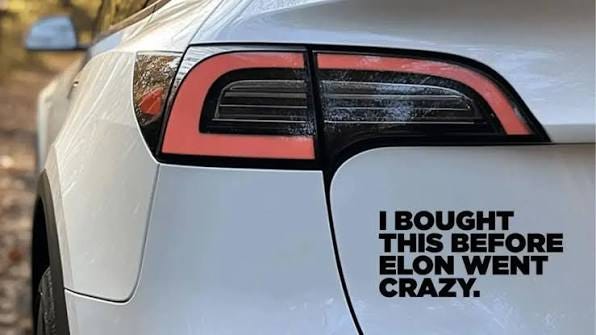
And no, I never put one of those “I bought this before Elon went crazy” stickers on my Tesla.
I like technology. I lean into it because it is fun, interesting, inspiring, and often useful.
So instead of writing another piece about how AI is going to destroy humanity, steal everybody’s job, ruin creativity, melt the electrical grid, and turn every piece of media into slop, I want to show you some of the genuinely useful and creative things I have seen just this week.
Temporary Jobs Are Still Jobs
One of the arguments against AI data centers is that the construction jobs are temporary. After the facility is completed, it may not employ a massive number of permanent workers relative to the amount of money invested in it.
You know what? That criticism is true.
These projects do not necessarily create enormous numbers of permanent jobs after construction. But where, exactly, is this mass employment for steelworkers, pipefitters, plumbers, carpenters, electricians, linemen, truck drivers, equipment operators, and everyone else involved in building these facilities supposed to come from?
Infrastructure construction happens in phases. Union workers already understand that. They move from one major project to another. These data centers are temporary projects, but those temporary jobs are still putting food on people’s tables.
A friend of mine owns Terra Group, a company that supplies aggregates and other materials for construction projects. He told me his company had been struggling for roughly four years. Construction had slowed down enough that he thought he might eventually have to close the business he had spent around a decade building.

Then data-center construction began expanding around him in Louisiana.
His company supplies materials such as limestone, sand, dirt, and other aggregates. It opened a 327-acre dirt pit near the project and uses its supply chain to bring contractors whatever materials they need. His description was basically that they operate like butlers, except the butlers have brokers, heavy equipment, and a bunch of dump trucks.
He told me:
“We were in a really bad place with this company over the past four years, but this data center really saved us and catapulted us into a new realm of reality.”
They also have a construction management software Terra Logic Suite.
He has rehired people, currently employs around 10 workers, and told me the company expects to add approximately 10 more while expanding with an office in Lima, Peru.
That is not a hypothetical economic model. That is a real business, owned by a real person I know, employing real people. AI infrastructure helped keep that business alive and gave it an opportunity to grow.
AI Is Giving Small Businesses Tools They Could Never Afford
Some of the best uses of AI are not flashy videos or fake celebrities. They are small-business owners using AI to do work they either could not afford to outsource or did not have the technical ability to complete themselves.
The margins for many small businesses are extremely thin. I know these people personally. They are doing everything they can to keep their companies running.
AI is helping them streamline operations, code websites, improve internal systems, manage data, build tools, and perform work that once would have required hiring a developer or consultant they could not afford.
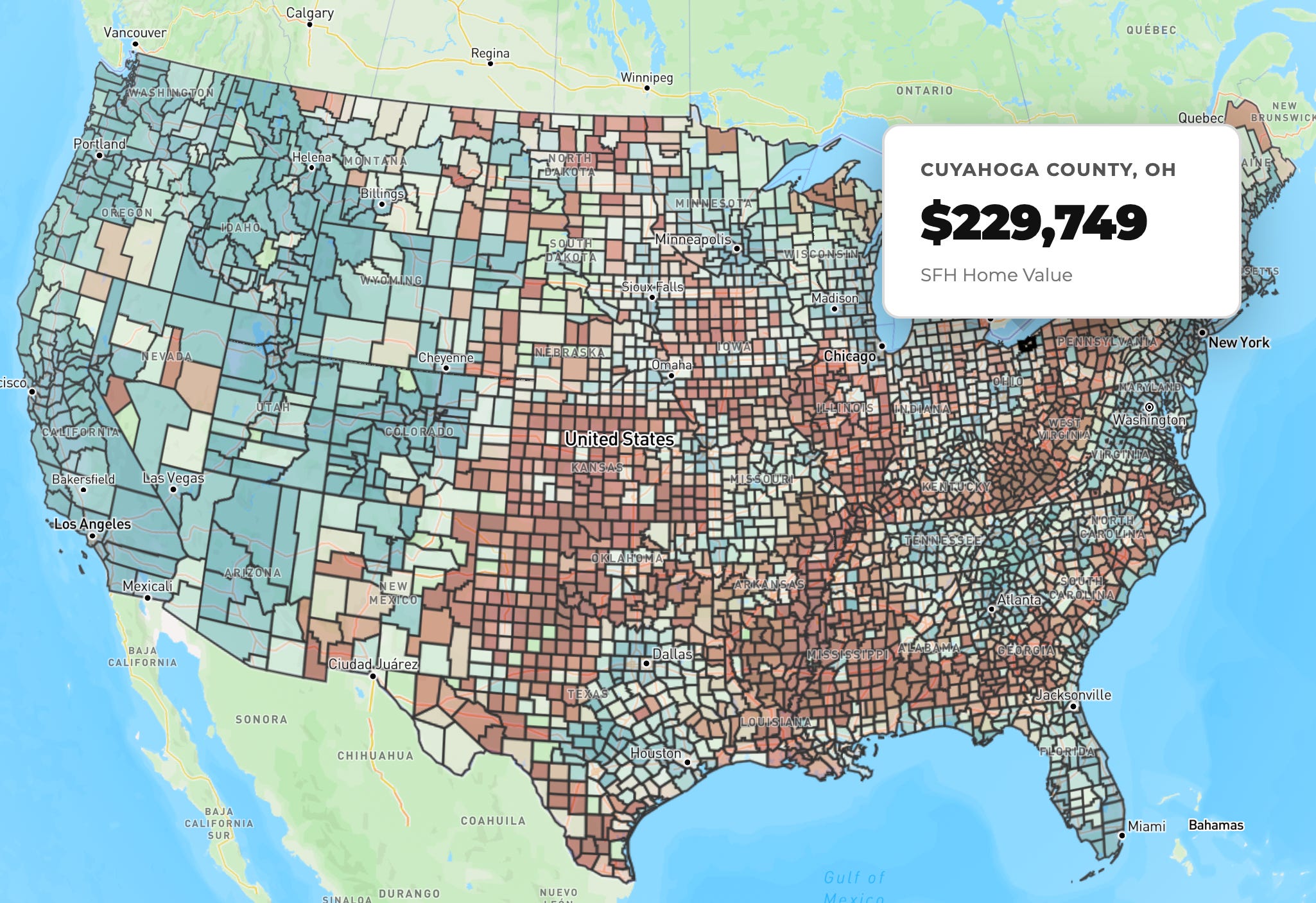
My friend Jasson Farrier, whom you have probably seen me speak with on podcasts, runs Ohio Housing Nerd. He used AI-assisted coding to build a national housing-data website for his YouTube channel and his clients.
It is a genuinely useful project that he probably could not have built by himself before these tools became available.
https://jassonfarrier.com/national-housing-data
Another friend owns Subscription Comics in Indiana. He is a father of three and a small-business owner. His wife works full-time, and he takes care of the children during the day while running the shop. He has a little nursery and play area in the back, with a television, couches, and space where the kids can do homework, study, and spend time while he helps customers.
With AI, he has been able to improve his online store and back-end systems so he can keep track of inventory and operate the business more efficiently.
That makes his life easier. It saves him money. It gives him more time with his children.

https://subscriptioncomics.com/
This is what gets lost when every conversation about AI immediately becomes a debate about garbage images, job destruction, or whether somebody cheated by using ChatGPT.
Real people are using this technology to keep their businesses alive.
AI Is Helping Me Learn Piano Again
I recently got a new piano.
I played when I was a kid, and people told me I was pretty good. Honestly, I thought I wasn’t anything special, but I will happily accept the compliments and praise if they motivate me to begin playing again.
The problem is that I have not played in roughly 30 years. My hands do not move the way they used to. My finger independence, coordination, scales, and muscle memory all need to be rebuilt.
So I created a day-by-day piano program with AI.
Every day, I ask it to give me that day’s lesson. It progressively rebuilds my technique through scales, chords, fingering exercises, coordination work, and classical pieces. I am currently working my way back toward playing Bach Inventions.
Here is part of one of the warm-ups it created:
Today we’re keeping the two-octave C-major scale.
Right hand UP:
1-2-3 | 1-2-3-4 | 1-2-3 | 1-2-3-4-5Right hand DOWN:
5-4-3-2-1 | 3-2-1 | 4-3-2-1 | 3-2-1Left hand UP:
5-4-3-2-1 | 3-2-1 | 4-3-2-1 | 3-2-1Left hand DOWN:
1-2-3-1 | 2-3-4-1 | 2-3-1 | 2-3-4-5Do: 2× RH alone → 2× LH alone → 5× hands together.
Is that going to replace a great piano teacher? Probably not. But it gives me a structured practice plan every day. It remembers what I practiced, adjusts the next lesson, and keeps me moving forward instead of randomly playing scales for 10 minutes and giving up.
AI Is Helping Me Keep My Chinese
I lived in China for 13 years and Taiwan for two. I used to be fluent in Chinese, but I have slowly been losing it.
I do not think I will ever lose it completely, but I am definitely rusty. Sometimes I hear a word that I completely forgot and think, “Oh shit, I know that word.” Other times, I look at a character I recognize but cannot remember its pronunciation or tone.
My reading ability has diminished. My pronunciation is probably absolute dogshit now, complete with a horrible Northeast Ohio American accent. I fought that accent for years and never completely defeated it, and I can tell you that it is considerably worse now.
Finding the exact word I want to express a particular meaning is also becoming harder.
My Chinese practice tutor in ChatGPT helps me knock off some of that rust. It gives me a dedicated conversation partner who is not going to become frustrated and switch to English. It is not using me as a language exchange because it wants to practice its English. It does not require me to schedule and pay for an expensive private tutor every time I want to practice.
I can practice reading, pronunciation, vocabulary, tones, and conversation whenever I want.
At the very least, I am no longer simply watching a language I spent 15 years learning slowly disappear.
AI Is Letting People Put Their Imaginations on the Screen
I have also started experimenting with fan art for some of the books I am reading.
If you read fantasy or science fiction, you know what it is like to build a world in your head. You develop an idea of what the people, places, creatures, clothing, cities, and entire universe look like.
Then the book becomes a movie or television show, and sometimes it looks nothing like what you imagined.
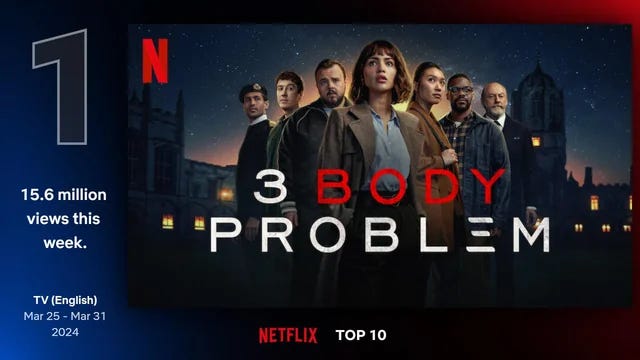
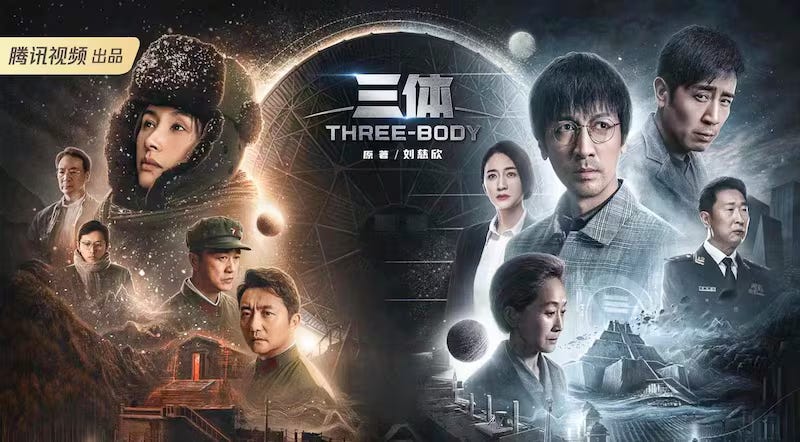
One of my biggest disappointments was Netflix’s version of The Three-Body Problem. It did not look or feel the way I wanted it to. I thought the Chinese adaptation was considerably better in my opinion.
Now I can take the version that exists in my head and begin translating it into something visual.
I am not claiming to be a professional artist. I am experimenting. I sit down and spend a few hours during the week trying to pull something out of my imagination and put it on the screen.
The response from some people is that if I cannot draw, I should not make art. I should hire an artist, pay someone else, or spend years learning how to draw.
You know what? I have enough shit going on. I am not going to spend the next decade learning how to draw because I want to create concept art from a fantasy book.
If I can spend a few hours creating something that previously existed only in my head, I believe there is more benefit than detriment in that.
ARK-7 Shows What We Can Create With AI
Then there are the professional and semi-professional creative uses that are beginning to emerge.
One of the most impressive things I watched this week was ARK-7, Episode 1, an AI-created science-fiction series published on YouTube.
It looks great.
You can still see that it is AI. It is not going to fool everybody into believing a major studio spent $200 million producing it. But that is not the point.
The point is that a person can have an idea, write a script, develop a storyboard, sketch out a world, and actually put the result in front of an audience.
As someone who loves science fiction, I appreciate that. I am glad somebody made it, and I want to see where creators take these tools next.
Fan-Made Trailers Can Bring Books to Life
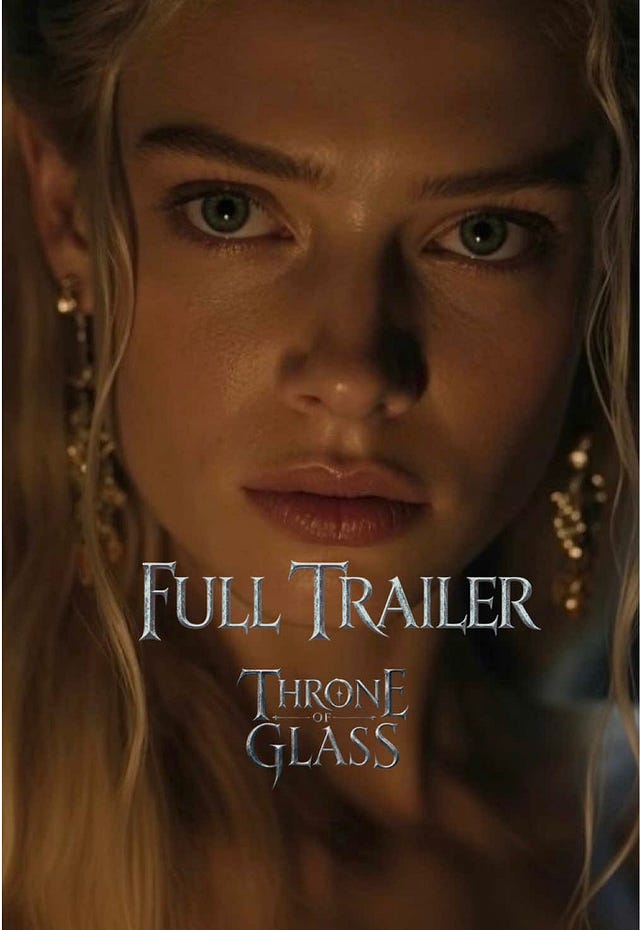
A friend also put a fan-made trailer for Sarah J. Maas’s Throne of Glass series on my radar.
It is absolutely amazing.
Someone loved a series of books, developed a visual interpretation of those books, and used AI to show other people what that interpretation looked like.
Yes, we need to have conversations about intellectual property. Do not steal someone else’s work and pretend it belongs to you.
But I also believe there is creative value in taking the vision inspired by a book and transforming it into a new visual form. Fan art has existed forever. Fan fiction has existed forever. Fans have always drawn characters, created costumes, written stories, edited videos, and built worlds inspired by the things they love.
AI gives more people the ability to participate in that culture.
I would rather discuss how we protect creators while allowing that kind of expression than simply declare that none of it should exist.
 Tiktok failed to load.
Enable 3rd party cookies or use another browser
We Are Completely Cooked, Because the AI Song Is a Bop?
The next example is honestly incredible.
Mikirah Muse an AI-generated artist released and AI-generated music video & song called Reckless (live). The artist, song, performance, and visuals are AI-created.
https://www.reddit.com/r/aivideo/comments/1wy2rx0/reckless/
I can tell you right now: We are cooked.
It is also really good. The song is catchy. It is a pop song that makes your head move, which is basically what most people want from a pop song.
Sometimes you do not want the most complicated, artistic, emotionally devastating piece of music ever written. Sometimes you want the McDonald’s of music. You want something simple, immediate, manufactured, and reasonably enjoyable.
One comment summed up the cynical argument perfectly:
“To me there’s no real difference between AI pop and modern pop music or musicians anyway. They’re both completely fake and manufactured, with meaningless lyrics written by people who don’t sing the song and produced to follow a very specific formula made to make money. Nothing is lost here.”
That is harsh, but it is also funny because people have been making the same criticism of pop music for decades.
Whatever. The song is still a bop.
I Use AI Every Day
AI is already part of my daily life.
I use it to organize thoughts and notes. I use speech-to-text and AI cleanup for The Angry Democrat. I use it to clean transcripts from League of Women Voters forums. I use it to create outlines, analyze information, study issues, and turn scattered ideas into something coherent.
AI does not decide what I believe. It does not create my political opinions. It helps me organize what I am already trying to say.
The technology can be abused. It can be used to create slop, cheat in school, spread misinformation, steal work, eliminate jobs, or flood the internet with garbage.
But every tool can be used badly.
The existence of bad AI content does not erase the small business that stayed open, the workers who were rehired, the father who gained more time with his children, the person rebuilding a musical skill, the former “expat” maintaining a second language, or the independent creator finally putting an imagined world on the screen.
We Have Lost the Plot on AI
I think we have lost the plot when it comes to AI.
The conversation should be about how we use this technology to expand human ability.
Maybe you do not want children using AI to answer every question and complete every assignment. Neither do I.
But why should AI not become an extension of the teacher, the classroom, and the curriculum?
OpenAI, Anthropic, and other companies could work with schools to build education-focused systems. Students could have an AI tutor connected to their coursework, available when they get home and the teacher is no longer standing beside them.
If a student does not understand a math problem, the system could explain it five different ways. If a student learns better through conversation, audio, repetition, examples, or visualization, the lesson could adapt.
Audiobooks and podcasts were game changers for people who love learning but struggle to sit down and read a book. For some reason, people act as though AI cannot be an extension of that same idea.
People who have never been able to sit down and write an essay can dictate their thoughts.
People who love to build but never learned how to draw can visualize their designs.
People who are dreamers can begin putting those dreams into reality.
The Best Work Will Still Rise
There is going to be a lot of garbage.
For every musician who became popular through SoundCloud, there are probably 10,000 people uploading music that is absolute dog crap.
But that is okay. They are still creating something.
The best work sometimes breaks through. The most creative, influential, and genuinely talented people find ways to separate themselves. AI will not eliminate creativity. It will expand the number of people who are allowed to participate.
That means more bad work, but it also means more opportunities for something amazing to appear from somebody who never had access to a studio, development team, animation company, private teacher, professional programmer, or massive budget.
I am all for it.
Let me know what you think in the comments.
But Elon did go crazy and is a menace to civilization…right? Go see the movie!