


Guest writer Dani Pajak argues that elected officials should follow the people. Editor Matt Diemer argues that the moment demands people willing to lead, even when doing so comes at a personal and political cost.
Guest Opinion: Representatives, Not Leaders
By Dani Pajak
The other day I came across a social media post from Eric Synenberg. He was pictured alongside Sherrod Brown and Scott DiMauro, and in the post he referred to them as leaders.
That one word stuck with me. Not because I dislike any of those individuals. Not because I oppose everything they stand for. It stuck with me because it highlighted something I’ve been noticing for years, especially in Ohio politics.
Too many elected officials today see themselves as leaders first and representatives second. That may sound like a small distinction, but in a representative democracy, it’s the difference between serving the public and directing it.
The more I thought about it, the more I realized this mindset may explain why so many people feel disconnected from government. Whether we’re talking about city councils, county government, the Statehouse, or Washington, more and more officials seem to view themselves as leaders with followers rather than representatives with constituents.
That’s a dangerous shift. Because in a representative democracy, the people are supposed to lead. The elected officials are supposed to follow.
What We Actually Elect
When someone runs for office, they aren’t applying to rule. They’re applying to represent. The title itself tells us what the job is supposed to be: represent us, listen to us, advocate for us, and vote on our behalf.
That’s the deal. We lend elected officials our authority for a limited time. We don’t surrender it permanently. Their power comes from us.
Too often, however, politicians begin acting as though the relationship works in reverse. Citizens are expected to support their agenda instead of the agenda reflecting the wishes of the citizens. That’s where trust starts to break down.
The Difference Between Representation and Leadership
A representative asks, “What do the people want?” A leader asks, “How do I get people to follow me?”
A representative understands they work for the voters. A leader can begin to believe voters should trust their judgment instead.
That distinction is more important than most people realize, because once politicians begin seeing themselves primarily as leaders, it becomes easier to justify ignoring the public when the public disagrees.
And we’ve all seen that happen.
Ohio Citizens Know the Routine
Residents attend meetings, send emails, sign petitions, testify at hearings, organize their neighbors, and vote. They participate in the process exactly as they’re told they should.
Then too often they hear the same response: “We hear your concerns.” “We value community feedback.” “We appreciate public participation.”
Followed by: “We’ve decided to move forward anyway.”
At some point, people stop believing they’re being heard. And honestly, can you blame them? If residents speak, vote, and participate only to be ignored, eventually many stop engaging altogether.
That’s not healthy for democracy.
The Euclid Example
I don’t have to look very far for an example. I live in Euclid.
Residents voted against joining RITA. The issue went before the voters, and the voters rejected it. In my view, that should have settled the matter. Instead, city officials ultimately moved forward despite the result.
Whether you support RITA or oppose it isn’t the point. The point is that voters spoke, and government decided it knew better. To me, that wasn’t representation. It was leadership. It was elected officials deciding that their judgment outweighed the decision made by the people they were elected to serve.
Two council members associated with that era of Euclid politics have since pursued higher office. Maria Jukic, a former Euclid council member, is now running for Congress. Christine McIntosh, also a former Euclid council member, is running for Cuyahoga County Council.
This is not about attacking either individual. It’s about asking a simple question: If voters explicitly say no, and elected officials find a way around that decision anyway, who is actually being represented?
Because it isn’t the people who cast those votes.
Who Gets Heard?
Every voter should ask themselves a simple question: When an elected official makes a decision, who are they really listening to? The residents? Or the donors, lobbyists, party organizations, consultants, and special interests with greater access and influence?
Most ordinary citizens have very little influence compared with organizations that have money, connections, and full-time political advocates.
A resident gets three minutes at a microphone. A special interest group gets a private meeting. A resident sends an email. A PAC writes a check.
That’s not how representative government is supposed to function.
Government should be most responsive to the people who live with the consequences of its decisions. Instead, too often it appears more responsive to those with the greatest resources and access.
That perception, whether fair or unfair, is fueling public frustration across Ohio.
The Rise of the Political Class
Part of the problem is that politics has become a career path. People move from one office to another, building networks, fundraising operations, and political alliances along the way. Eventually many become surrounded almost entirely by other political insiders.
The farther someone gets from everyday voters, the easier it becomes to believe they know better than the public they’re supposed to serve.
That’s when representatives begin to see themselves as leaders. And once that happens, the public becomes something to manage rather than something to represent.
Humility Is the Missing Ingredient
Good representation requires humility. It requires recognizing that holding public office doesn’t make someone wiser than the people who elected them. It requires accepting that citizens will sometimes disagree. It requires respecting those disagreements even when they’re inconvenient.
Most importantly, it requires remembering that the power belongs to the people.
Every council seat belongs to the people. Every county office belongs to the people. Every legislative district belongs to the people. Every congressional seat belongs to the people.
The politician is just renting it for a while. Too many have forgotten that.
Ohio Doesn’t Need More Leaders
Frankly, Ohio doesn’t suffer from a shortage of leaders. Every campaign promises leadership. Every consultant sells leadership. Every elected official celebrates leadership.
What we don’t have enough of is representation.
We need city council members who respect the will of their residents. We need county officials who remember who hired them. We need state legislators who spend more time listening than lecturing. We need members of Congress who remember they are public servants, not public managers.
Most importantly, we need elected officials who stop calling themselves leaders long enough to remember what they were elected to be.
Representatives.
Because representatives don’t ask people to follow them. They follow the people.
And if citizens have grown cynical about government, perhaps the problem isn’t the public. Perhaps it’s that too many elected officials have forgotten who they’re supposed to represent.
Ohio doesn’t need more leaders.
It needs more representatives.
Editor’s Response: We Need Actual Leadership
By Matt Diemer
I understand where Dani is coming from. “Representatives, not leaders” is a good slogan. It’s populist, and it speaks to something everybody wants in a democracy: to know that their voice matters.
People want somebody who goes to Congress, the Statehouse, or the governor’s office to act on their behalf. They want to be heard and taken seriously. And they are tired of a political class that congratulates itself while treating the public as an inconvenience.
The way political insiders talk about one another’s “leadership,” as though every person holding a microphone is George Washington crossing the Delaware, is cringeworthy. The self-congratulation and navel-gazing deserve an eye roll.
But I reach the opposite conclusion from Dani.
Right now, I don’t think representation is what we’re missing most. We need actual, bold leadership. And real leadership has real consequences.
Courage Requires Something to Lose
During my first campaign, I read Profiles in Courage, written by a young senator named John F. Kennedy.
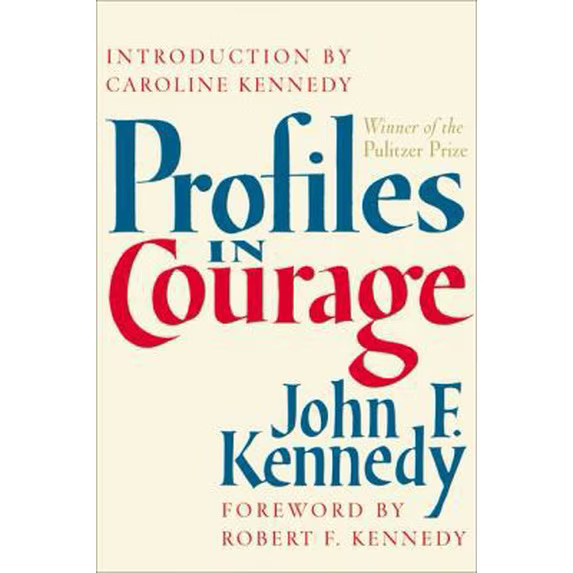
What stayed with me was the idea of courage in the face of consequences. Political destruction. Financial loss. A career ending. Relationships breaking down.
The ideals took precedence. They were important enough that risking something substantial became necessary.
That is a very different thing from finding the position that will make the largest number of people happy with you.
Right now, I see too many people trying to get in line, convinced that fitting into the existing political structure is the only way forward. Being agreeable, building the right relationships, and becoming everybody’s best buddy get treated as qualifications for office.
But serious crises and complex problems require something much rarer.
They require somebody willing to make a decision, explain it, and accept the consequences of following it through.
What I Mean by Leadership
Before going further, I should define the word as I’m using it.
Leadership is having a vision, the conviction to pursue it, and the ability to communicate it well enough to build a coalition capable of achieving it.
The vision alone is insufficient. You have to develop a plan, bring people together, and execute it.
Only after that work has been done can we fully judge, in hindsight, whether the direction was correct. Leadership involves accepting that uncertainty and taking responsibility for the result.
That is why I disagree with the idea that an elected official’s central question should simply be, “What do the people want?”
In my view, representation framed entirely that way becomes populism. Find the majority position, adopt it, and follow the votes. If the majority already agrees with you, the political decision is easy. You have the people, you have the votes, and you have a path to winning.
Where is the courage required in that?
And is the most popular decision always the best decision?
Dani describes a representative who listens to the public and a leader who asks people to follow. But bringing people toward a vision requires more than demanding their trust. It requires explaining where you want to go, why you believe it is right, and what it will take to get there.
People then have something to evaluate beyond whether you have repeated their current preferences back to them.
What Happens When the Popular Becomes Unpopular?
The harder test comes after an election.
You win a majority behind an idea. You begin carrying it out. Then the transition becomes difficult.
The popular thing becomes unpopular. The inexpensive thing becomes costly. The changes people supported in principle become difficult in practice.
What happens then?
Do you abandon the vision because the public mood has shifted? Do you move to whatever position now has the easiest majority? Or do you have the clarity and conviction to explain the difficulty, keep the coalition together, and carry the work through?
Following a vision through turmoil takes courage. It takes the ability to communicate with people who are frustrated, uncertain, or beginning to lose faith in what they supported.
That, to me, is leadership.
The responsibility is to help bring people somewhere that will benefit the greatest number of them, even when getting there is strained and turbulent.
And the sacrifice required may be your own popularity, your position, or your political future.
That is a cost I want somebody seeking office to understand before asking for the job.
The People Calling Themselves Leaders Often Aren’t
Dani is right about the misuse of the title. Most of the people celebrating one another as leaders have done very little to earn it.
To be perfectly honest, some of them are not doing a particularly good job of representing people, either.
But their failure does not persuade me that we have too much leadership. It persuades me that we have too many people claiming the title without accepting the responsibility or the risk that comes with it.
I want people with convictions strong enough to withstand a difficult period. People who can build a coalition around a clear vision and keep working when the applause stops. People willing to risk their own careers for an outcome they believe will serve the public.
That is what I took from Profiles in Courage. And that is what I think we are missing.
Dani wants elected officials who remember whom they serve. I want people who can do that and still have the courage to set a direction, bring others along, and see it through.
We need the person willing to fall on the knife and, in hindsight, look at the scar and say it was worth it.
I respectfully reject Dani's populist representative for the reason Matt cited and others.
I also reject Matt's leadership by vision due to the assumption of benevolence being inherent which it isn't.
Both are white males and there is deep white, male priviledge embedded in both these perspectives.
Likewise, "reps with cults" and "leaders as visionaries" are essentially two sides of 1 coin.
IOWs, both can easily lead to might over right, corporate billionaires over average citizens, superstitions over reason and reality, authorianism over free will, and worse.
America is riddled with society wide problems and so what we need is listeners first, people from all walks of life & viewpoints who run for office, willing to bring citizens together, also from all walks of life and viewpoints, who then use their legislative power to address these challenges.
All solutions ought to be crafted by basic principles such as:
1) Harm reduction
2) Empowering individuals to choose their best selves & life
3) Abundance not scarcity
4) People over obscene profit
5) The common good
6) Inclusion
7) Reality / reason
8) No silver bullets
9) ....
10) .....