

The Democratic Party spent years bringing talented and passionate people into the party. Then it frustrated those people, refused to let their ideas grow, and shut down voices that wanted to push the party somewhere new.
The Democratic Party is seeing this with the Democratic Socialists of America, or the DSA. A lot of people have been in the Democratic Party for many years, even decades, running on certain beliefs, ideas, and policies that have yet to come to fruition.
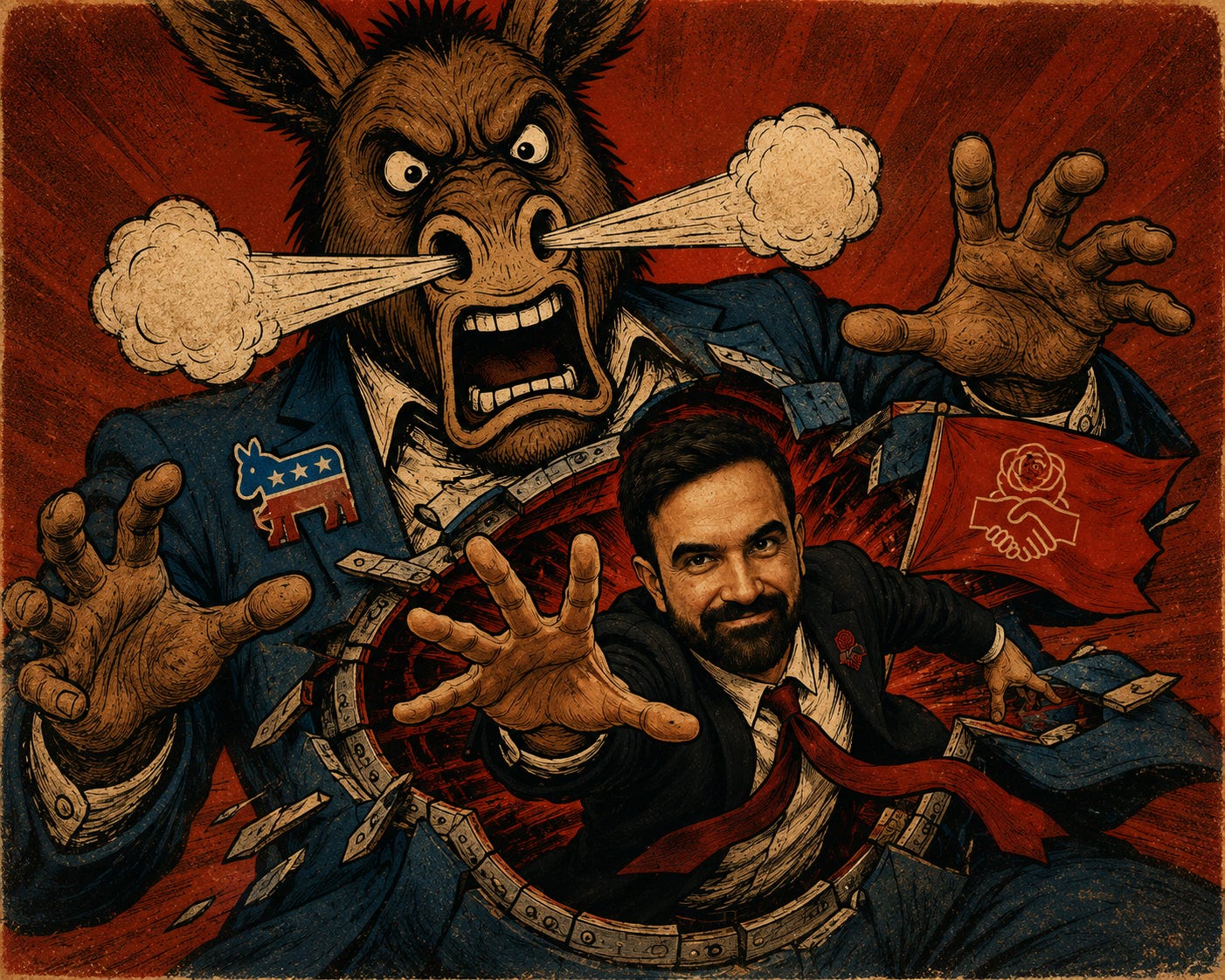
So what is the Democratic Party to do? What is this talent left to do?
When you look at how businesses acquire talent, how competition emerges, and how new products get formed, maybe what we are seeing here is the emergence of a new Democratic Party being created from within.
We have seen this play out in business over and over again. Once the need for a product/idea/policy begins to emerge, a company has to make a choice. It can allow a new product/idea/policy to develop from within lead by it’s talent. It can let the people behind that product leave and become the competition. Or it can fire the employees, lock the product in the basement, and pretend it never existed.
The Democratic Party is facing that choice with the DSA right now.
Below, I’m playing with an idea about what we can learn from business, how it compares to the modern Democratic Party and the DSA, and what we can expect in the future.
What do you think about the DSA? What do you think about the relationship between the Democratic Party and the DSA?
Tying Up Talent
Tying up talent is a common business practice. When a company wants to corner an emerging industry and stifle competition, one of the first things it does is capture the best talent.

We have seen this after World War II with the development of nuclear technology. We saw it during the Cold War with rockets and engineering. We are seeing it again with artificial intelligence and programming.
Companies will pay astronomical amounts of money to make sure the best and brightest people are working for them.
At first, those people actually help develop the technology. They build the company, create its products, and give it an identity that sets it apart from the competition. That helps the company establish itself and lock in its market.
Eventually, though, the shareholders, profit margins, and safety become the top priorities. Why rock the boat in calm weather?
That does not change the engineers or their passion for what they are doing. The massive salaries and stock options may allow them to live comfortably and put some money in the bank, but that does not mean their ambitions are being fulfilled.
Eventually, they go to the company and say, “I want to start doing X, Y, and Z. I want to work on something new. I want to keep pushing the boundaries of this industry.”
The company tells them no. Just do your job.
So they go back to plugging away at some menial task. They are still collecting a great salary, but they feel empty. They know they can do more. They know the technology can do more. They know their ideas could improve the company, but they are not allowed to pursue them.
At that point, they have a choice.
Leave or Innovate From Within
The first choice is to leave the company and become the competition.
That happens more often than people think. Large companies develop or employ people with important ideas, fail to recognize what those ideas can become, and then watch someone else make money from them.
Xerox PARC developed technology that helped shape modern personal computing, including major elements of the graphical user interface. Xerox did attempt to commercialize some of that technology, but it never took advantage of it the way Apple and Microsoft eventually did. Steve Jobs saw what Xerox had and understood where personal computing was heading.
The other choice is to start a small rebellion inside the company.
That is closer to what happened with Sony and the PlayStation.

Sony was not a video game company. Ken Kutaragi was an engineer inside Sony who believed the company should enter the gaming business. He faced plenty of resistance and ridicule from people who thought gaming was a waste of Sony’s time, money, and resources.
But the idea survived. Sony’s leadership eventually allowed it to move forward, and the PlayStation became one of the defining products in the company’s history.
This is what I see happening inside the Democratic Party.
It took me a little while to get here, but I think the Democratic Party has created the same problem.
Gen X, millennials, and now Gen Z grew up inside the Democratic Party. They heard about what the future could look like. They decided to work toward it. They invested their time, their money, and, in many cases, their livelihoods into building the Democratic Party into what it is today.
Then, at some point, the party told them it was no longer interested in pushing the boundaries.
We are not going to grow. We are not going to pursue real political innovation. We are going to maintain the status quo and become a reflection of the competition.
It reminds me of Apple’s iPhone and Samsung’s Galaxy phones. They go back and forth, slowly improving their products but rarely changing too much. One year, the Galaxy may be better. The next year, the iPhone catches up.

They know their customers. They have a pretty good idea of how many phones they will sell and who will buy them. Why take a huge risk with a product they already know will sell?
Democrats and Republicans have fallen into a similar pattern. They know their voters. They know who is likely to support them. They know that many people will stay with them because they are afraid of what the other party will do.
So there is very little reason to change the product.
But eventually, the frustration sets in.
The people who joined the Democratic Party because they wanted to create change have been told no too many times. Just like the engineers inside a company, they now have the same basic choices.
They can leave and build something new, or they can innovate from within.
Why Not Just Start Another Party?
We have watched people try to leave and start something new with different levels of success.
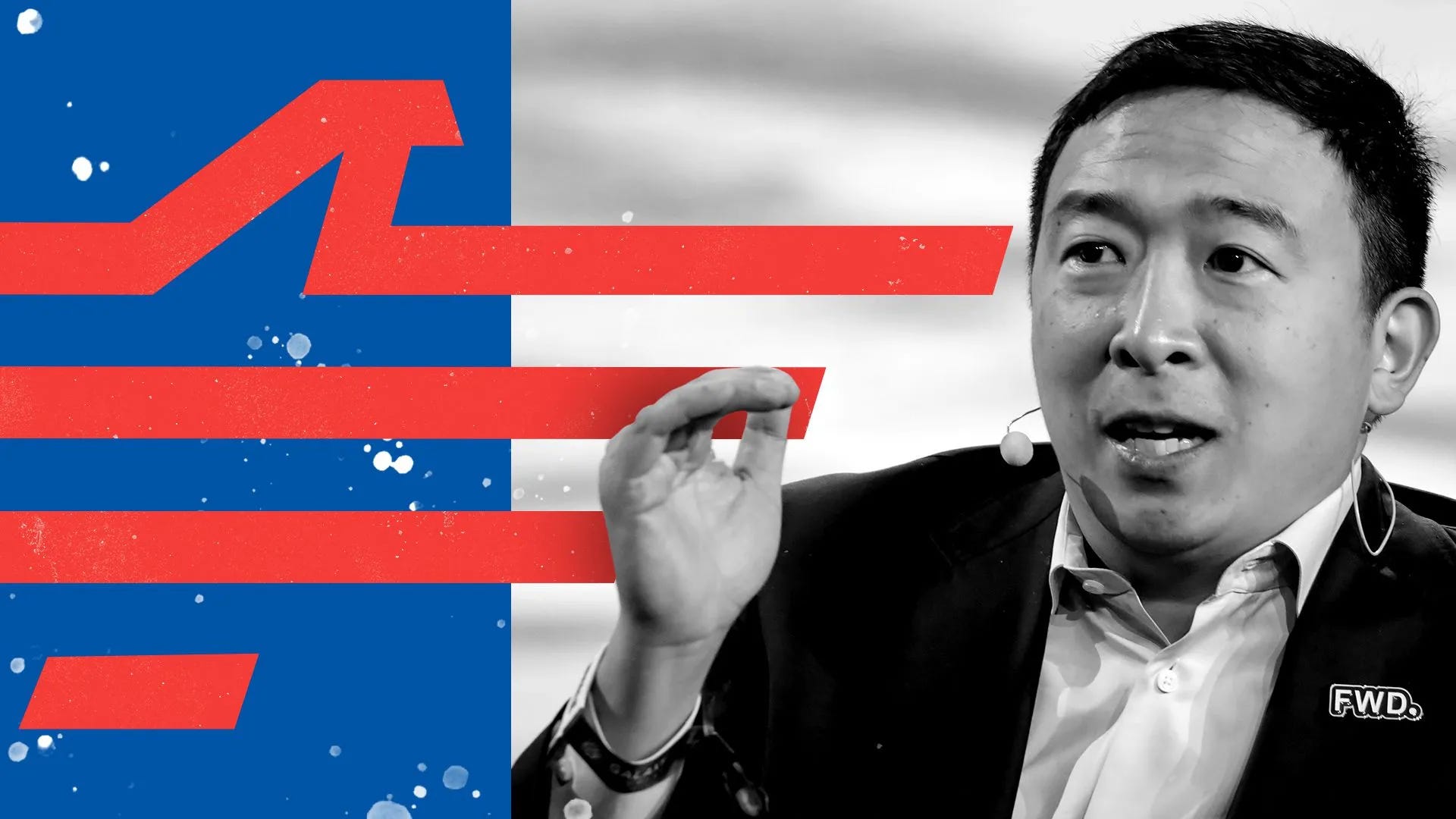
The Green Party is one example, or what Tucker Carlson is trying now leaving MAGA. My personal favorite is The Forward Party. Andrew Yang ran unsuccessfully for the Democratic presidential nomination in 2020. After seeing what he believed was the party’s inability to hear new voices and accept new ideas, he helped create a new political party.
That is the hardest path because you have to create your own market share.
Trying to build a new political party is like trying to release a new phone that competes with Apple and Samsung or a new video game system that competes with Sony, Microsoft, and Nintendo.
Even if the product is good, capturing any relevant share of the market is almost impossible. Very few companies manage to do it. When they do, it takes years of convincing people, one by one, why they should leave the product they already know.
Politics is no different.
A new party has to convince voters that it can win. It has to build infrastructure, raise money, gain ballot access, find candidates, and overcome the belief that voting for it will only help elect the party those voters dislike the most.
Sometimes the better option is to innovate from within. You take what everyone knows is needed and build it yourself because the company is too afraid to do it.
The company does not want to upset its shareholders. It does not want to rock the boat. Most importantly, it does not want to interfere with the money-printing machine.
On the flip side, Coca-Cola thought New Coke was going to be the best thing. By the mid-1980s, Pepsi was taking market share in part because of its sweeter taste profile. Coca-Cola said, “We can compete. We have the brand name, and we’re going to formulate a new Coca-Cola that can compete with Pepsi.”
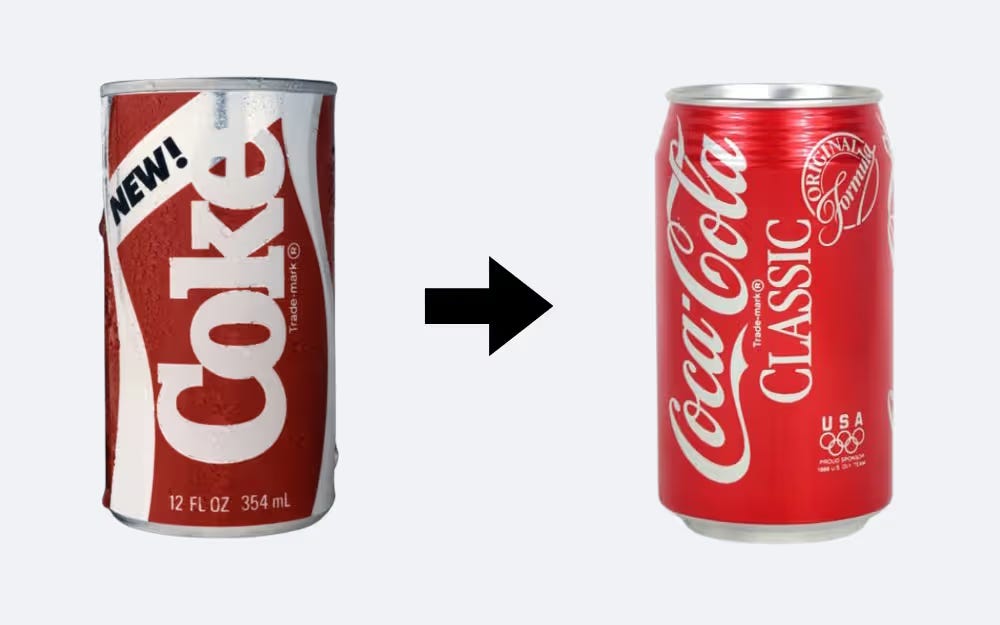
In blind taste tests, many people preferred New Coke over the old Coke and Pepsi. So Coca-Cola rolled it out thinking it was going to win the game.
But loyal Coca-Cola drinkers did not want New Coke. It did not matter that it performed well in taste tests or that some people preferred it. The established Coca-Cola drinkers wanted the product they grew up with and were used to. Any change or deviation from it was a veto for them.
That is where the DSA comes in.
The Rogue Product
The DSA is not literally a product created or owned by the Democratic Party. It is an independent political organization.
But it operates like a rogue product using the Democratic Party’s distribution system.
That distribution system is the Democratic ballot line. Instead of trying to create an entirely new political party, DSA-backed candidates can run in Democratic primaries. They can reach voters who already identify as Democrats and gain a realistic path to public office.
They do not have to leave the Democratic Party to challenge the Democratic Party.
The DSA is effectively saying: We have been part of this coalition. We have wanted to change the party and create new product offerings within it. In many cases, these are products the party already talks about. We just want to promote them more, refine them, and actually run on them.
Those products are their issues, policies, and values.
Eventually, being told no was no longer an acceptable answer. Instead of continuing to ask for permission, the DSA began recruiting and supporting its own candidates.
It created something resembling a company within a company. It aligned itself with the Democratic brand, used the Democratic ballot access, and began offering voters a different product.
Now we are finding out whether people want to buy it.
When I have used this analogy with people, some have said it does not work because the PlayStation became incredibly popular.
But nobody knew the PlayStation would become popular before Sony released it. That was the risk.
The DSA is taking a risk too. Its candidates may win. They may lose. Its political product may become more popular, or voters may ultimately reject it. Policies could fail.
At the same time, the Democratic Party has to decide what this product represents.
Is it one part of the larger Democratic coalition? Is it a separate ideological offering within the party? Or is it slowly redefining what the Democratic Party is?
The Talent Was Already There
Steve Jobs is often credited with saying that you do not hire smart people so you can tell them what to do. You hire smart people so they can tell you what to do.
That is one of the things the Democratic Party forgot.
The talent was already hanging around the party. The people with ideas were already there. The party should have been listening to them, folding their ideas into the larger organization, and using their talent to build something better.
Instead, the party treated them like engineers it wanted to keep away from the competition.
It wanted their work, their votes, and their energy. It just did not want their ideas changing the product.
You cannot bring talented people inside, push them away from the decision-making process, and then act surprised when they begin building something of their own.
That is what companies do when they are more concerned about controlling talent than using it.
Cannibalize Your Own Product
The other idea often associated with Steve Jobs is that if one of your products is going to be cannibalized, you might as well do it yourself.
If you already sell one product and know somebody else is going to create something that eats into your sales, why not create it first?
Apple understood that the iPhone would eat into iPod sales because the iPhone could do many of the same things. It did not matter. Apple would still be the company selling the new product.
The Democratic Party now has to ask itself the same question.
Is the DSA something that will caucus with Democrats, compete with establishment candidates, and cannibalize some of their votes while still helping the party maintain political power?
Or is it a product the Democratic Party wants absolutely nothing to do with?
Companies deal with this problem by creating separate brands for different parts of the market. Sometimes consumers do not even realize that two competing products belong to the same parent company.
The products do not have to be identical. They do not have to appeal to the same people. They just have to allow the larger company to reach different parts of the market.
The Democratic Party could decide that the DSA is another offering within a larger coalition. That does not mean the DSA controls the entire party. It does not mean every Democrat has to become a democratic socialist.
It means there is room for another product that appeals to people the existing Democratic product is failing to reach.
Of course, there is always the third option.
You can fire the employees, lock the product in the basement, and make sure it is never seen again.
The Democratic Party can try to force the DSA out. It can spend money defeating its candidates, shut its members out of the party, and make it clear that its ideas are not welcome.
But if the party does that, it will not make the demand for those ideas disappear. It may only force the people behind them to become actual competition.
None of this is new. We can look at the Republicans, the Whigs, and other political parties that changed, divided, or disappeared when new factions and ideas emerged. We can also look at companies that acquired talent, allowed that talent to flourish, suppressed it, or eventually lost it.
The Democratic Party now has to make the same decision.
Does it let the talent build something inside the party? Does it invite that talent to become the competition? Or does it lock the product in the basement and hope nobody ever asks what happened to it?