

Over the weekend, I went to the Kennedy Space Center in Florida. This has been on my bucket list since I was a kid. I remember calling Space Camp myself, asking them to send brochures so I could pitch my parents on sending me. We did not have the money, so I did what a lot of kids did. I read everything I could. I watched anything related to space. I got hooked on science fiction. I fell in love with the idea that people would willingly climb into a machine, launch themselves into the unknown, and try to discover something new simply because it was there.
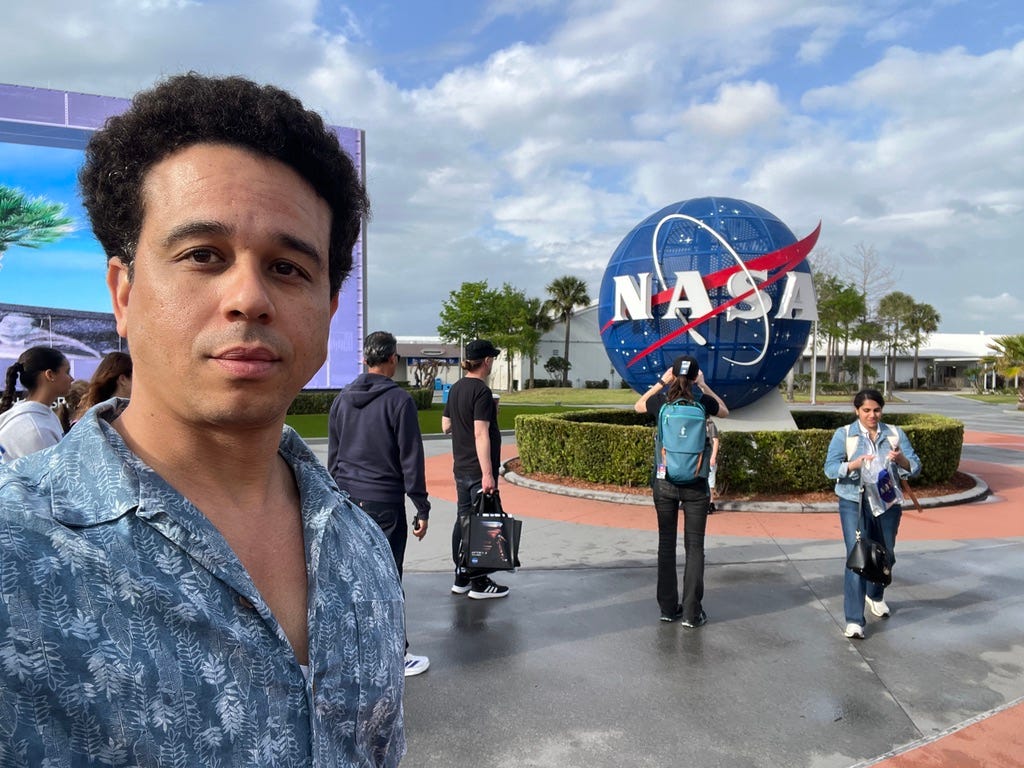
Walking into Kennedy Space Center brought all of that back immediately. The place itself is massive, thousands of acres of preserved land where rockets just happen to launch. It is clean, well maintained, and a little dated in parts. A lot of the experience is still built around touchscreens, videos, and guided storytelling. But then you turn a corner and see the real hardware. The rockets, the capsules, the scale of what was actually built. That is when it stops being a museum and starts feeling like something much bigger.
And that is where the experience shifts from nostalgia to something more complicated.
The Apollo Mindset vs. The Modern One
When you walk through the Apollo section, you are not just looking at artifacts. You are looking at a mindset.
You see the control rooms from the early 60s. Solid desks. Analog switches. Landline phones. Rooms filled with engineers working through problems in real time. There is footage of John Glenn dealing with issues mid-flight, and you can hear the tension in the room as people try to solve it with tools that look primitive by today’s standards.
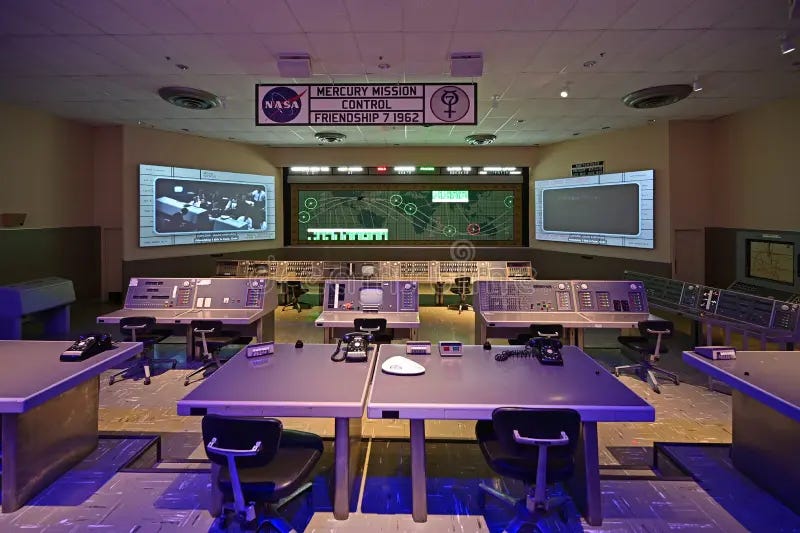
And yet, they made it work.
They did not have perfect systems. They did not have certainty. What they had was urgency, belief, and a willingness to take risks that most people today would not even consider.
That is what struck me the most. The comparison between what they had and what they accomplished.
They were not doing it because there was something to extract from the moon. There was no oil. No gold. No immediate return. They were doing it because it mattered to try. Because exploration itself was the goal (well and beating Russia).
Now compare that to how we talk about space today.
One of the most common explanations for why we never went back is that there is nothing there. It is expensive. It is not worth it.
That framing alone tells you everything about how the mindset has changed.
We went from asking what is possible to asking what is profitable.
The Price of Inspiration
There was another moment that stuck with me. It cost over $80 to get in, plus parking. $100! And that is before you even step inside. Standing there, knowing that this facility exists because of taxpayer investment, it felt off. Maybe there are operational reasons. Maybe the visitor experience is privately managed. But as a citizen, it felt like I was paying to see something I had already helped fund.
And the experience itself reinforces that feeling.
So much of it is packaged. Controlled. Delivered through screens and structured narratives. It reminded me of the World Expo I talked about before. There is something missing when everything is presented in a way that feels processed instead of lived.
And yet, the physical artifacts cut through that.
Standing under a Saturn V rocket, you cannot help but feel something. You start thinking about the scale of the effort, the number of people involved, the amount of coordination it took to make something like that work.
And then the question starts forming.
If we could do that then, why does it feel like we are hesitating now?
Public vs. Private and the Shift in Incentives
The other thing that becomes impossible to ignore is how much of the current space activity is now driven by private companies.
As you go through the bus tour, you see launch pads and facilities not just for NASA, but for SpaceX, Blue Origin, Boeing. Old NASA infrastructure is being leased out. New systems are being built alongside the old ones.
In many ways, it is impressive. SpaceX, in particular, has driven down the cost of getting payloads into orbit dramatically. Reusable rockets. Frequent launches. A level of efficiency that changes what is possible.


But it comes with a different set of incentives.
Now the conversation is about cost efficiency, payload economics, commercial viability. Space tourism becomes part of the discussion. Low Earth orbit becomes a marketplace.
And I do not think that is bad. In fact, it is necessary to scale what comes next.
But it does raise a concern.
If the primary driver becomes profit, what happens to the things that do not have an immediate return? What happens to the long-term exploration goals that require sustained investment without a clear financial payoff?
Because that is exactly what got us to the moon in the first place.
What If We Never Stopped?
As I went through the exhibits, especially the Apollo section, I kept coming back to one idea.
What if we never stopped?
What if we treated that moment not as a finish line, but as a starting point?
There is a show I like, For All Mankind, that explores that exact question. What happens if the space race never ends? What happens if we keep pushing, keep investing, keep exploring?
Walking through Kennedy Space Center, that question does not feel theoretical.
Because you can see both versions at the same time.
You see what we were capable of when we were driven by curiosity and ambition.
I left Kennedy Space Center feeling two things at the same time.
Inspired by what we can accomplish and what could have been.
Yet as I was leaving, there was Artemis II sitting on the pad, the first crewed mission back toward the Moon in over 50 years, (tentatively launching April 1, 2026) built through a mix of NASA leadership and private contractors, a reminder that we still know how to do this when we choose to, the question is whether we are willing to commit to it beyond just this moment.
Because the talent is still here. The technology is better. The capability has not disappeared.
If something does not have a clear return, it struggles to get support. If something is risky, it gets delayed. If something requires long-term commitment, it gets questioned.
And that is where I think we have lost something important. Exploration is not supposed to be safe. It is not supposed to be immediately profitable.
It is supposed to push us forward.
Amaze! Amaze! Amaze!

Hi Matt
My dad was over tracking and communication for NASA. As a kid I got to sit in the visitor section of the control centers at Goddard when some of the launches were done. I grew up at the White Sands Missile Range army base in New Mexico. That is where it all began. There is a museum there. Nothing like you went to see, but where it all began non the less. If you are ever aroung White Sands, check it out. You will even get to see a picture of my dad as he was inducted into the Space Hall of Fame!
Doug