

Hey everyone, Matt here.
If you’ve been following me, you know I don’t put much faith in polling. Look at the trends and the sentiment, but remember that the sentiment inside our own bubble can look very different from what is happening outside it.
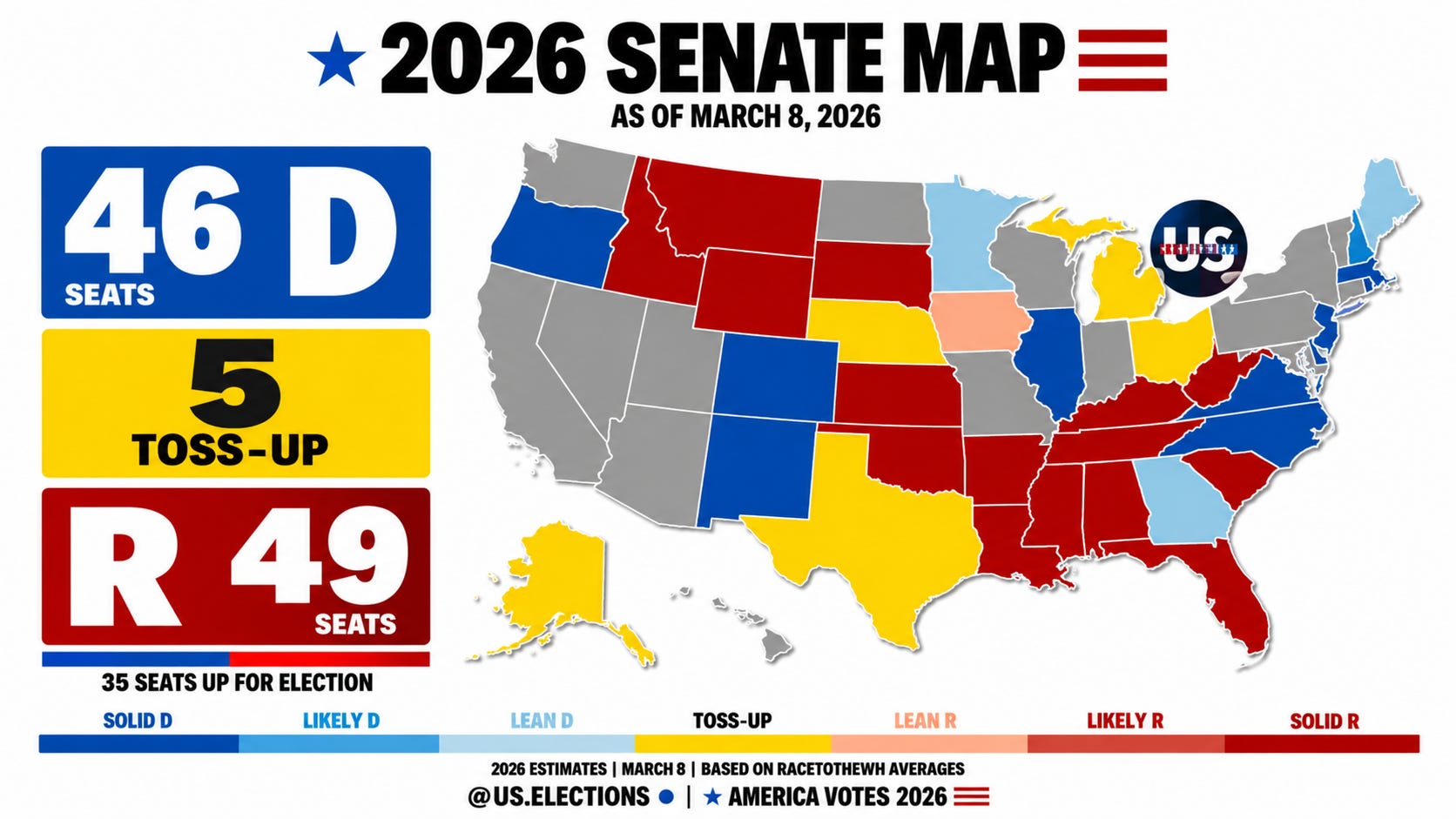
Republicans expected a red wave in 2022. It failed to materialize the way they promised. Now Democrats are talking about a blue wave crashing over the country like Barack Obama’s victory in 2008.
There is real dissatisfaction in this country. I understand why Democrats see an opportunity. But I remain skeptical about the size of the victory people are expecting, especially in Ohio.
The discovery that polling operations were publishing fabricated surveys should give everybody a reason to slow down and look more closely.
The Numbers Were Made Up
Wedgewood Polls admitted that virtually all its published polling was fabricated after an investigation by FiftyPlusOne. Earlier this year, a separate operation, Median Strategies, also acknowledged releasing fake surveys.

Median’s releases included a Wisconsin Democratic primary poll showing Francesca Hong with a substantial lead. Wedgewood published fabricated numbers involving Michigan’s Senate race, where Abdul El-Sayed ultimately became the Democratic nominee.
Mallory McMorrow described what happened after a fake Wedgewood survey showed her support collapsing: donations dried up, volunteers became discouraged, and reporters pressed her about dropping out.
Think about what that means for a campaign. A number gets published, becomes a headline, and starts shaping conversations with donors, volunteers, and voters. The candidate then has to respond to a supposed political reality that somebody invented.
By the time the fabrication is exposed, the fundraising calls, discouraging conversations, and damaging coverage have already happened.
Calling this a “social experiment,” as these operations have done, does not erase the consequences.
Ohio Was in the Mix
Wedgewood’s fabricated Ohio releases claimed to survey likely voters from August 11 through August 13.
They showed Amy Acton leading Vivek Ramaswamy, 47% to 46%, and Sherrod Brown leading Jon Husted, 48% to 44%.
Those numbers appeared in election coverage and prediction-market commentary. They gave readers the impression that another independent survey was confirming Democratic momentum.
Legitimate surveys have also shown competitive Ohio races. But every fabricated poll added to the conversation creates a false sense of corroboration. Readers see several headlines pointing in the same direction and assume the evidence is getting stronger.
Meanwhile, Trump carried Ohio by about 11 points in 2024. Mike DeWine beat Nan Whaley by roughly 25 points in 2022.
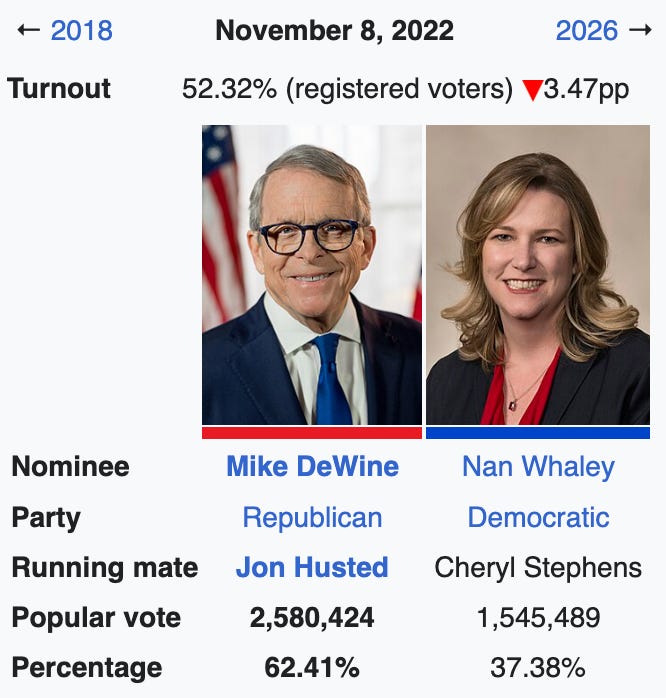
That is the recent electoral history Democrats are working against. Candidates and circumstances change, but flipping this state requires a substantial shift in who votes and whom they support.
Polling, Betting, and the Feedback Loop
An August analysis discussing Wedgewood’s Ohio Senate numbers reported roughly 277,000 Kalshi contracts traded on August 13.
That figure measures trading volume and fabricated survey results were being used in commentary about markets where people were wagering real money.
I have raised concerns about prediction markets before. In Someone Is Creating Prediction Markets for OH-7 Primary, an anonymous researcher helped examine a thinly traded Polymarket race and accounts apparently connected through a common funding source.

The concern was how relatively little money could produce an overwhelming-looking probability that voters might mistake for broad agreement about a candidate’s chances.
Put those systems together and you can see the problem. A poll feeds coverage. Traders react to information circulating around the race. Market odds become another headline, which people then share as further evidence of momentum.
How much independent information is actually underneath all that confidence?
Look at Who Paid for the Poll
The same scrutiny should apply to favorable polling in the Brian Poindexter–Max Miller race.
One Bedrock survey was commissioned by Iron Workers International and The Next 50, both supporting Poindexter. Poindexter is an ironworker.
Be skeptical when a poll showing you ahead is commissioned by the union you belong to. Ask who paid for it, how the survey was conducted, what questions came before the candidate matchup, and whether the full results are available.
The union commissioned the work; Bedrock conducted the poll. Readers deserve that distinction, along with the sponsorship disclosure.
We should demand the same transparency from a Republican-funded survey showing Miller ahead. Favorable numbers should invite examination, especially when the people paying for the poll have a stake in the outcome.
But in either case, where are the checks and balances? Too often, researchers, news outlets, and political commentators run with numbers that fit a narrative instead of checking the polling methodology, weighting, and who paid for the work. When fabricated polls can make it into coverage and polling averages, we have to ask who is checking any of this and who is held accountable when they get it wrong.
And now we’re getting that transparency less than two weeks before Election Day, after the numbers have circulated for months and early voting has already started. People have donated, volunteered, and cast ballots while fabricated polling was part of the coverage they were seeing. By the time the correction arrives, the damage may already be done.
What Does Margin of Error Mean?
Even a legitimate poll can be presented with more certainty than it deserves.
A survey showing a Democrat at 42% and a Republican at 38%, with a four-point margin of error, does not establish a secure Democratic lead. Move the Democrat down four points and the Republican up four, and the result becomes 38% to 42%, reversing who is ahead. People see “up four” and overlook the uncertainty. That is a competitive race, not a guaranteed Democratic win.
That is my point: people see “up four” and treat it as a win while ignoring the uncertainty in the numbers. The margin of error for the difference between two candidates is larger than the margin reported for either candidate individually. A close poll is evidence of a competitive race, not a victory to celebrate.
Then you have undecided voters, turnout assumptions, and errors that the published margin does not capture.
People see their candidate ahead and mentally move the race into the win column. Enough of those assumptions become a wave narrative.
Gerrymandering adds another obstacle. A favorable national environment still has to translate into wins in districts drawn to favor one party. Enthusiasm across the country does not distribute itself neatly across the seats Democrats need.
What About the Rest of the Ballot?
I also want to know whether the enthusiasm around Brown and Acton extends to the rest of Ohio’s Democratic ticket.
What is happening in the races for secretary of state, auditor, and treasurer? Are voters broadly reconsidering Republican control, or responding to particular candidates?
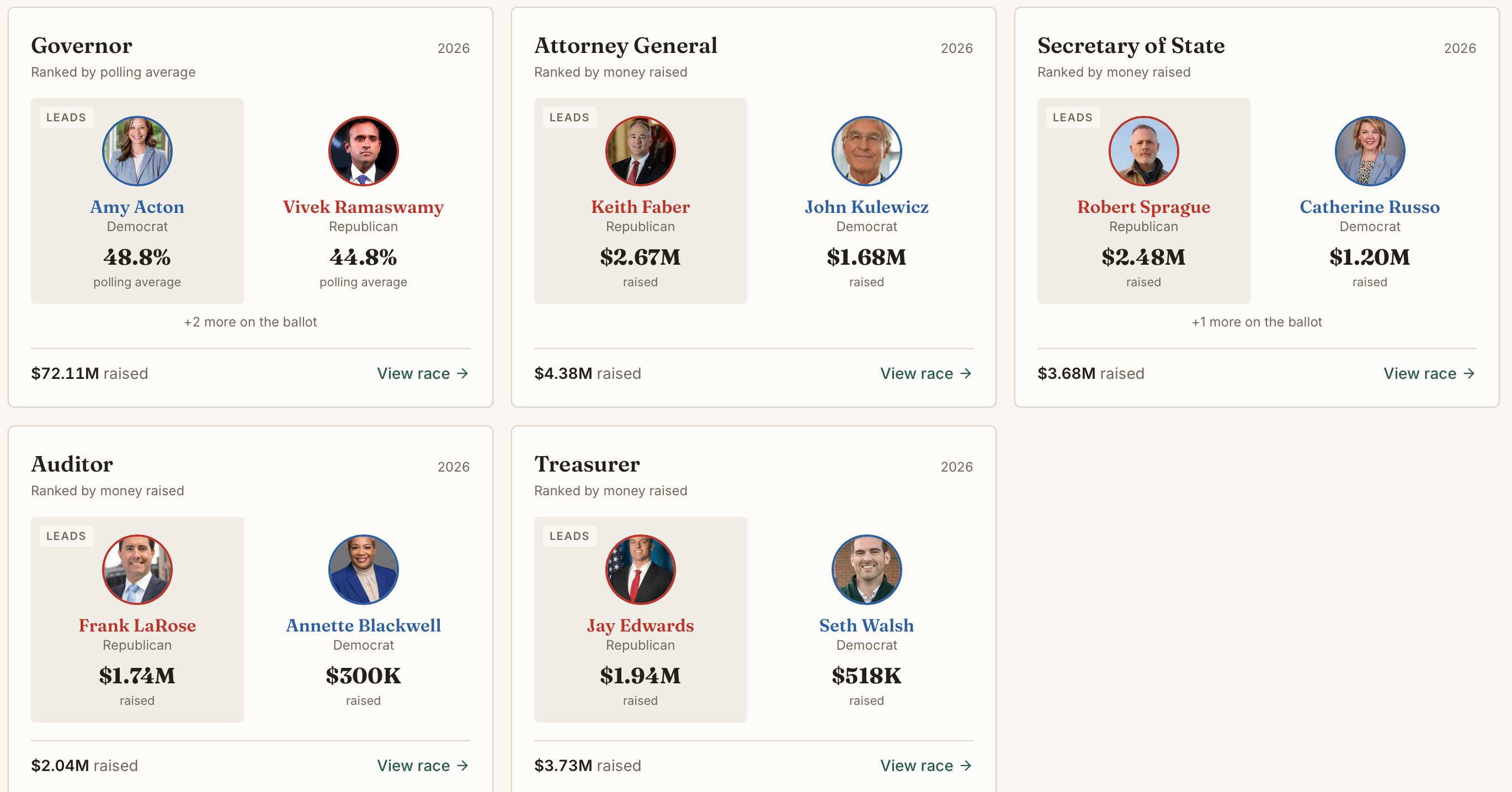
That distinction changes how we should understand this election.
A Republican voter might hold their nose and vote for Sherrod Brown while supporting Republicans elsewhere. Brown strikes me as a particularly plausible candidate for that crossover support.
But voting for Brown, Acton, and a Democratic congressional candidate on the same ballot requires a broader set of choices. How many normally Republican voters are prepared to make them?
Some will cross over in one race. Others will leave contests blank or stay home. Democrats may bring out voters who skipped the last election.
Those are the mechanics of winning. They deserve more attention than the assumption that disliking Trump automatically produces a Democratic ballot from top to bottom.
I Want Evidence Before Celebration
Most of my readers are Democrats. That is why I am bringing this conversation here.
We have confirmed fabrications, questions about verification, and political coverage that helped give invented numbers credibility. The evidence warrants scrutiny of the system.
Follow the money. Examine the methodology. Ask aggregators how they vetted these firms and news organizations whether they corrected the stories built around fabricated results.
Apply that scrutiny to the numbers you like.
Democrats have opportunities in Ohio. Winning them requires overcoming the state’s recent voting patterns, reaching people outside our bubble, and getting supporters to vote.
I would rather understand the uncertainty now than discover on election night that our confidence was built partly on information somebody made up.
I would rather have skepticism than hopium. No one is more hated than he who speaks the truth.