

This article might be a little bit of what people now call “slop.” A little bit all over the place. But it is something I have been thinking about recently, even though the idea itself is actually very old.
People usually phrase it as having “fuck you money.” The idea that you have enough freedom and security that you can say exactly what you want, do what you want, and be completely yourself without worrying about the consequences.
If you have that kind of freedom, the consequences of what you say do not really affect your livelihood, your social circle, your family, or your position in the world. You live outside many of the boundaries that other people have to live within.
And that idea made me start thinking about the word authenticity.
And because I live in the political space, and because I am The Angry Democrat, I want to talk about what authenticity actually means when we talk about political candidates.
My Own Struggle With Authenticity
I have been interviewing candidates recently, and I have also been a candidate myself twice.
One of the most common pieces of advice you hear in politics is simple.
“Just be authentic.”
But I remember my 2022 campaign clearly. I was the furthest thing from authentic.
I was trying to craft a message that I thought would resonate with everybody. I did not want to come down too hard on certain issues because I did not want to alienate voters. I also did not want to make people mad who I might need as allies. You know, the, “reach across the aisle! Compromise!” approach.
So my authentic self was not really present.
Sure, people thought I was a nice guy. Some people liked me more than my opponent. Obviously not everybody, because I lost.
But I still had supporters.
But, the question I wrestled with was whether I was actually being authentic.
And if I was not, why not?
The Boundaries Around Authenticity
I give people the advice all the time. Just be yourself. Be authentic.
But to truly be yourself, you have to live without certain boundaries.
Even people who appear authentic are still operating within some kind of structure. Someone may say whatever they want, act however they want, and appear to live freely. But in politics that can be just as much of a gimmick as someone who carefully guards their opinions.
Sometimes authenticity itself becomes a strategy.
But the truth is that most people have something to lose.
When someone believes they have something to lose, and when the loss feels more important than the potential gain, authenticity takes a back seat.
Even when you think you are being authentic, there is always a moment where you pause and ask yourself questions.
Do I really believe this?
Do I really want to say this?
Am I willing to make this person mad?
Am I willing to make this group mad?
Am I willing to lose a friend or a family member?
The Lines We Choose Not to Cross
Some decisions are easy. Sometimes you know it is time to cut the rope with someone in your life.
But most situations are not that clear.
Sometimes the question becomes what are you actually sacrificing?
I have a couple of friends where there are certain political topics we simply do not talk about. And, these are people I talk about politics with all the time.
But for the sake of our friendship, we either had conversations about boundaries or we have an unspoken agreement not to go there.
We know there are strong beliefs on both sides.
So some topics are simply better left unsaid.
Does that make me inauthentic? Do I guard myself on those topics because of friendships?
It is something I have been wrestling with.
What is there to gain by being completely authentic?
And what is there to lose?
Authenticity Fears
One of the biggest fears about authenticity is the possibility that your authenticity turns out to be ignorance.
Maybe you stand firmly on something and later realize you were wrong.
Maybe you change your opinion later.
That ignorance or misinformation destroys a friendship or burns a bridge that cannot be repaired.
And maybe you later find yourself holding the exact opposite view or that the facts around the view you held were wrong.
Those are the risks people quietly think about when they decide whether to speak their mind. When you take a hard stand on something, you are putting your identity behind it. You are telling people this is what you believe and this is who you are.
But people grow. People learn. Circumstances change.
And sometimes the thing you were absolutely certain about turns out to be incomplete, misunderstood, or flat out wrong.
If that authenticity cost you relationships along the way, the damage may already be done. A friendship may already be broken. A bridge may already be burned. A person you once respected may no longer be part of your life.
That possibility alone makes people cautious.
Because authenticity does not just carry the risk of being criticized in the moment. It carries the risk that someday you might look back and realize the person you were so certain about being was not the person you are anymore.
Authenticity Is a Privilege
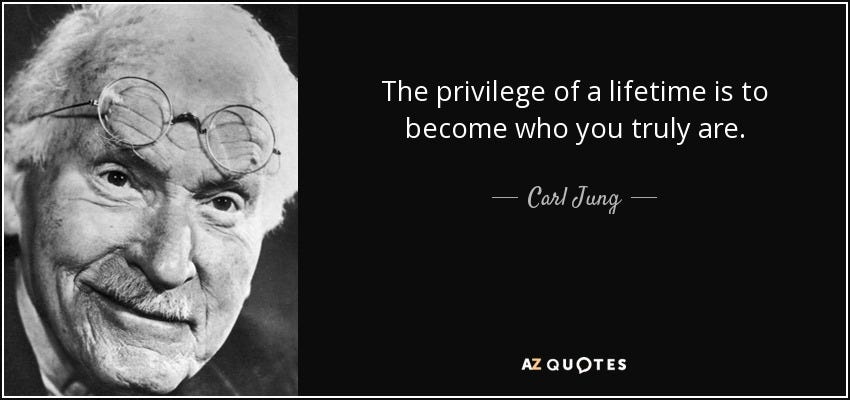
I believe authenticity is a privilege.
It is something available to people whose world revolves around themselves in a way that cannot easily break. No matter what happens, their world remains intact because they are the center of it. Their decisions, their opinions, and their voice do not depend as heavily on keeping everyone around them satisfied.
Authenticity also belongs to people who have reached a realization about themselves and their place in the world. They understand that if everything around them were to fall apart because of something they said or believed, they could still live with that outcome.
They understand the consequences and accept them.
At the end of the day, they know they will still be standing.
Friends or no friends.
Family or no family.
They understand that their life ultimately belongs to them, and that realization creates a kind of freedom. It allows them to say what they believe, even when they know it might upset people or create conflict.
That realization, that willingness to accept the consequences of being fully yourself, is what makes authenticity possible. And that is why authenticity is not just a personality trait. It not just a choice. It is not a way of acting during a campaign.
It is a privilege.
The Evolution of a Candidate
As a candidate trying to find your authentic voice is hard.
It means pushing against the fear that people will be mad at you.
It means pushing against the fear that people will say your opinions are worthless or invalid.
It means figuring out what you actually believe and which things deserve a strong voice.
At the same time, it is asking does everything deserve a voice?
Authenticity is not about shouting every thought you have. It is about being thoughtful, confident, assertive, and mindful.
And it means understanding that some people will not like you. And that is ok.
Some people will not like what you say. And that is ok.
Some people will not like what you stand for. And that is ok.
Every political candidate experiences this process.
At least the good ones do.
There is a cycle I have noticed.
At first, candidates are terrified. Myself included.
They write speeches. They stand in front of people. Their voices crack. Their hands shake. They are nervous as hell trying to get through a stump speech they have practiced a hundred times.
They do not want to disappoint people.
They do not want to get laughed at.
They do not want to say the wrong thing.
Eventually they get more comfortable. They learn how to deliver the speech better.
But the speech itself usually does not change.
The candidates I watch most closely are the ones who eventually challenge themselves.
The ones who get angry at the system.
The ones who notice when the media plays favorites.
When the party plays favorites.
When the thumb is clearly on the scale.
At that point, candidates face a choice.
Some decide they just need to play the game better so that the system favors them next time.
Others cannot ignore the injustice. It bothers them too much.
Those are the candidates I pay attention to. The candidates who find their voice. The ones who refuse to accept the unfairness.
They begin their campaigns trying to please everyone. They try to get every vote possible for an abstract idea of winning.
But over time they evolve.
They begin speaking their truth.
They start raising ideas that may be unpopular but address real problems people see coming.
They begin advocating for solutions they genuinely believe in, even when those ideas are outside the normal political playbook.
They start speaking honestly about how systems might need to change.
And through that authentic voice they begin to build real alliances, real coalitions, and real change.
But even that process is a privilege.
The ability to speak up is a privilege.
The ability to have strong opinions publicly is a privilege.
The ability to lose a friend, a colleague, a job, a family member, or political party loyalty because of political disagreement is a privilege.
And the ability to not fear those consequences is privilege.
The Hard Road to Authenticity
I describe this moment as a realization.
The realization that you have to live your own life.
And that if you do that, the people who truly belong in your life will remain.
But not everyone reaches that point.
The journey is difficult.
For some people it never gets completed.
Sometimes people lose more than they gain. They live with regret.
For many people, inauthenticity becomes the only way to survive.
And that is not something I say with judgment.
When I say authenticity is a privilege, I mean that very literally.
A Question Worth Asking
Through my experience running for office twice, interviewing candidates for podcasts, working with the party, and now writing as The Angry Democrat, I have seen many different types of candidates.
I have also seen my own evolution.
So I encourage people to ask themselves a question. Even if you are not a political candidate.
What do you do?
Do you walk away and try to figure out how to play the game better so the system eventually favors you? Or do you challenge yourself?
Do you develop clear ideas, clear values, and move forward knowing that authenticity may come with consequences?
Because authenticity always comes with an uncertain future.
And the decision to act on it is always a privilege.
“Just do the right thing. The rest doesn’t matter.” - Marcus Aurelius